Leading economists on Thursday called for stronger fiscal discipline, improved governance and effective implementation of the proposed national budget for 2026-27, warning that weak revenue collection, rising debt obligations and corruption could undermine the country’s economic outlook.
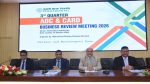
The observations came at a seminar titled “National Budget 2026-27: Priorities and Perspectives” held at East West University (EWU) in Aftabnagar, Dhaka. Prof Mustafizur Rahman, Distinguished Fellow at the Centre for Policy Dialogue (CPD), presented the keynote paper, while Prof A K Enamul Haque, Director General of the Bangladesh Institute of Development Studies (BIDS), and Prof Mohammed Farashuddin, former Governor of Bangladesh Bank and Chairperson of the Board of Trustees of East West University, joined the discussion, EWU said in a press release.
Mustafizur Rahman said the proposed budget contains a number of positive initiatives, including tariff reductions aimed at facilitating exports and business operations. However, he cautioned that with revenue collection expected to fall short in the current fiscal year, achieving an additional 18 percent revenue growth target would be nearly impossible.

He also expressed concern over the rising cost of debt servicing, warning that Bangladesh could face a long-term debt trap when repayments of principal on mega projects begin.



As the designated discussant, Enamul Haque said pervasive corruption must be curbed if the benefits of the proposed budget are to reach the general public. He urged the government to take appropriate initiatives to introduce a nationwide cashless transaction system.
Mohammed Farashuddin welcomed the budget’s inclusion of benefits for older people for the first time, but said it lacked specific measures to address widening inequality. He also suggested that the government could take difficult decisions, including extracting coal in Dinajpur, to help ease the country’s energy shortage.
The speakers also stressed the importance of proper implementation of the budget to achieve objectives related to education, employment, inflation control, graduation from least developed country status and sustainable economic growth.
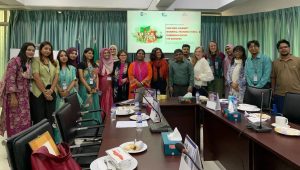
Faculty members, university officials and a large number of students attended the seminar. Students also took part in a question-and-answer session, seeking the panellists’ views on a range of budget-related issues.