



At 20, Sohel Islam was a first-year higher secondary student. But after seeing peers earn well by driving battery-run rickshaws, he dropped out and joined the growing workforce chasing quick cash.
Sohel, who came to Dhaka from Bhola, told TIMES of Bangladesh, “As I started getting cash in hand every day, I now drive the rickshaw full-time.”
A similar journey brought a 19-year-old from Kurigram to Dhaka about a year ago. Poverty had delayed his education, and he was 17 by the time he reached Class IX. Later, he left school to work as a mason’s assistant to support his family before switching to battery-run rickshaws.
“I now earn up to Tk800-Tk900 a day,” he said.
Researchers say such stories are becoming increasingly common. Battery-run rickshaws are attracting thousands of young people, including students and first-time workers, with the promise of immediate income but raising concerns over long-term education and skills development.
A study titled “Urban Mobility Study: Rickshaws in Transition” found that a significant share of young workers are entering the battery-run rickshaw sector.

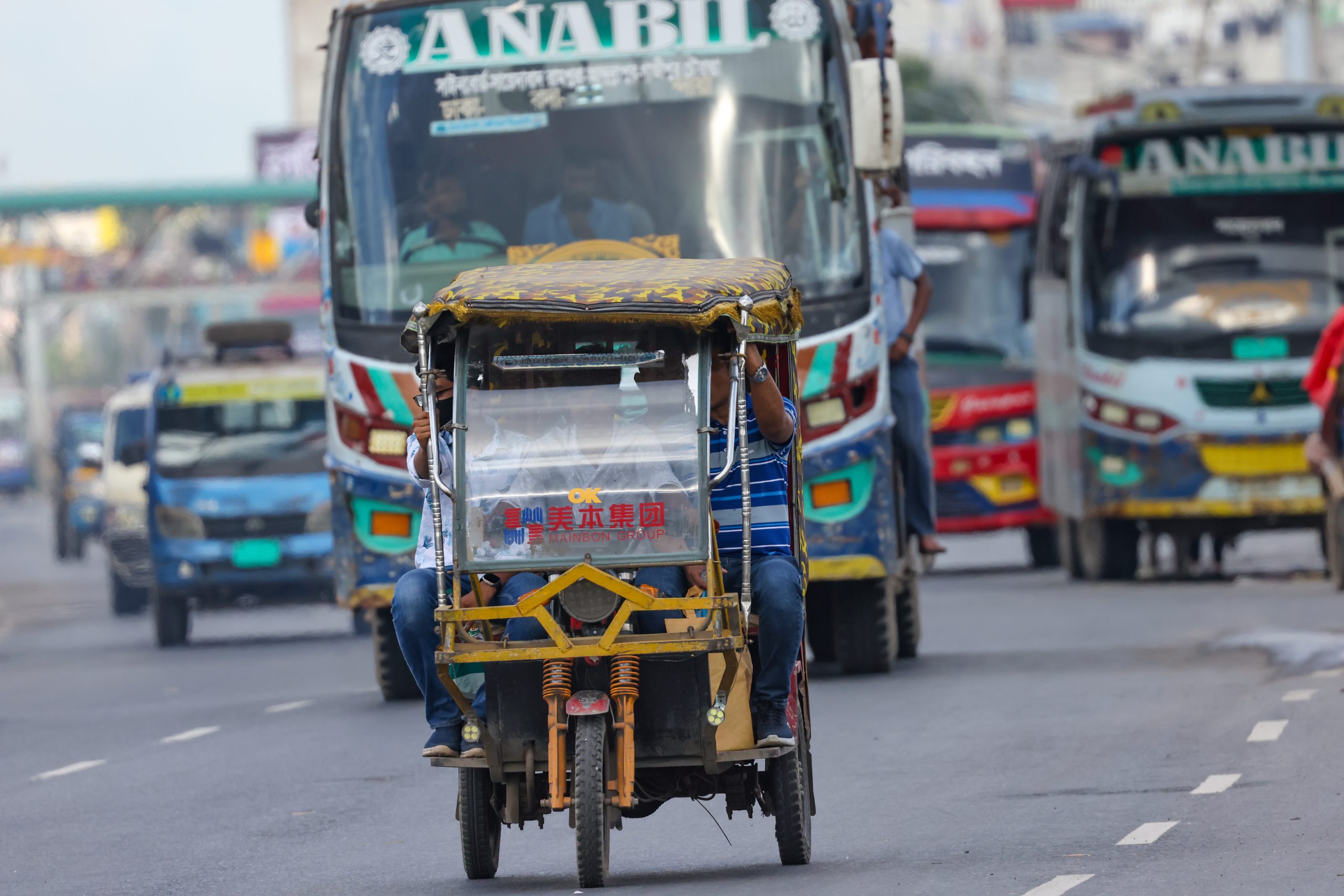
While the average age of pedal rickshaw drivers is 42, battery-run rickshaw drivers have an average age of 38. Around 75 per cent are new entrants to the profession and had never driven pedal rickshaws before.
Another study titled “Role of Battery-Operated Rickshaw in Income and Employment Generation of Urban Bangladesh”, conducted in Chattogram city, found that some battery-run rickshaw drivers were previously unemployed students, mostly aged between 16 and 30.
The 2018 study found that 43 per cent entered the sector due to low investment requirements, 27 per cent were attracted by independent work opportunities, and 17 per cent by higher income prospects.
A 2024 study titled “Prospects and Challenges of E-Rickshaws in Urban Transportation Systems of Bangladesh”, conducted in Rangpur City Corporation, found that 9 per cent of rickshaw drivers were former students who later adopted it as a full-time occupation.




The study also found that 23 per cent of drivers were previously farmers, 13 per cent pedal rickshaw pullers, 12 per cent unemployed, 10 per cent day labourers and another 10 per cent private-sector employees.
Quick money, low barriers
Studies suggest battery-run rickshaw driving offers higher earnings than many other occupations while requiring limited skills, less physical effort and low investment.
According to Innovision Consulting, the average daily gross income of battery-run rickshaw drivers is Tk880, compared with Tk594 for pedal rickshaw drivers.
Before switching to battery-run rickshaws, 72.19 per cent of drivers earned Tk200-Tk300 a day. Around 89.40 per cent said they could save up to Tk5,000 a month after switching to battery-run rickshaws.
However, researchers warn that short-term financial gains could come at the cost of education and future employability.
They say poor urban families often struggle to balance education and work. Once young people enter the labour market early, their education suffers and the chances of returning to school decline.
Mohammad Ali Zinnah, pro-vice-chancellor of the National University and professor at the Institute of Education and Research of Dhaka University, told TIMES of Bangladesh that battery-run rickshaws may ease financial pressure on poor families in the short term but pose long-term risks.
“Although battery-run rickshaws provide some relief to the financial hardship of poor families in the short term, they carry worrying implications in the long term. Interest in viewing education as a long-term investment is declining, while immediate income opportunities are becoming more acceptable to many families,” he said.
He warned that limited opportunities for skill development could leave young workers vulnerable.
“If these jobs decline or disappear in the future, their alternative employment options will also become narrower,” he said.
Akter Mahmood, former president of the Bangladesh Institute of Planners, said the issue should not be viewed only through the number of rickshaws on roads.
“The socio-economic reasons behind this trend must also be identified,” he said.
AKM Fahim Mashroor, chief executive officer of Bdjobs.com, said the rise of battery-run rickshaws was partly linked to job losses in other sectors.
“As various businesses and garment factories have shut down, a large number of workers have become unemployed. To deal with that pressure, the government has somewhat relaxed controls on battery-run rickshaws. However, this cannot be a long-term solution,” he said.