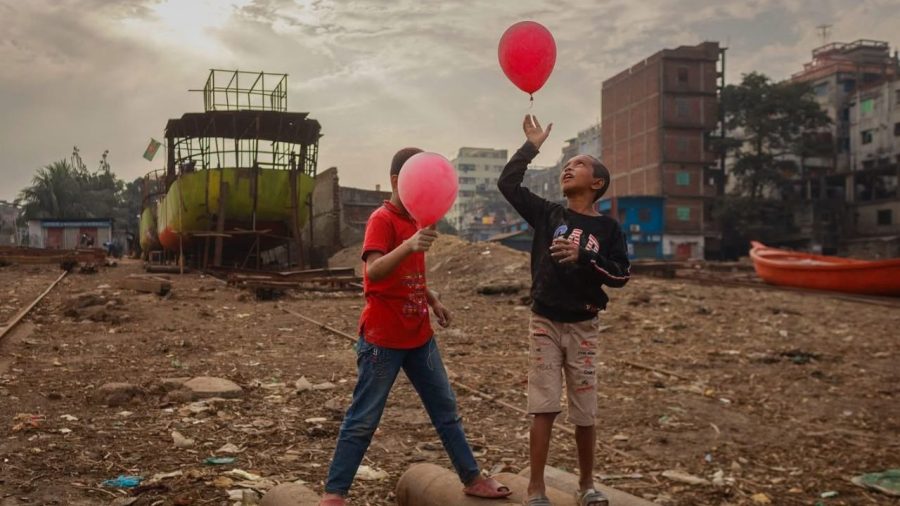

Bangladesh banned leaded gasoline in 1999. Most people assumed that solved it. It didn’t. National data released over the past year shows that lead poisoning has become one of the country’s largest untreated public health crises, and it has almost nothing to do with cars anymore.
The Bangladesh Bureau of Statistics, working with UNICEF, ran the country’s first nationwide blood-lead survey in 2025. Researchers tested roughly 13,700 children aged one to five, along with pregnant women. Just over 38 per cent of the children had elevated blood lead levels. Bangladesh now ranks fourth in the world for the number of children affected more than 35 million, according to UNICEF and Pure Earth.
Dhaka is worse than the rest of the country by a wide margin. Nearly two-thirds of children tested in the division 65.2 per cent had elevated levels, well above Sylhet’s 46.7 per cent and Chattogram’s 42.1 per cent. An earlier, smaller study by icddr,b and Stanford researchers, testing 500 children aged two to four in the capital, put the figure above 75 per cent in 2022. By the time of the national survey three years later, it had dropped to 65 per cent. That’s still a public health emergency. It’s also evidence that something is working.
The World Bank puts a price on all of this: $28.6 billion a year, or 6 to 9 per cent of GDP, according to a 2024 study by economist Bjorn Larsen. Roughly $10.9 billion of that is lost cognitive potential in children. The rest about $17.7 billion comes from adult cardiovascular disease linked to lead exposure.

The source has changed. This isn’t leaded gasoline anymore. It’s batteries.
Electric three-wheelers have taken over Dhaka’s streets in the past decade, and they run on lead-acid batteries. Somewhere between 60 and 65 per cent of the country’s battery demand now comes from them.
Most of those batteries eventually end up at informal recycling operations open-air smelters, often set up in the middle of residential neighborhoods, breaking down scrap batteries with no filtration at all. The lead goes straight into the yards next door.




Pure Earth has measured soil at some of these sites carrying lead concentrations of up to 70,000 parts per million. The U.S. safety threshold is 200. Children living near the worst of these sites have tested at blood lead levels of 47 micrograms per decilitre against a national “elevated” threshold of just 5.
It’s not only the recycling sites. Market testing by UNICEF and Pure Earth has traced lead to recycled aluminum cookware, glazed ceramics, cheap paint, turmeric adulterated with lead chromate for color, and children’s toys.
The government has, for the first time, built an actual system for finding and cleaning up contaminated sites.
The Department of Environment, working with Pure Earth and French government funding, has validated a national framework called the Toxic Site Identification Programme, along with a companion guideline for remediation. Officials have now set a target: cut children’s blood lead levels by 95 per cent by 2035, using the 2025 survey as the starting line.
Enforcement against illegal backyard smelters is still inconsistent. And for most families in the affected neighborhoods, there’s no way to know their children are exposed unless someone runs a blood test something that rarely happens outside a research study.
The views expressed in this photo story are solely those of the author
The author is a documentary photographer