


The Dhaka North City Corporation (DNCC) has launched the country’s largest urban forestry project using the Miyawaki method to protect environmental balance against the backdrop of air, water, and soil pollution in the capital.
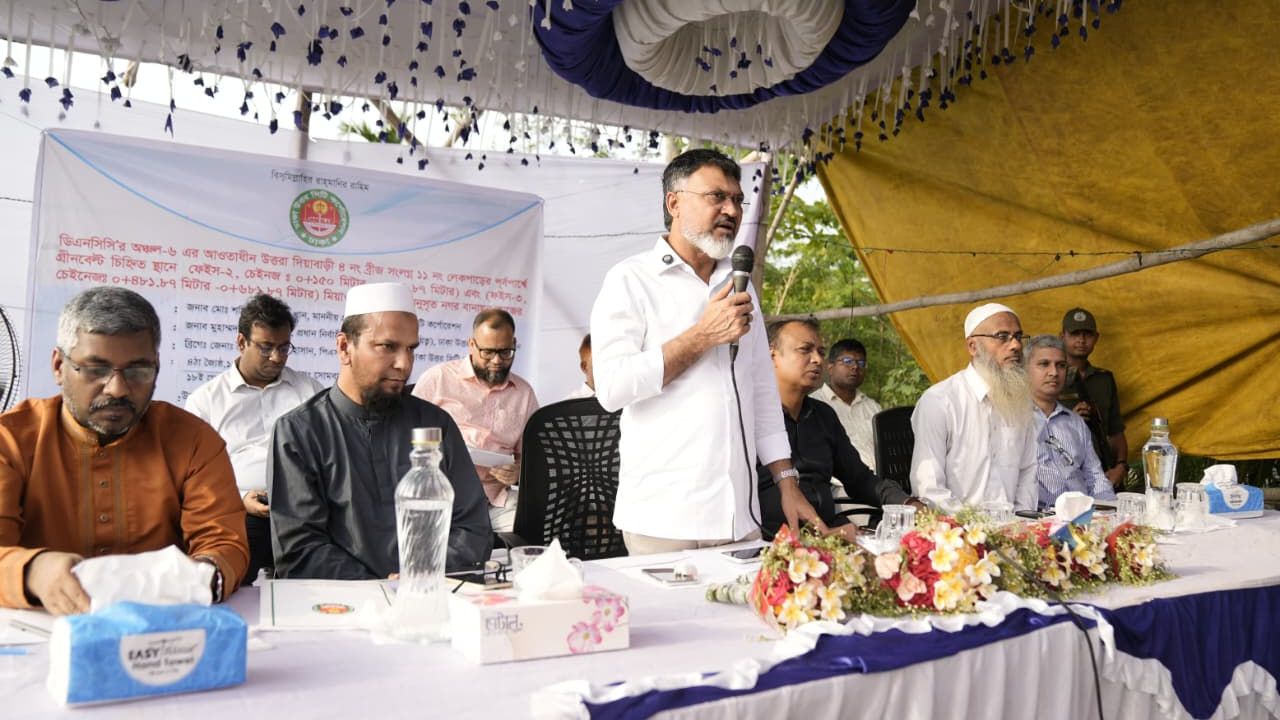
DNCC Administrator Md Shafiqul Islam Khan inaugurated the project on Monday afternoon by planting saplings in the designated greenbelt area on the eastern side of the Lakefront, adjacent to Bridge No 4 in Uttara Diabari.
Speaking as the chief guest at the ceremony, organised by the Environment, Climate and Disaster Management Circle, the DNCC Administrator stated that he would give the highest priority to this afforestation project.
He noted that while the benefits of trees are widely known, there are few initiatives where their practical impact on urban life can be fully realised. Highlighting the mental peace he felt at the site, he added that such environments would have a positive impact on the physical and mental health of city dwellers.

Superintending Engineer Abul Kashem, in his welcome address, said the forest would play a significant role in controlling pollution in Dhaka. He noted that more than 39,000 trees are being planted at this site as part of a broader plan to plant 500,000 trees over the next five years.
The project, presided over by Superintending Engineer Abul Hasnat Mohammad Ashraful Alam, is currently in its second and third phases.
Approximately 39,400 trees across 250 species – including local fruit-bearing, flowering, medicinal, timber, ornamental, conifer, and various shrubs – will be planted across roughly 2.60 acres.



This follows the successful completion of Phase 1, which saw 14,000 trees planted between 26 November 2025 and 15 January 2026.
The Miyawaki forest incorporates biophilic design and biomimicry principles, featuring undulating mounds, winding paths, and lakeside walkways. To ensure the Japanese experience of “Shinrin-yoku” or “forest bathing,” the area provides opportunities for residents to walk amidst dense greenery.
The environment was specially prepared by mixing loamy soil with vermicompost, cocodust, rice husk, bone meal, and organic fertilisers.
Several government, private, and voluntary organisations are involved in the initiative, including the Forest Department, Shakti Foundation, Green Savers, Green Voice, Brighters, Youth Foundation of Bangladesh, OAB Foundation, and the Youth and Environment Development Organisation. The firm EDIFICE assisted with feasibility studies and surveys.
Technical assistance for the Miyawaki, biophilic, and landscape concepts is provided by Arham Ul Huq Chowdhury.
Professor Dr Ahmad Kamruzzaman Majumder of Stamford University and Rawfa Khanam of C3ER, BRAC University, are involved as task force members for air quality analysis and planning.
This project is part of the Prime Minister’s declared programme to plant 250 million trees over five years. The DNCC has already submitted a plan to the ministry to plant 500,000 trees within the same period, with a target of 50,000 trees by December 2026 in the first year.
Through this initiative, the DNCC aims to develop long-term green infrastructure to improve urban air quality, protect biodiversity, and ensure the well-being of citizens.