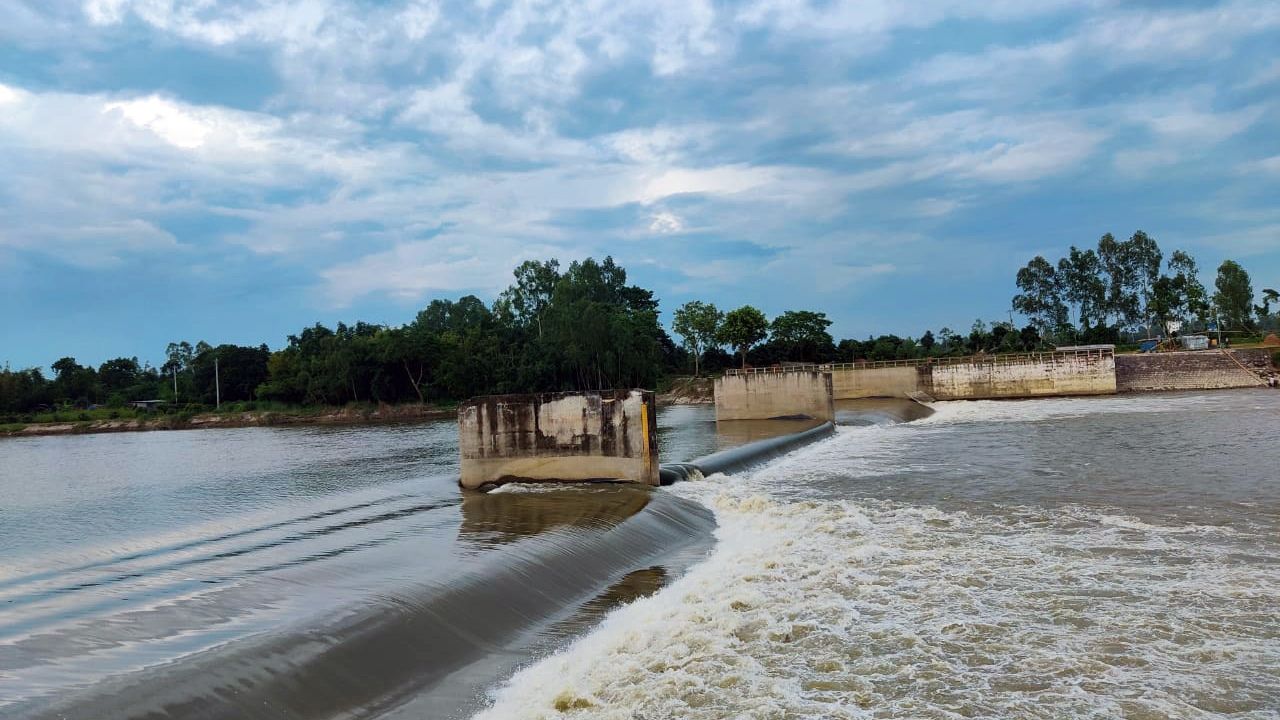

The country’s second-largest rubber dam, built over the Atrai River in Mohonpur of Sadar Upazila in Dinajpur, has turned from a boon into a source of worry for local farmers.
For the past three years, the dam’s rubber has been leaking, leaving the river dry and leaving around 5,00,000 people across 80 villages in two upazilas struggling during the peak Boro rice season.
On-site observation reveals that the leaking rubber has reduced the river to sandbanks, where water should normally flow abundantly at this time. Croplands are cracking from lack of irrigation, putting farmers’ harvests at risk.

Constructed under the supervision of the Local Government Engineering Department (LGED), the 135-metre-long dam once revolutionised agriculture in the region.
The 26-kilometre reservoir allowed farmers to cultivate Boro rice easily, but that scene has been a memory for the past three years.


Azgar Ali, a farmer from Bhakir village in Chirirbandar, lamented, “I have prepared my two-and-a-half bighas of land for Boro cultivation. Every year we rely on river water, but now there isn’t a drop. How can I prepare the land or plant seedlings?”
Mohonpur farmer Mohammad Ali added that the situation has persisted for three to four years. “Repairs have been attempted from time to time, but nothing has worked. Without river water, we are forced to use diesel-run shallow machines, which multiplies cultivation costs beyond what ordinary farmers can afford,” he said.
Repair work on the dam has now begun, with the damaged rubber sections being replaced by contractor Prime Engineering Construction using new rubber imported from China.
Technician Akbar Ali said, “If there is no disruption from natural disasters, the work should be completed within two to three months.”
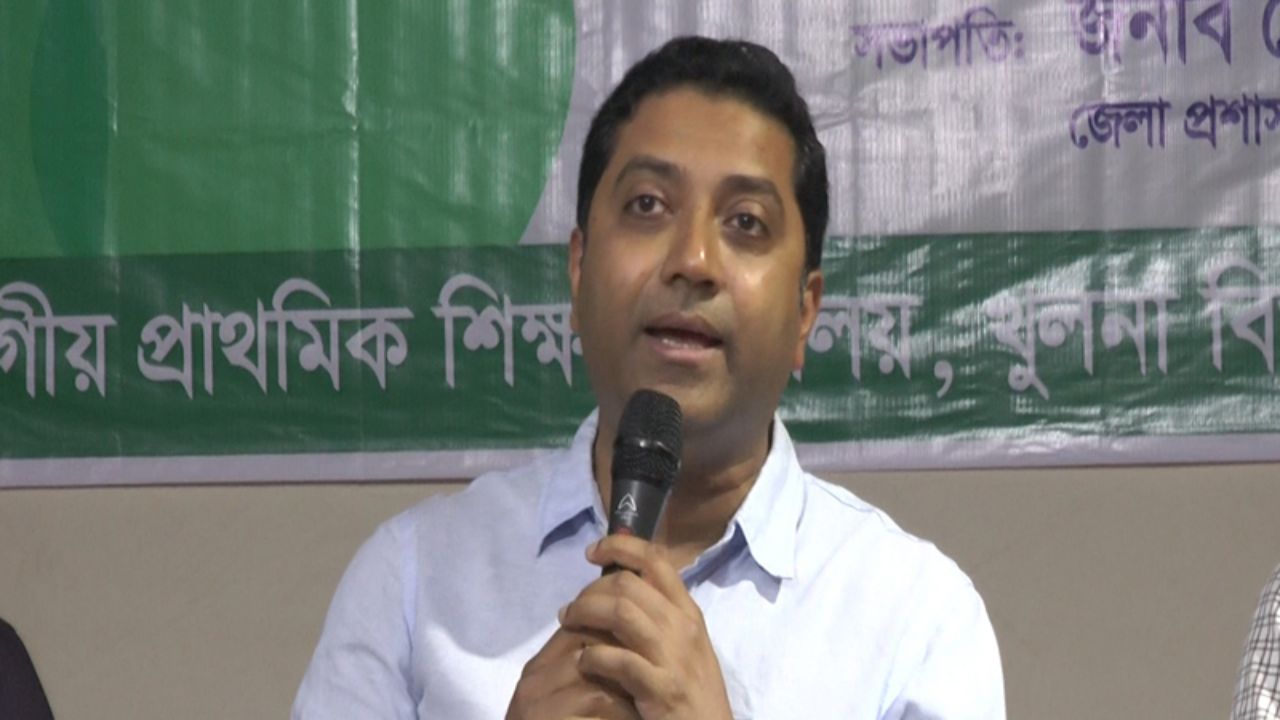
LGED Sadar Upazila Engineer Rishad Jaman acknowledged the farmers’ hardship, saying, “Service has been disrupted for three years due to the leaking rubber. We have initiated work through a tender process and hope farmers will benefit within two months.”
Once the largest rubber dam in the country, it now ranks second, but its significance to local farmers remains immense. Authorities warn that unless the dam is repaired quickly, achieving the Boro production targets this season could face serious setbacks.