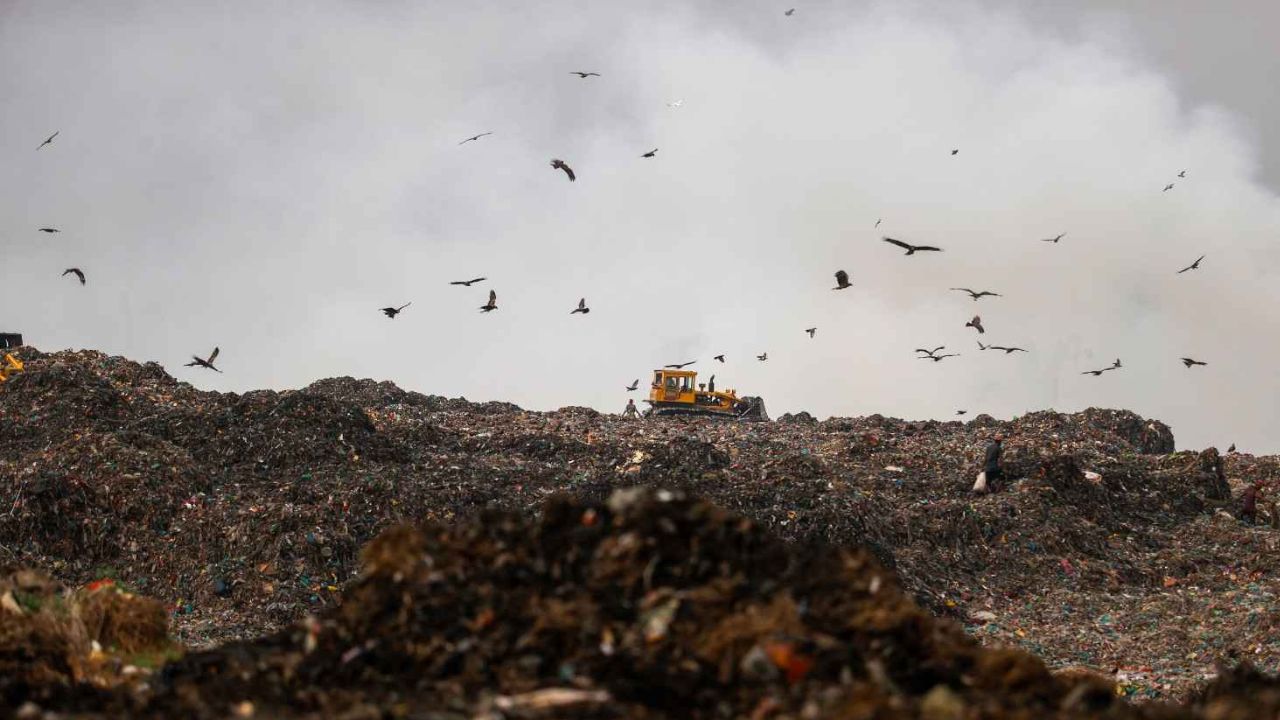

The smell arrives before the sight. Then come the towering heaps of waste, the drifting smoke, and the workers moving through the landfill. Among them is Momtaz Begum, searching for plastic and metal scraps under the unforgiving midday sun.
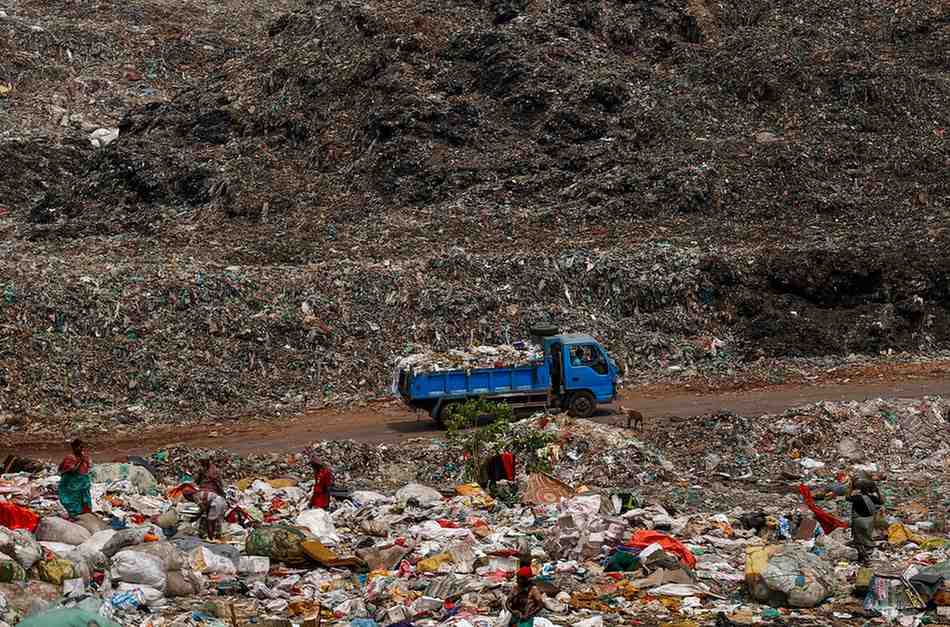
She was only 10 years old when she first started working here. Nearly two decades later, little has changed. “I come in the morning and leave in the evening,” she says. For her labour, she earns Tk 8,000 a month. Asked about health problems, she pauses before replying: “Sometimes I have difficulty breathing.”
Around 15 to 20 workers toil alongside her every day without gloves, protective shoes, masks, or any other safety equipment.

Dhaka South City Corporation, however, disputes such claims. Its Chief Waste Management Officer, M Mahaburur Rahman Talukdar, said city corporation employees do not work inside the landfill in this manner. “Those you saw are hired by surrounding business operators,” he said.
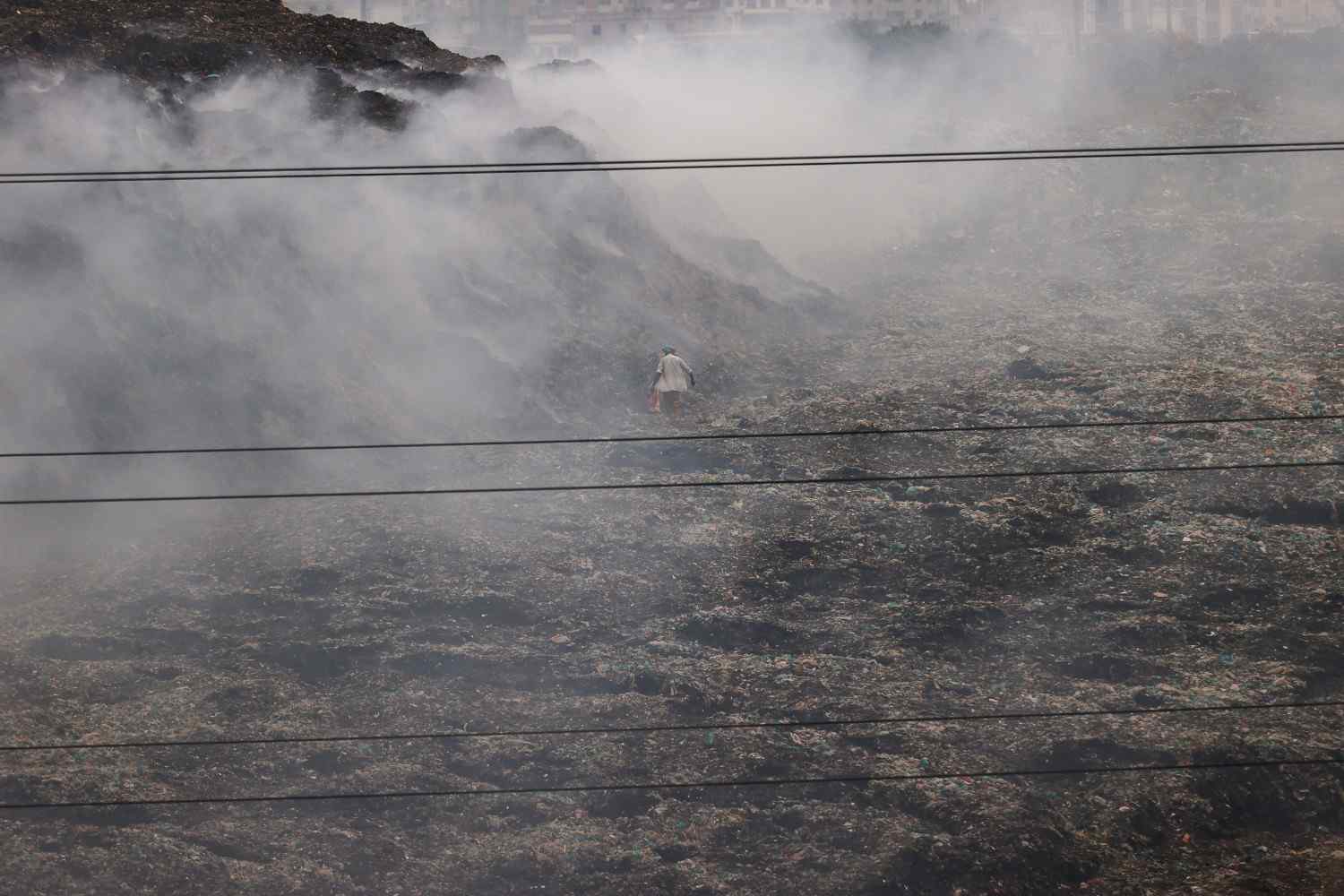
Around both the Matuail and Aminbazar landfills, homes, markets, and farmland sit uncomfortably close to the mountains of waste.




Children play in nearby fields while smoke from burning garbage drifts through the air. Along the blackened waters of the Kanyadara Canal, farmer Badal washes freshly harvested coriander leaves. “Crops used to grow well here,” he says. “Now the acidic water damages them very quickly.”
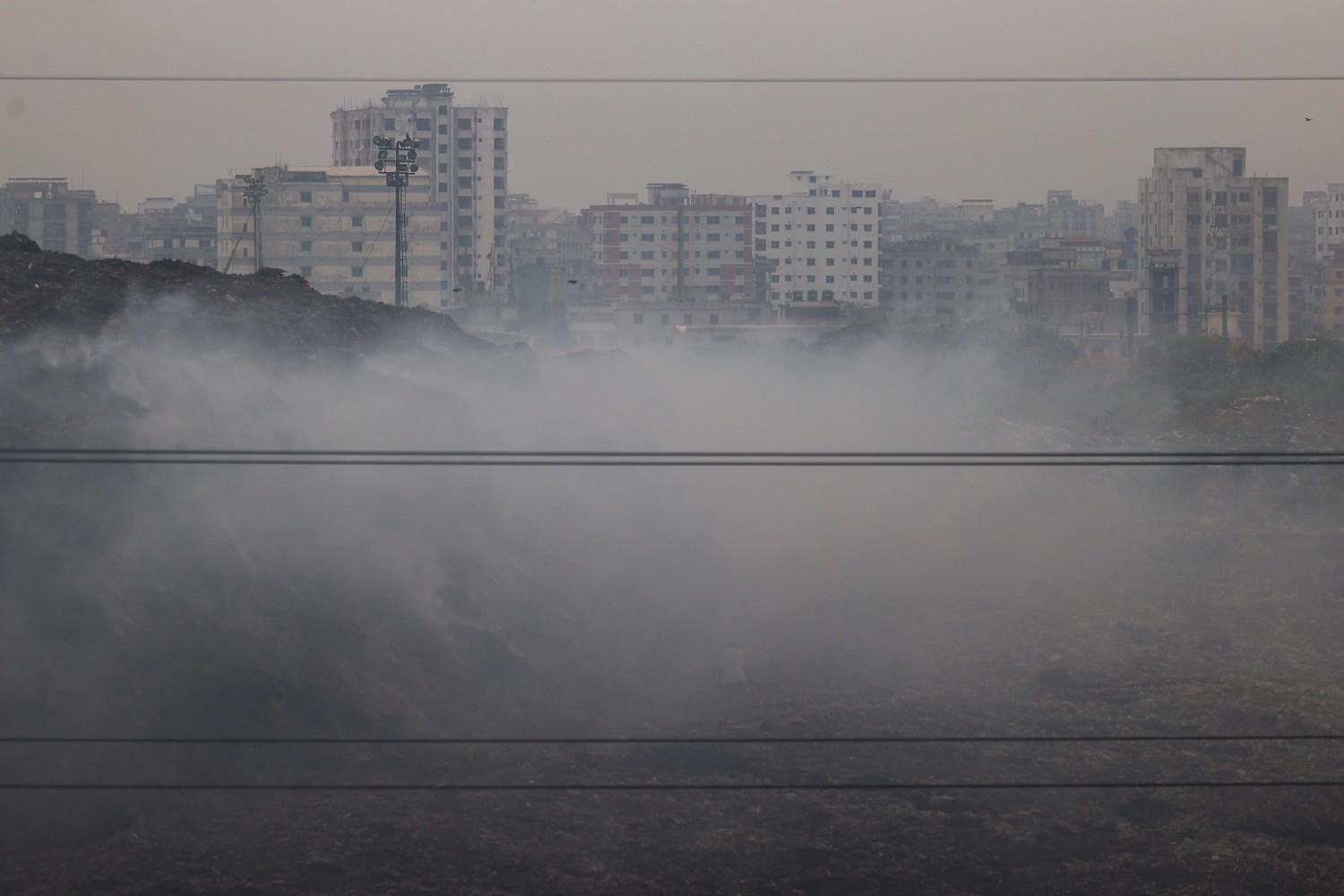
For residents, the impacts are impossible to ignore. “I have to live here because of my work,” says Manzur Islam of Manda Green Town. “But when the smoke rises, even closed windows cannot stop my children from struggling to breathe.”
According to climate and environmental expert Atique Rahman, the smoke contains far more than an unpleasant odour. It carries hazardous pollutants, including PM2.5, PM10, dioxins, and furans, substances linked to higher risks of cancer, cardiovascular disease, and chronic respiratory illness.
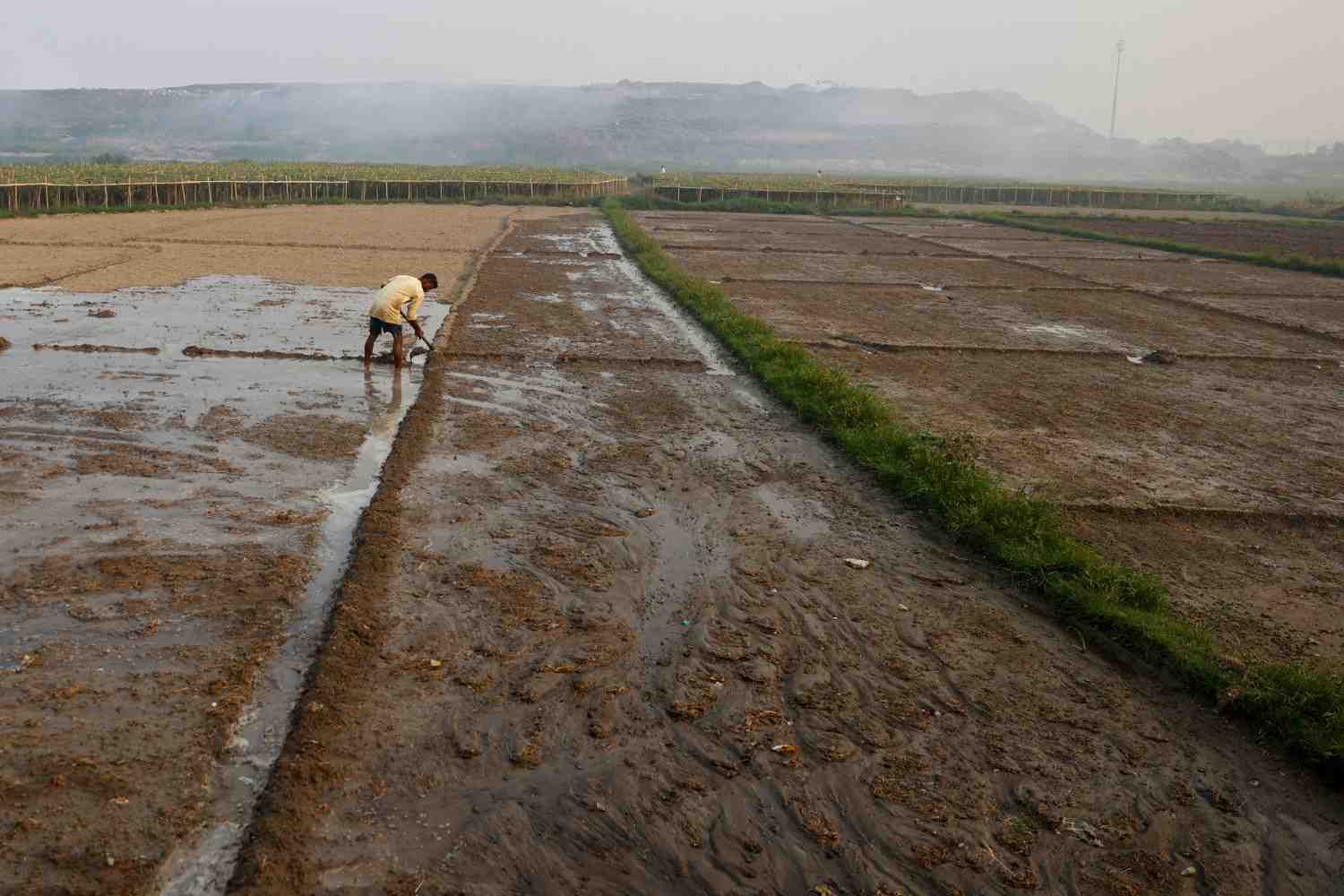
Every day, Dhaka’s two city corporations dump between 7,000 and 9,000 tonnes of waste at these open landfills. While the landfills help manage the capital’s daily waste, nearby communities pay the price through contaminated water, polluted air and persistent health hazards.
For thousands of people living in the shadow of Dhaka’s landfills, the city’s waste problem is not a distant environmental issue. It is a daily reality.