
In a city where every minute counts, escalators were meant to be a quiet relief. It’s a small investment to ease the struggles of daily life. Yet, in Dhaka, these promises of convenience have turned into unexpected obstacles. From hospitals to airports and busy intersections, the broken escalators of the city are now silently adding to the suffering of its residents.
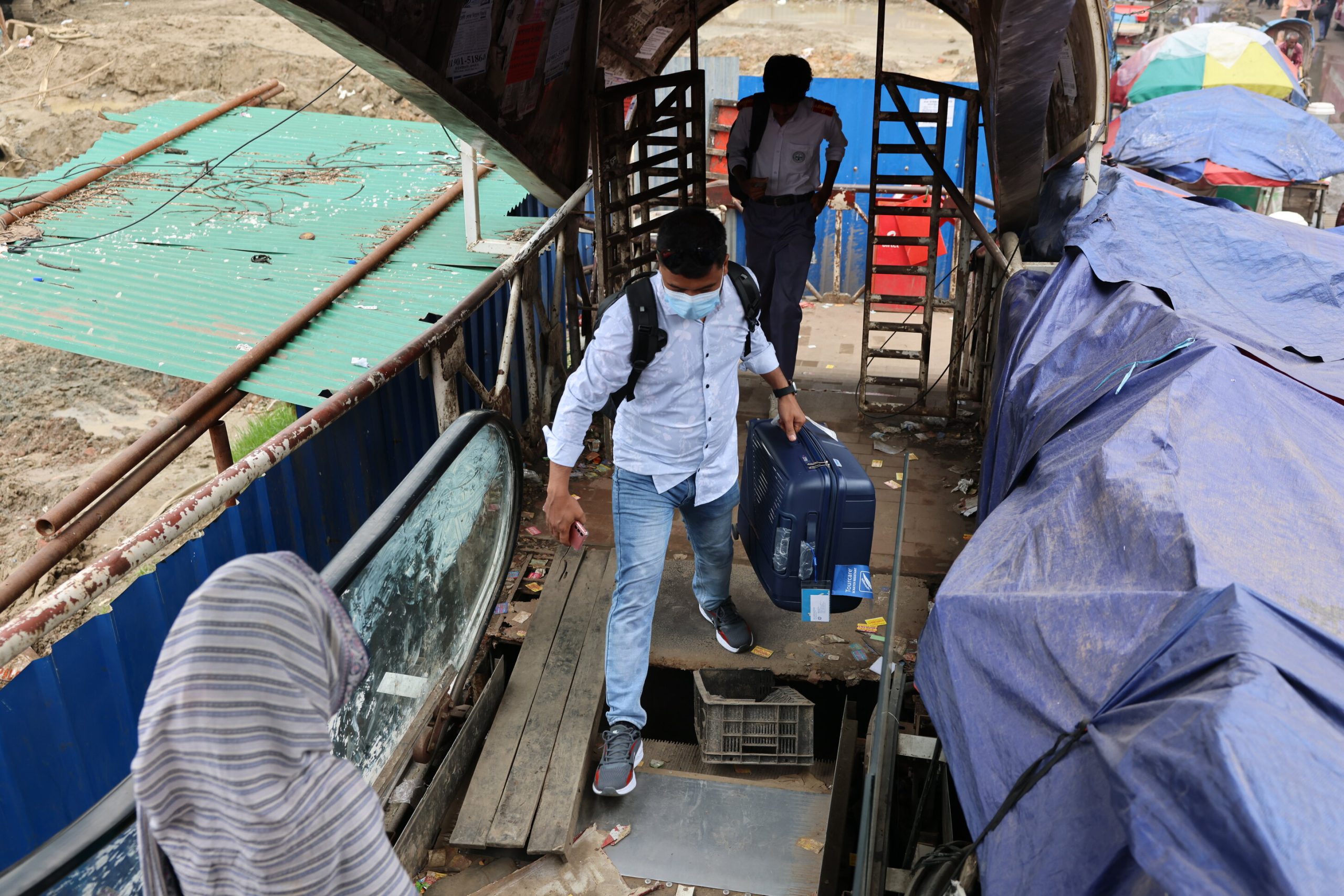
The scene at Hazrat Shahjalal International Airport is extremely alarming. Arrivals expecting a smooth return to their homeland are met with chaos. An escalator, once intended to ease the burden of heavy luggage, now lies dismantled. Parts have been stolen, leaving a gaping hole at the bottom.
Passengers are forced to cross over wooden planks, risking falls and injuries. The joy of returning home is overshadowed by anxiety and frustration, as travellers negotiate an unsafe, disorganised environment.

At Suhrawardi Medical College, one of the city’s most frequented hospitals, the escalator that was supposed to carry patients safely between floors has been out of order for months. Sick and injured patients now face the harsh reality of crossing a busy road just to enter the hospital, navigating traffic and dodging hurried rickshaws.
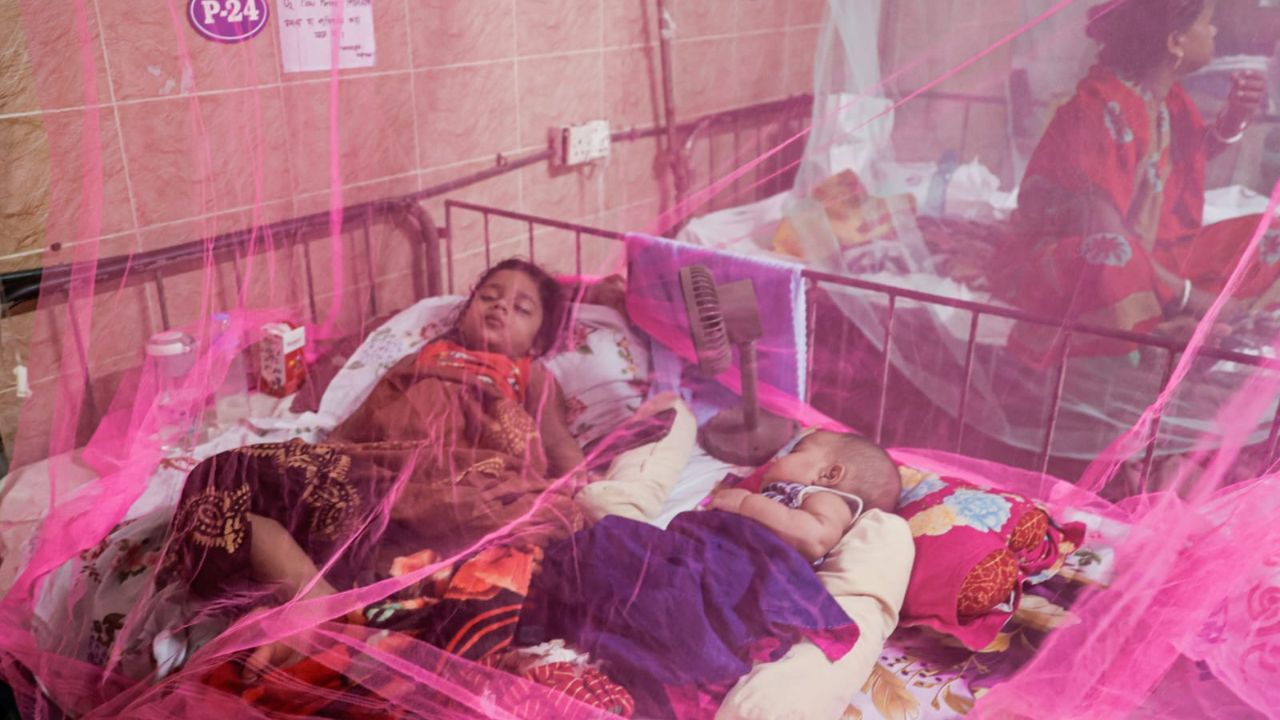


The footpaths, clogged with street vendors, offer no refuge. For the relatives, what should have been a simple visit has become an exhausting ordeal, adding stress to already tense situations.
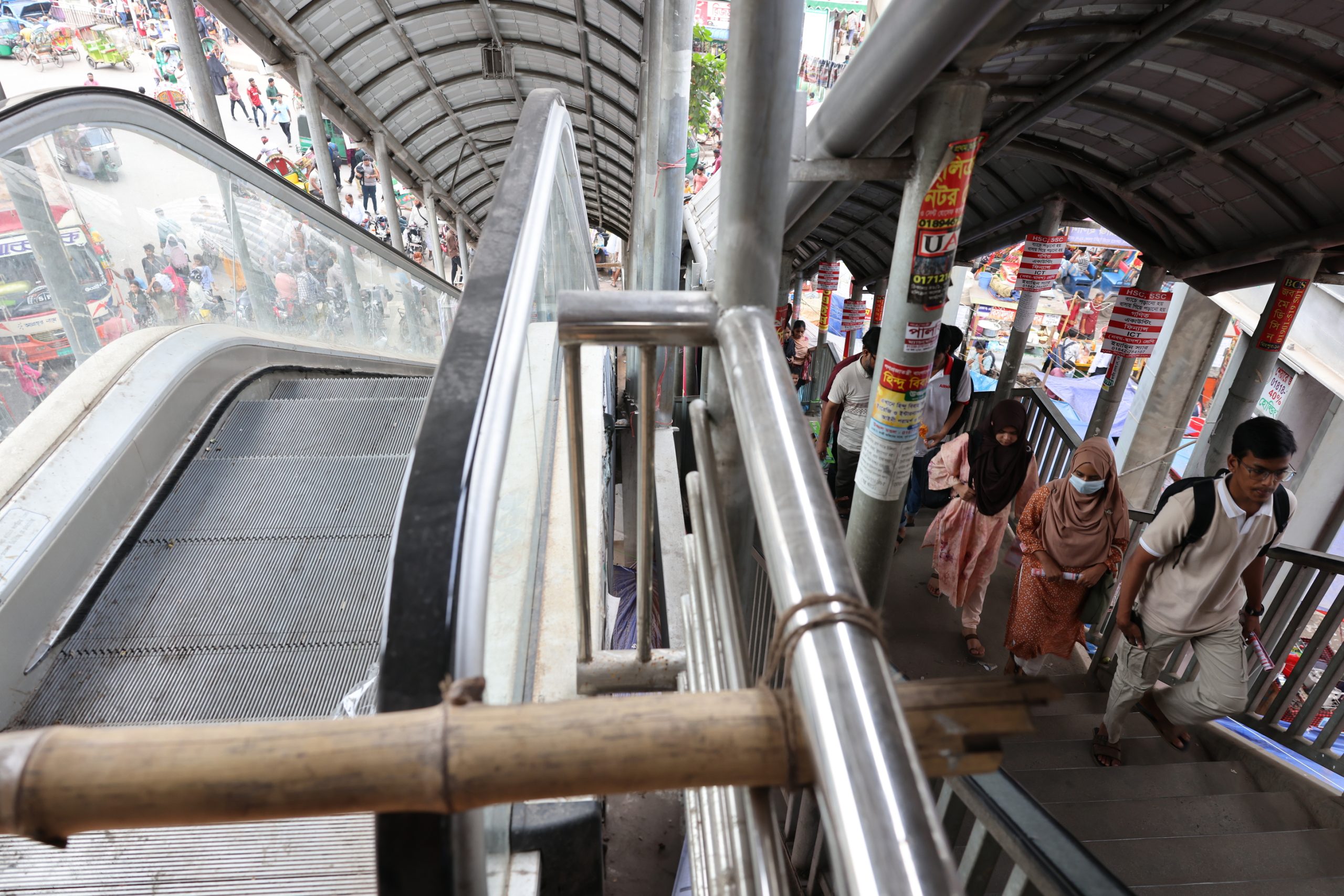
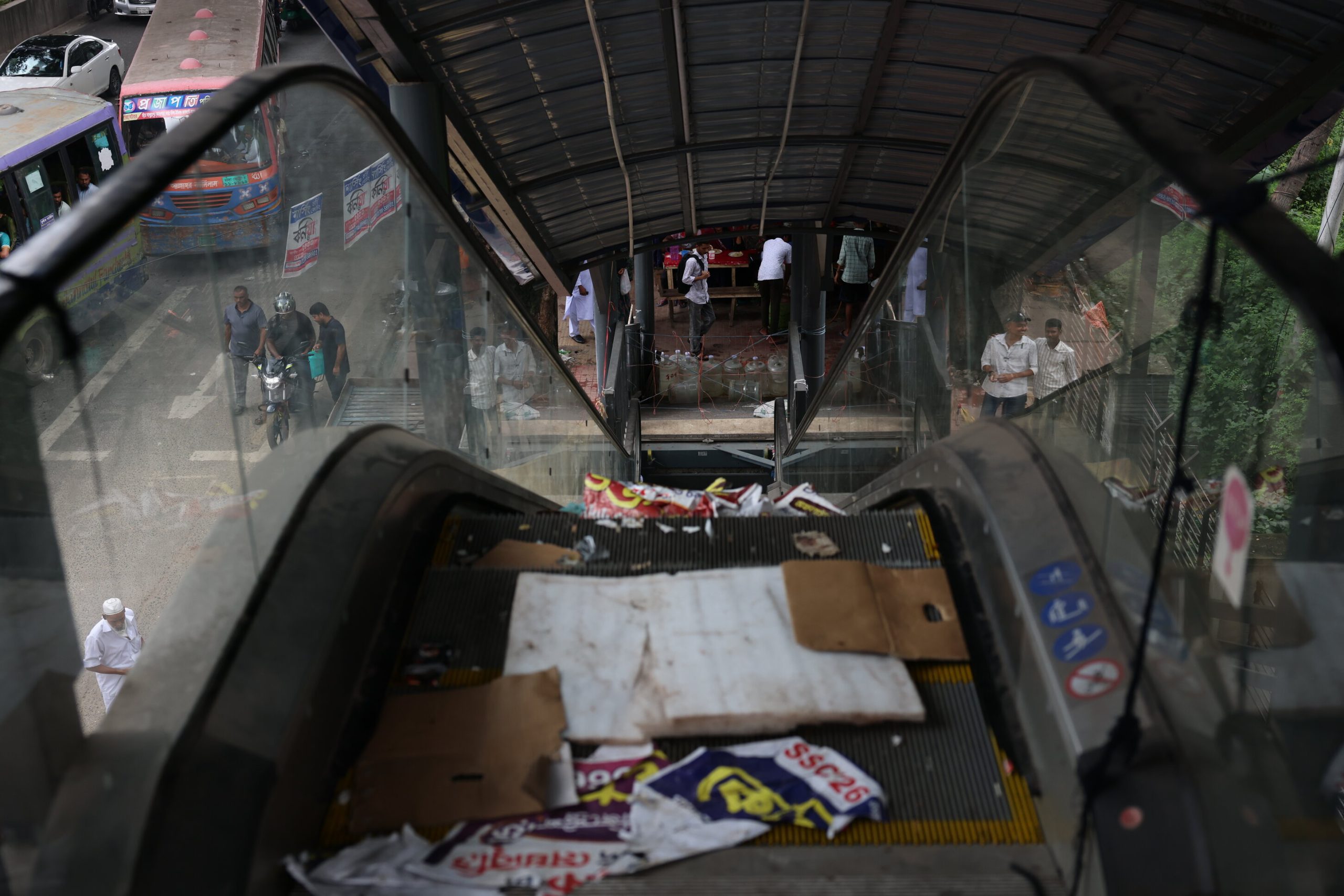
It is not just hospitals and airports. The escalators at Farmgate and Sainik Club, crucial nodes in Dhaka’s daily transit network, tell the same story. Parts are missing, machinery is rusting, and people suffer the consequences. What was meant to be a symbol of progress has instead become a daily hazard.
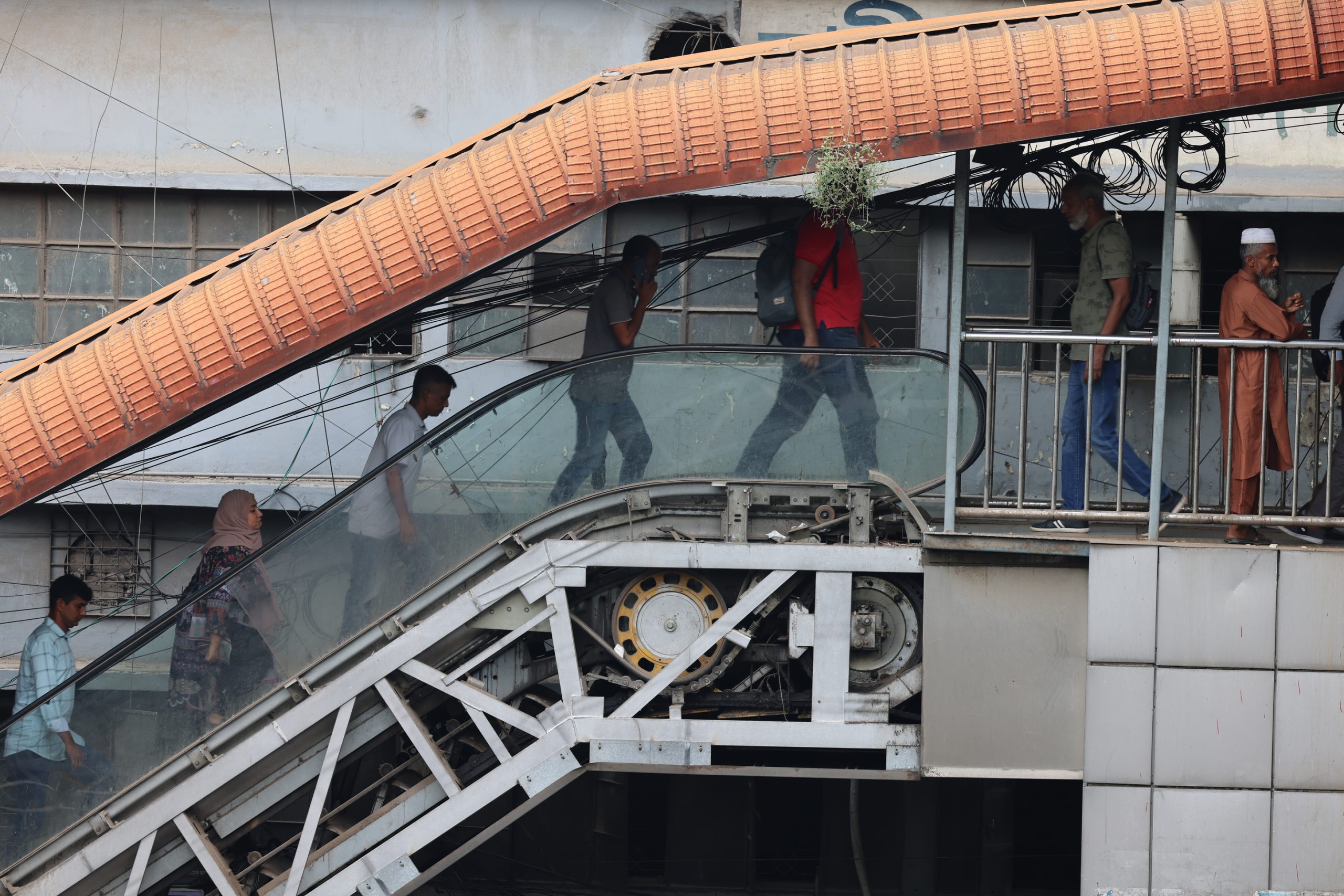
The government spent significant sums on these installations, yet maintenance has remained an afterthought. In a city already drowning in pollution and traffic snarls, these broken escalators are an insult. They’re a glaring, daily reminder of wasted resources and completely misplaced priorities.
Dhaka deserves better. Until someone steps up and takes real accountability for regular maintenance, these machines will continue to do more harm than good. It will turn a simple convenience into a frustrating, needless risk.