




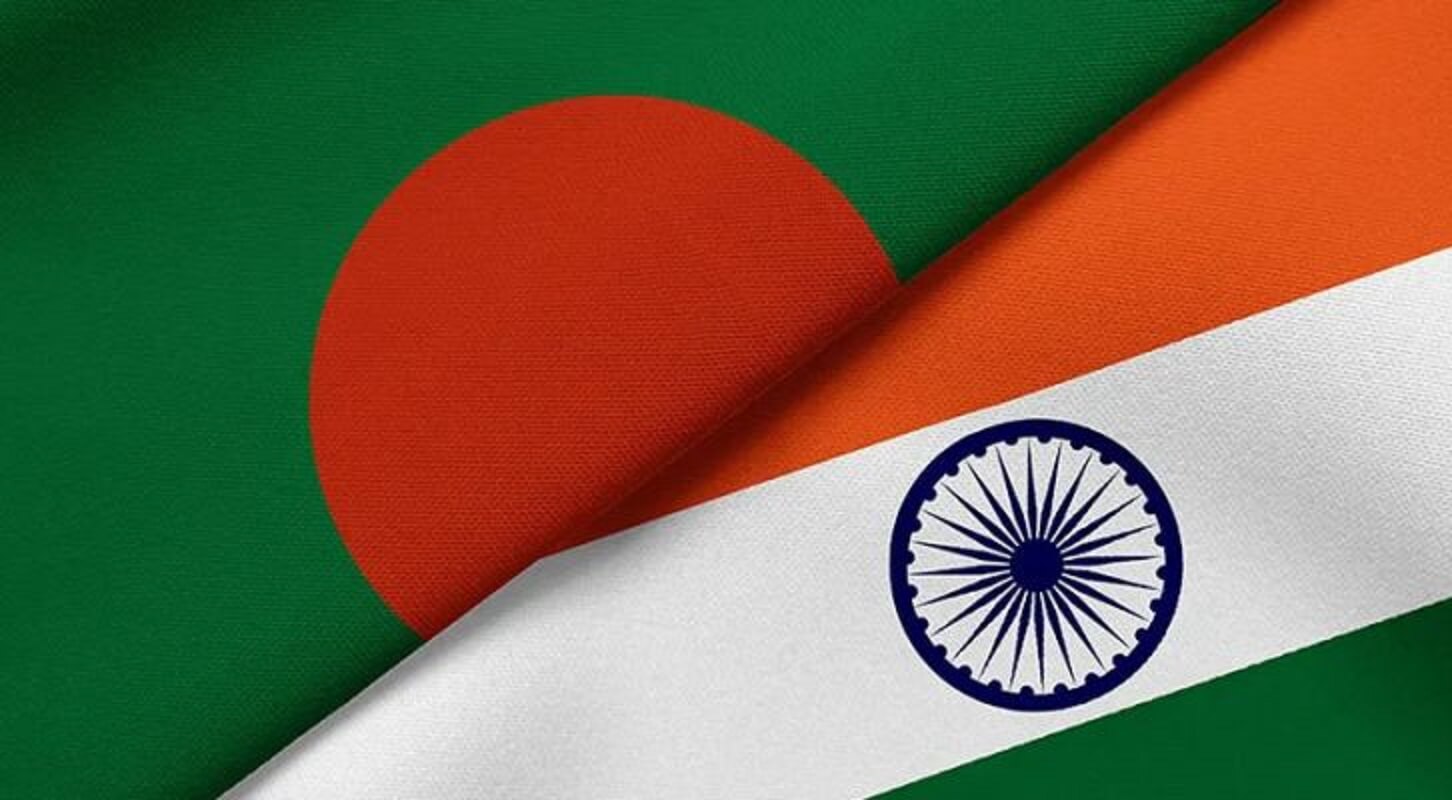
Bangladesh has stressed the need to create an “enabling environment” to advance relations with India, while New Delhi has called for high-level political engagement to address contentious issues through dialogue and put bilateral ties on a stronger footing.
The positions were expressed separately by Foreign Minister Md Khalilur Rahman and newly appointed Indian High Commissioner Dinesh Trivedi after the envoy called on Prime Minister Tarique Rahman on Monday.
The statements from both sides suggest that, despite continuing disagreements over the extradition of ousted prime minister Sheikh Hasina, political activities from Indian soil and other bilateral irritants, Dhaka and Delhi are seeking to keep diplomatic channels open and create space for higher-level political engagement.
After a busy day, the Indian envoy left for Delhi on Monday afternoon for consultations with senior political leaders and to seek directives on engagement with Dhaka.
Briefing journalists after the meeting, Khalilur Rahman said the discussions focused on creating conditions conducive to improving bilateral relations.
“Emphasis has been placed on creating the enabling environment needed to advance relations between the two countries,” he said, adding that the two sides also discussed the extradition of Hasina and the repatriation of those accused in Hadi’s murder.
“The issue of the extradition of convicted Sheikh Hasina to Bangladesh has come up, and we have told them to expedite this extradition process. We hope India will provide a positive response in this regard,” the foreign minister said.
Regarding the repatriation of those accused of killing Hadi, Khalilur said Bangladesh had provided India with all the documents requested by its authorities.
“We have given them all the documents that India asked for. This is a very sensitive matter for us, and we have asked them to bring these killers to us as soon as possible,” he said.
5 August event
The foreign minister was particularly critical of the 5 August event in New Delhi in which Hasina participated virtually and made political remarks about Bangladesh and its current government.
Dhaka had strongly protested the event, arguing that allowing the convicted former prime minister to participate from Indian soil was detrimental to bilateral relations.
The issue was also discussed when High Commissioner Trivedi met the foreign minister on Sunday.
“Yesterday, I had a conversation with him [the Indian envoy], and he said that he understood the issue and the perspective from which we had presented it in our press statement,” Khalilur said.
“We have clearly stated our position regarding 5 August, and the Indian authorities have taken it seriously,” he added, expressing hope that the incident would not be repeated.
“I think after talking to them, they have understood, and we hope that they will not do anything to undermine any pillar of our state. This is our expectation, and I am somewhat confident from what I have discussed with them that this incident will not be repeated.”
Two invitations from India
Khalilur also clarified that India had extended two separate invitations to Prime Minister Tarique Rahman — one for a bilateral visit and another to attend the Brics Summit in his capacity as chair of Bimstec.
Indian Prime Minister Narendra Modi had invited Tarique Rahman for a bilateral visit, although no date was specified.
“We are yet to take any decision about the visit to India,” Khalilur said.
Trivedi, meanwhile, said Prime Minister Modi was looking forward to receiving his Bangladeshi counterpart.
Speaking to reporters after meeting the Bangladesh prime minister and Home Minister Salahuddin Ahmed, Trivedi expressed optimism that direct engagement between the two leaders could help address outstanding differences.
“I have mentioned before that the people of India and the Prime Minister of India are looking forward [to the visit], and we are positive that if the two leaders sit together, there will be issues. If there are no issues, it is not a democracy,” he said.
Dialogue to address differences
Trivedi said differences between democratic countries were natural and should be addressed through dialogue rather than allowed to undermine broader relations.
“There are issues at home too. When I go home, there are issues at home too. There is no issue that we cannot solve. I can say this with confidence — there is no issue that we cannot sit down and solve,” he said.
The envoy stressed that Bangladesh and India are both vibrant democracies and that stronger bilateral relations would serve the interests of both countries.
“It’s a win-win situation between the two countries. Both countries want it, the people, the common people, want it. The common people of India, the common people of Bangladesh want the same thing — that relations should be good. It’s natural,” he said.


