





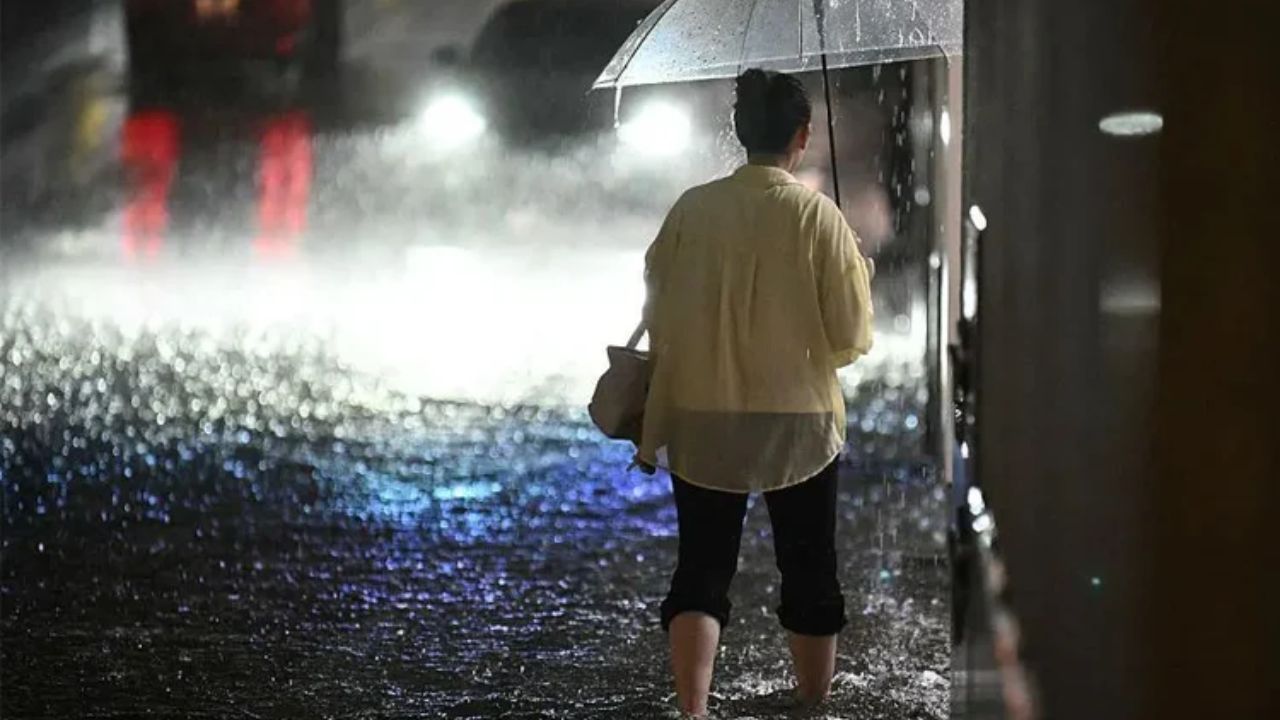
At least eight people have lost their lives following unprecedented, record-breaking rainfall that has battered eastern Japan, causing widespread disruption and leaving thousands of passengers stranded at Tokyo’s Narita Airport.
The torrential downpours cut power supply to over 20,000 households in Chiba prefecture, prompting local authorities to issue their highest Level 5 emergency alert on Thursday.
Although the warning was downgraded to Level 4 by Friday morning, residents have been warned to remain vigilant against ongoing risks of landslides and flooding.
According to Japan’s Meteorological Agency, the extreme weather was triggered by warm, humid air streaming into eastern Japan and mixing with cold air in the upper atmosphere, creating highly unstable conditions.
The meteorological body, which previously characterised the downpour as an “unprecedented level of heavy rain,” expects the wet weather to persist until late on Friday.
Chiba prefecture, situated adjacent to Tokyo, recorded over 100 millimetres of rain per hour from Thursday afternoon – representing approximately three times the average precipitation for the month of August. This is the highest volume of rainfall ever registered in Japan’s history.
“This case was an extremely unusual situation, even by Japan’s historical weather standards,” Chiba Governor Toshihito Kumagai told BBC on Friday morning.
He said while he has managed numerous disasters during his career, he had never witnessed an event of this nature. The Governor emphasised that rescue teams would persist with operations, prioritising the preservation of human lives.
The death toll of at least eight was confirmed by reports from public broadcaster NHK, the Kyodo news agency, and the Asahi newspaper.
Local authorities reported that the casualties included a woman who was trapped and died inside her submerged vehicle on a flooded road, while two other individuals collapsed on the streets and subsequently died.
The deluge caused massive transport disruption across the region, with several railway services remaining suspended on Friday morning and major highways closed. More than 100,000 households were advised to evacuate on Thursday due to power blackouts and landslides triggered by the rain.
While thousands were left stranded at metro stations, approximately 1,800 people sought shelter overnight at the Chiba Prefectural Government building.
Speaking to NHK, a business owner in Chiba’s Ichikawa city described the sudden onset of the storm as a complete surprise. “The power is out, so I’m worried whether I can open my business in the next couple of days,” she said.
At Tokyo’s Narita Airport, a spokesperson said all flights were scheduled to run normally on Friday, although flag carrier Japan Airlines cautioned that some of its services might experience delays, but no cancellations were expected.
The disaster follows a series of active tropical systems in the region. Earlier in the week, Japan, China, and the Philippines were battered by three consecutive storms – Dolphin, Chan-Hom, and Peilou – which moved through the region simultaneously.
Typhoon Dolphin, the strongest storm to strike China this year, led to the evacuation of more than a million people after making landfall in the country’s east over the weekend.
In Japan, the same storm had previously lashed Okinawa island, uprooting trees, causing major power outages to tens of thousands of properties, and forcing flight cancellations.
Meanwhile, authorities in the Philippines have again ordered the closure of schools and government offices across most of the northern part of the country in anticipation of flooding.


