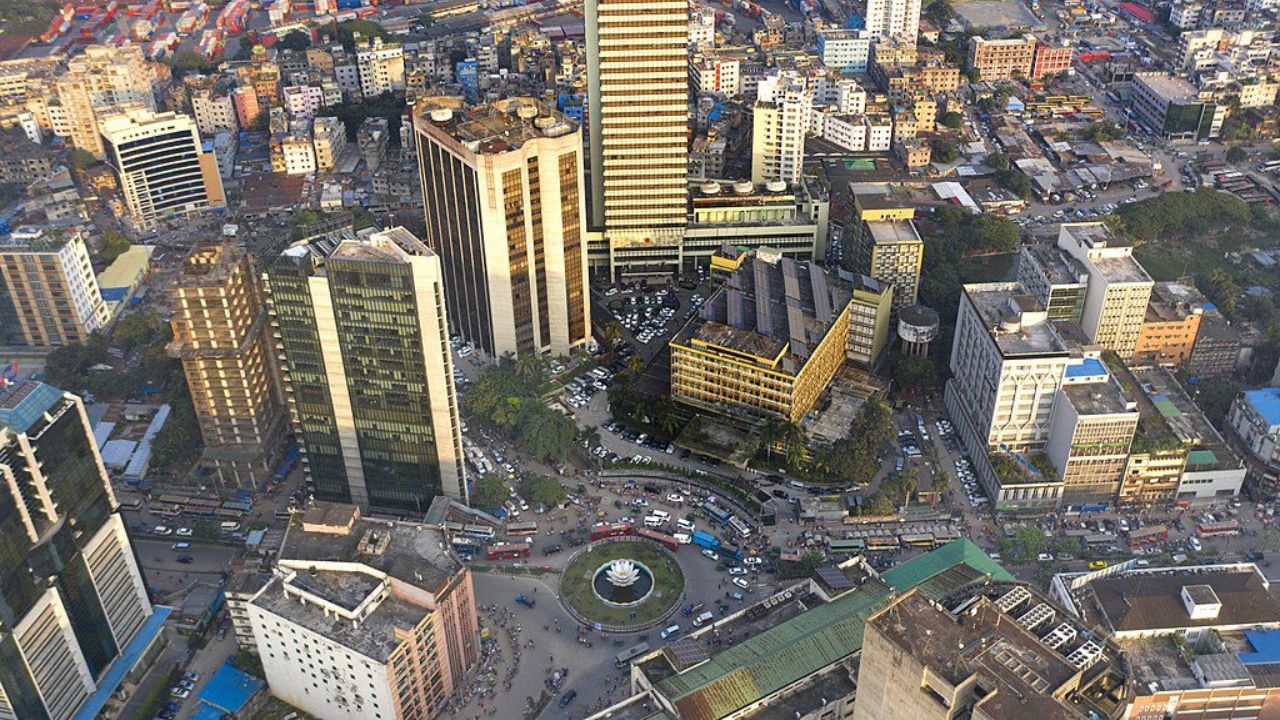



The mass exodus of millions from Dhaka during the Eid-ul-Fitr holidays highlights a poignant truth: for the nearly 20 million residents tethered to the capital, leaving is not just a tradition but a desperate pursuit of relief.
Behind the festive rush lies a city that has become synonymous with suffering, where unplanned urbanisation and a lack of basic amenities have turned daily existence into a relentless struggle.
A crisis of planning and centralisation
Experts argue that the city’s decay is the inevitable result of a monocentric development model.
Speaking to TIMES of Bangladesh, urban planner Adil Muhammad Khan noted that the immense pressure on the capital is not merely a lifestyle issue but the fruit of long-term unplanned urbanisation and centralised development.
“Because almost everything – from employment and education to healthcare – is Dhaka-centric, people are forced to come here, yet the infrastructure was never built to carry such a load,” he explained.
This lack of green spaces, parks, playing fields, and effective public transport is fostering social isolation and permanent mental fatigue. In a habitable city, walking paths and quiet environments are essential, yet their absence in Dhaka is a common grievance for almost every resident.
‘Battle’ of the streets
For Dhaka’s residents, the start of each day is “preparation for a new battle”. Upon entering the streets, the heavy sight of traffic congestion is accompanied by an invisible panic of falling behind both time and the city.

This pressure eventually manifests in the body, behaviour, relationships, and even thought patterns.
Commuters like Tanzil Haq, who travel from Mirpur to Motijheel, report physical symptoms of anxiety, such as heart palpitations, before their workday even begins.
Noorjahan, another office-goer, highlighted the extreme unpredictability of travel times – which can swing from 30 minutes to 1.5 hours – and lamented that employees are often unfairly blamed for these delays.
For long-term residents like Jomir Ali, who has lived in the capital for 30 years, the commute now causes body aches and dizziness. “It feels like life is ending on the streets,” he remarked.




For those whose livelihoods depend on the road, the strain is constant. Md. Sadik, a ride-sharing biker, described the “intense pressure” of navigating traffic while facing “trouble from the police,” noting that a full day on the road leaves him short-tempered.
Ibrahim Islam, a CNG auto-rickshaw driver, expressed a similar weariness after 15 years of witnessing unresolved gridlock.
Multidimensional toll on health
The cost of this “concrete grind” is increasingly measured in clinical terms. Dr Abdul Hamid, a psychiatrist, told TIMES that the stress in Dhaka is multifaceted, involving personal, social, environmental, and even weather-related triggers.
“Housing worries, financial pressure, job anxiety, future concerns, and loneliness are exhausting people from within,” he said. He further explained that long periods stuck in traffic spike cortisol levels, increasing risks of anger, insomnia, and hypertension.
Physically, the city is breaking its youth. Jahin Ahmed, a university student, suffered a heart attack and developed high blood pressure – conditions he attributes to a sedentary, high-stress lifestyle and poor eating habits.
Cardiologist Dr Md Mujibur Rahman confirmed that an increasing number of young patients are presenting with such issues due to irregular sleep, lack of physical exertion, and the stress of city life.
Another student, Munia Ahmed, reported stress-induced weight gain and a total loss of motivation. Professor Ayesha Mahmuda of the Department of Psychology at the University of Dhaka warned that such chronic emotional isolation can push individuals towards “burnout” or clinical depression.
Stigma and the Silent Crisis The statistics are alarming: 90% of patients seeking treatment at the National Institute of Mental Health and Hospital are of working age.
However, Naima Nigar, Assistant Professor at the Department of Psychology, University of Dhaka, warned that the true scale of the crisis is hidden by social stigma. Many avoid seeking help for fear of being labelled “weak” or “mad.”
Even the pursuit of healthcare is an ordeal. Rasheda Begum, a resident of Mohammadpur, described how navigating hospitals for two days for her husband left them both feeling physically ill.
Environmental Health and the Loss of “Shonkhya” Dhaka’s status as one of the world’s most polluted cities adds a layer of toxicity to the grind. Beyond air pollution, the incessant noise – honking, construction, and shouting – means the city is never silent.
Maqsuda Jahan, a homemaker in Motijheel, described how honking penetrates closed windows, causing her hypertensive father to jump in distress. Dr Abdul Hamid noted that such noise keeps the nervous system in a constant state of “alert.”
With a lack of parks, leisure activities have dwindled to restaurants, shopping malls, and mobile screens. For residents like Zakir Islam, a caretaker who finds the city “very grave” compared to the open conversations and comfort of his village, the city is a place of pain.
Shamsu Mia, a small businessman, echoes this sentiment, stating he only stays for trade and spends the year yearning for the reprieve of home.
Environmentalist Atiq Rahman categorised the situation as a “health crisis,” noting that rising temperatures and population density are putting constant pressure on the human nervous system.
He stressed that decentralised urban development and “green infrastructure” are no longer just environmental goals but urgent public health necessities.