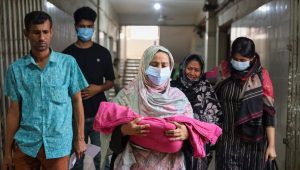



Mabia Khatun Lucky, a resident of Savar, died of dengue. Her son, Labiuzzaman, remains hospitalised, fighting the same disease. In front of their three-storey house lay a waterlogged vacant plot which had long bred a massive infestation of mosquitoes.
Lucky’s tragic death highlights a much wider and growing crisis. As dengue infections surge, healthcare facilities across Bangladesh are buckling under the pressure.
Anwarul Quader Nazim, the chief executive officer of Enam Medical College Hospital, described a dire situation to TIMES of Bangladesh, “Patients are rising at a rapid pace—on some days, we are receiving 30 to 40 new admissions.
“The situation is deteriorating to a point where providing beds to patients according to their needs has become difficult.”
An outdated arsenal
Despite repeated warnings from the Health Minister himself that dengue could take a horrific turn this season, there is little evidence of any extra effort being directed towards Aedes mosquitoes, the carriers of the disease.
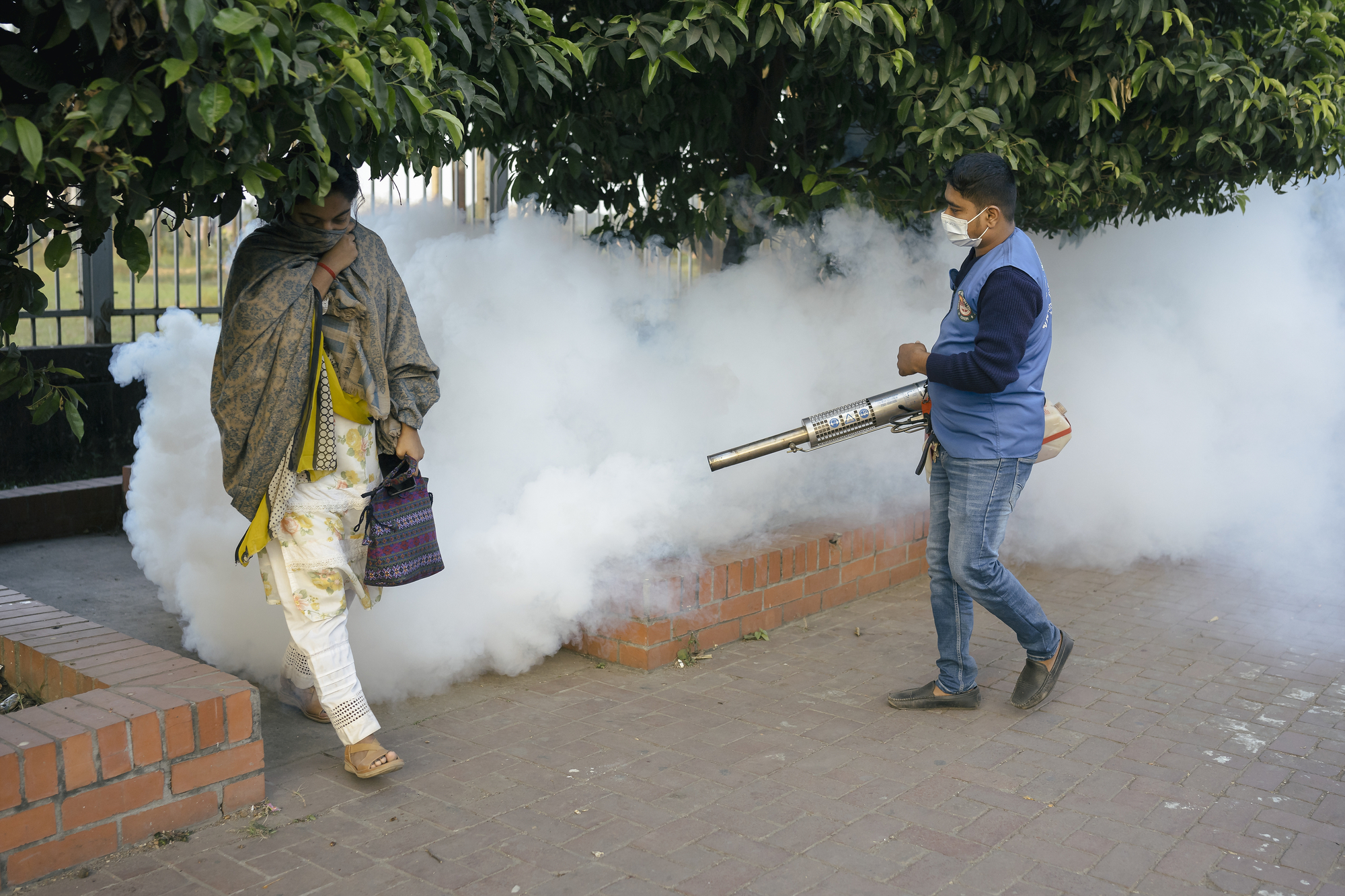
Instead, authorities continue to rely heavily on “fogging” – a chemical-spraying method that has failed to deliver results for decades.
While the rest of the world is evolving its mosquito control strategies and finding success through innovative techniques, Bangladesh remains largely blind to these developments.

The contrast with other nations is stark. Mashudul Awal Sharfee, a native of Kishoreganj who currently resides in Germany, shared his astonishment at how things are managed abroad. “We have mosquitoes here too, but they do not bite,” he noted.
When asked how this is achieved, he admitted, “I was also surprised. I don’t really know.”
According to the World Health Organisation (WHO), mosquitoes are responsible for more than 700,000 deaths globally every year. In Bangladesh, the toll is felt in hundreds of lives cut short annually.
To counter this global threat, countries are constantly experimenting with new scientific solutions. Singapore, for instance, has deployed Wolbachia technology to suppress Aedes mosquito populations and curb dengue transmission.



Elsewhere, including in Germany, experimental programmes are utilising the Sterile Insect Technique (SIT), biological larvicides, and rigorous, systematic surveillance.
A grim toll
In Bangladesh, however, mosquito control continues to be defined by a repetitive cycle of fogging, larviciding, and manual destruction of breeding sites, with very little room for research or modern thinking. The catastrophic toll of recent years underscores the failure of this approach.
The data paints a devastating picture of the epidemic:
- In 2023, dengue infections reached an unprecedented peak, infecting more than 321,000 people and killing 1,705.
- In 2024, over 101,000 infections and 575 deaths were recorded.
- In 2025, the epidemic persisted with over 100,000 cases and 413 deaths.
- This year, even before the monsoon has fully passed, infections have already crossed the 25,000 mark.
“We must look at modern technology for mosquito control,” urged Professor Golam Mostafa of Jahangirnagar University’s Department of Entomology.
“Globally, countries are employing methods like the Sterile Insect Technique to suppress mosquito reproduction. However, before we implement such technologies in Bangladesh, we must rigorously test their effectiveness under our local conditions.”
Professor Mostafa emphasised that merely targeting adult mosquitoes through fogging cannot control dengue. He called for regular surveillance of mosquito larvae, their breeding habitats, and the chemical resistance of the insecticides currently in use.
Crucially, Bangladesh conducts very little scientific testing to see if mosquitoes have developed resistance to the chemicals being sprayed. “Simply spraying chemicals repeatedly without scientific evaluation will not yield the desired results,” he warned.
The official stand
The Dhaka North City Corporation insists that introducing new technologies is on their agenda, but argues that not all global methods are directly applicable to the local context.
Md Asif Iqbal, the Corporation’s Senior Pest Control Officer, told the Times that they maintain regular communication with Jahangirnagar University’s research team to guide their operations.
Addressing the criticism surrounding fogging, Iqbal said, “In accordance with researchers’ advice, we are gradually reducing unnecessary fogging. We are carefully scheduling these activities, particularly in high-risk public spaces where people might be exposed to the spray. “Fogging is now carried out during off-peak hours at schools, madrasas, and temples when crowds are thin.”
However, Iqbal expressed strong reservations about the immediate introduction of advanced biological technologies like Wolbachia or SIT. “These technologies take a long time to show results,” he explained.
“During the period required for these methods to become effective, we cannot simply suspend our existing mosquito control operations. If we do, the situation could spiral into an even worse disaster. Moreover, these technologies are highly expensive, and their efficacy in Bangladesh’s unique environment and reality remains unproven.”
The path forward
Despite these reservations, the City Corporation has not completely shut the door on innovation.
Iqbal revealed that they have conducted trials on Bacillus thuringiensis israelensis (Bti), a biological larvicide, with promising results. The corporation is considering importing Bti for future larval control if the situation demands.
Ultimately, global experience demonstrates that successful mosquito control cannot rely on a single silver bullet. It requires an integrated, multi-pronged approach.
Singapore relies on continuous surveillance alongside rigorous breeding site management, while Germany’s programmes combine SIT with larval habitat destruction and biological controls.
The lesson for Bangladesh is clear – the focus of modern mosquito control must shift from merely trying to kill adult insects to actively disrupting their birth, reproduction, and disease-carrying capabilities.