Sixty-seven people died on this road between January and April. One hundred thirty-four died in 2025. Fatal accidents are recorded almost daily.
The same road carries salt from coastal farms, steel for the Matarbari power plant, containers for Bangladesh’s first deep-sea port, and three million tourists a year.
Economic models project this Chattogram-Cox’s Bazar corridor could add $150 billion to national GDP by 2050.
Those models assume the road moves. It does not.
A deadly geography
Thirty-five thousand vehicles pour daily into a 151-kilometer stretch of Chattogram-Cox’s Bazar Highway built for just 15,000.
The result is a grueling five-hour bottleneck for a journey that should take two.
On this road, truck operators measure delays in hours, bus drivers navigate markets encroaching onto the asphalt, and leaking salt trucks leave behind a dangerously slick glaze. Without a median barrier, head-on collisions are a constant threat.
Every accident carries a dual toll economic stagnation and human tragedy. An accident at Keranihat halts freight bound for the Matarbari Deep Sea Port, a collision at Chakaria stranding tourists heading to Cox’s Bazar, and a wreck on the Patiya-Dohazari curve paralyses containers bound for the regional energy hub.
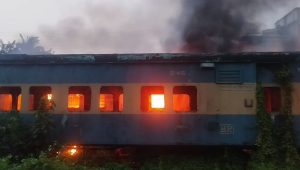
But the truest cost of this infrastructure deficit is measured in blood. Sections from Patiya to Dohazari and Chunati to Chakaria are notorious for lethal curves and blind spots. According to highway police, fatal accidents are now a daily occurrence.

Data from the Bangladesh Jatri Kalyan Samity reveals that the highway claimed 134 lives across 106 accidents in 2025, with another 67 people killed in 58 crashes between January and April 2026 alone.
The organisation’s Secretary General, Mozammel Hoque Chowdhury, notes that while these figures are likely underreported, they still reflect a fatality rate more than double the national average.
The carnage stems from a deadly failure to adapt.
Salauddin Chowdhury, Officer-in-Charge of the Dohazari Highway Police Station, explains the psychological trap for motorists Drivers coming off the four-lane Dhaka-Chattogram highway are accustomed to speed and space. When they hit this narrow two-lane bottleneck, they fail to adjust.
Local logistics compound the hazard. Mohammad Musa of the Arakan Road Transport Workers Association points out that brine-leaking salt trucks turn the tarmac into ice, while a lack of designated bus bays forces drivers to load and unload passengers directly on the highway.
Compounding this, transport experts note that most accidents strike in the early morning hours, fueled by driver fatigue from grueling shifts.




Even the new railway alternative, inaugurated on November 1, 2023, has done little to relieve the pressure. Road transport remains the undisputed lifeline for local travel, last-mile connectivity, and heavy freight.
A road collapsing under its own weight
Originally built for 12,000 to 15,000 vehicles daily, the highway now buckles under more than double its intended capacity. The gridlock is driven by a perfect storm of demographic pressures a permanent Cox’s Bazar population of 2.8 million, over one million displaced Rohingya refugees, and an annual influx of three million domestic tourists.
The math simply doesn’t work anymore, says Kabir Sohail, a tourism entrepreneur who commutes weekly. It takes over five hours to crawl just 151 kilometers. To put that in perspective, I can drive the 300 kilometers from Dhaka to Chattogram in the exact same time. We are throwing away half our productivity just sitting in traffic.
The economic fallout is compounding. Every hour a truck carrying Cox’s Bazar salt or industrial equipment for the Matarbari power plant sits idle, the cost of doing business in Bangladesh climbs. Yet, while the Roads and Highways Department (RHD) acknowledges the systemic failure, the transition to a modern multi-lane highway remains stalled in bureaucracy.
Historic route, modern gridlock
Historically known as the Arakan Road, this corridor has served as a strategic trade and military lifeline since the medieval Arakanese Kingdom.
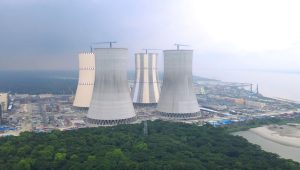
Its strategic importance peaked during World War II as a vital supply line for Allied forces. Now, it connects the Karnaphuli Tunnel and the Moheshkhali-Matarbari energy hub to the rest of the nation.
Yet, this South-East Economic Gateway remains physically trapped in the past. While Bangladesh celebrates the 1,200 MW Matarbari power plant and massive LNG infrastructure, the road feeding these modern marvels is choked by at least ten major marketplaces operating with near-total disregard for traffic flow.
According to transport operators, workers, and Highway Police records, severe gridlock paralyses the route almost immediately after crossing the Karnaphuli Bridge.
The bottleneck tightens at key points, including Shantirhat, Rowshon Hat, Kamal Munshir Hat, Dohazari Bazar, Keranihat, Padua Tewari Hat, Amirabad, Chakaria, Eidgaon, and Jhilangja.
In Lohagara and Patiya, the highway effectively ceases to be a thoroughfare, morphing instead into a chaotic village bazaar.
The markets sit directly on the asphalt, says Nazmul Mostafa Amin, a local leader who has organized protests for road safety.
Hawkers and vendors set up stalls right on the road, often with the tacit approval of local influencers and police who collect masohara (extortion fees). We are sacrificing national economic momentum for local petty corruption.
JICA intervention A race against time
Recognising that the current gridlock is no longer sustainable, the Roads and Highways Department (RHD) has accelerated infrastructure projects backed by a Tk 8,556 crore funding agreement with the Japan International Cooperation Agency (JICA).
The immediate strategy focuses on surgical strikes to debottleneck the route. Initial work has begun to widen key sections by six feet and extend existing roadways to four lanes along 800-metre stretches, targeting the heavily congested areas of Jangalia, Chunati, and Lohagara.
Concurrently, authorities have launched the Chattogram-Cox’s Bazar Highway Improvement Project. This phase will construct four strategic bypasses around Patiya, Dohazari, Lohagara, and Chakaria, alongside a 3.5-kilometer flyover at Keranihat—one of the route’s most notorious traffic bottlenecks.
Further down the line, a proposed Tk 47,000 crore upgrade of the 60-kilometer Shah Amanat Bridge–Fasiakhali stretch, linking directly with the Matarbari Port corridor, is poised to become Bangladesh’s most expensive road project.
Notably, nearly 60 per cent of this route is planned as an elevated structure to protect the vital migration corridor for endangered Asian elephants traveling between the Chunati and Fasiakhali wildlife sanctuaries.
However, execution remains complex. Although JICA submitted its feasibility report, the government has delayed approval while pursuing revisions.
Progress continues to stall amid soaring construction costs, land acquisition disputes, and severe environmental concerns regarding the ecologically sensitive Chunati forest range.
Feasibility studies are still ongoing for several segments, says Jahid Hussain, Superintending Engineer of RHD Chattogram. The full expressway plan is now targeted for completion by 2029.
Beyond asphalt: the management crisis
Despite the highway’s hellish reputation, the region it serves is flourishing. Independent of traditional Chattogram Port activities, the South-East corridor is rapidly evolving into a standalone economic powerhouse.
Yet, the transport crisis threatens to choke this growth in its infancy. Chronic congestion is slowing supply chains to the Moheshkhali–Matarbari energy hub, while weak connectivity drives up transportation costs and post-harvest losses for Bandarban’s farmers. Simultaneously, persistent gridlock undermines tourism expansion in Cox’s Bazar by bottlenecking visitor mobility.
Among commuters, transport owners, and workers, the consensus is clear concrete and asphalt alone will not fix this route. The corridor desperately requires a management revolution.
We have over 500 buses operating across 19 registered routes, but hundreds more unauthorized vehicles, including luxury double-deckers and illegal three-wheelers, clog the remaining space, notes Mohammad Mohiuddin of the Bus Owners’ Association.
Without strict enforcement of route permits and the systematic removal of illegal markets, even a four-lane expansion will eventually succumb to the same chaos.