Bangladesh’s capital market needs a wider tax gap between listed and non-listed firms, stronger listing incentives and a clearer bond market roadmap if it is to unlock its growth potential, the Chittagong Stock Exchange (CSE) said, describing the proposed budget as a potential inflection point for the sector.
Investor sentiment and market depth could strengthen with effective implementation of the announced measures, CSE Chairman AKM Habibur Rahman said at a post-budget briefing in Chattogram on Sunday.
According to CSE Managing Director M Shaifur Rahman Mazumdar, the budget signals a gradual reorientation away from bank-dominated financing towards capital market-led long-term funding for infrastructure and investment mobilisation.
Commodity exchange development, exchange-traded funds, real estate investment trusts, hedging instruments and derivatives were cited by the exchange as evidence of a structural shift towards a more diversified financial system.

Preparatory work for a commodity exchange is complete in terms of technology and regulatory design, it said, with the platform ready for launch pending a five-year tax holiday to ensure viability and support infrastructure investment.
Listing momentum is unlikely to improve without a stronger fiscal incentive structure, CSE said, arguing that widening the tax gap between listed and non-listed companies from 7.5 to 10 percentage points is necessary to encourage public listings, improve transparency and broaden the formal tax base.
A three-year tax exemption for newly listed companies would help expand the supply of quality equities, deepen liquidity and reduce concentration risk in trading activity, the exchange added.


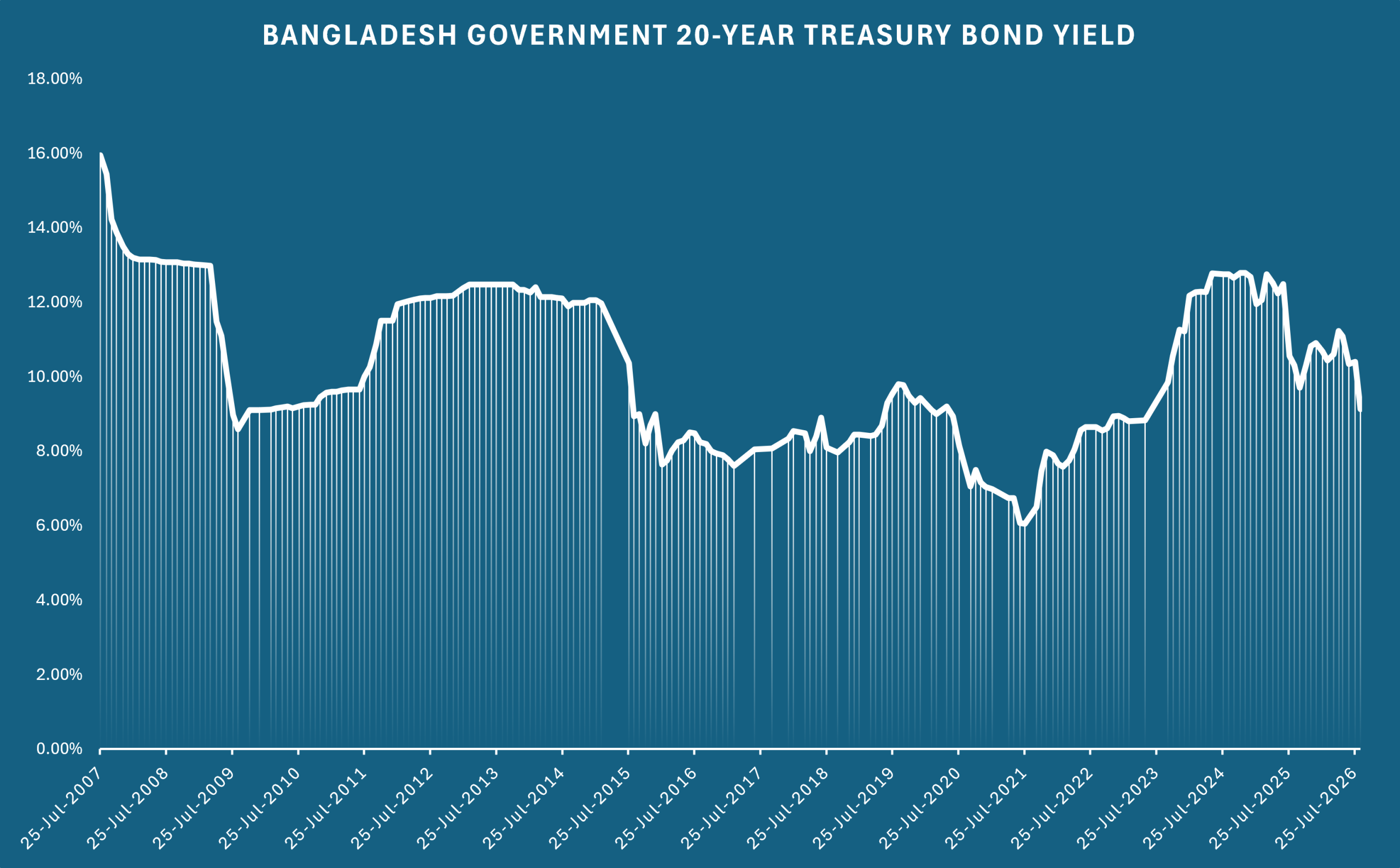
Heavy reliance on bank credit continues to define Bangladesh’s financing structure, CSE said, pointing to the need for deeper non-bank funding channels.
Corporate bonds, sukuk, municipal bonds and infrastructure funds were highlighted as critical tools for long-term infrastructure and industrial financing.
The exchange also called for a formal corporate bond market target equivalent to at least 2 per cent of GDP, noting that while the budget references bond market development, it does not set out a clear penetration framework.
Long-term debt market expansion could face setbacks from the withdrawal of tax exemptions on zero-coupon bonds, CSE warned, especially amid high interest rates and inflationary pressure that is increasing demand for alternative financing instruments.
Despite references to corporate bonds, municipal bonds, sukuk and infrastructure funds, no structured implementation framework exists to scale these instruments into a functioning ecosystem, the exchange said.
Digitalisation objectives may be undermined by current tax structures, CSE said, proposing cuts in withholding tax on non-resident technical services from 20 per cent to 10 per cent and VAT on software maintenance from 15 per cent to 5 per cent to improve efficiency and accelerate technology adoption in capital market operations.
Institutional participation could weaken if dividend taxation changes increase effective tax burdens, the exchange cautioned, recommending retention of the existing 20 per cent tax rate on dividend income for institutional investors to preserve stability and long-term engagement.
Structural dependence on bank-led financing continues to constrain capital market depth, CSE said, citing limited development of bonds, derivatives and alternative instruments as barriers to savings mobilisation and investment diversification.
If fully implemented, the reform agenda could reposition the capital market as a central channel for infrastructure financing, foreign investment attraction and savings mobilisation, the port city bourse said, adding that it remains engaged with policymakers and regulators to support the transition.