By cruel arithmetic, Dhaka offers each child just 0.33 square meters of playground, nowhere near the global standard of nine. The numbers are stark, but the reality on the ground is harsher. A city bursting with towers, roads and concrete has quietly erased the fields where generations once learned to run, climb, fall and rise again.
Playgrounds, once scattered across neighbourhoods, are disappearing under real estate pressure and unplanned growth. Parks shrink. Open spaces turn into markets, parking lots or construction sites. Many of the remaining grounds are encroached, poorly maintained or simply locked away. The loss is not just spatial. It is a loss of childhood, physical freedom, social play and the unstructured joy that strengthens bodies and shapes young minds.
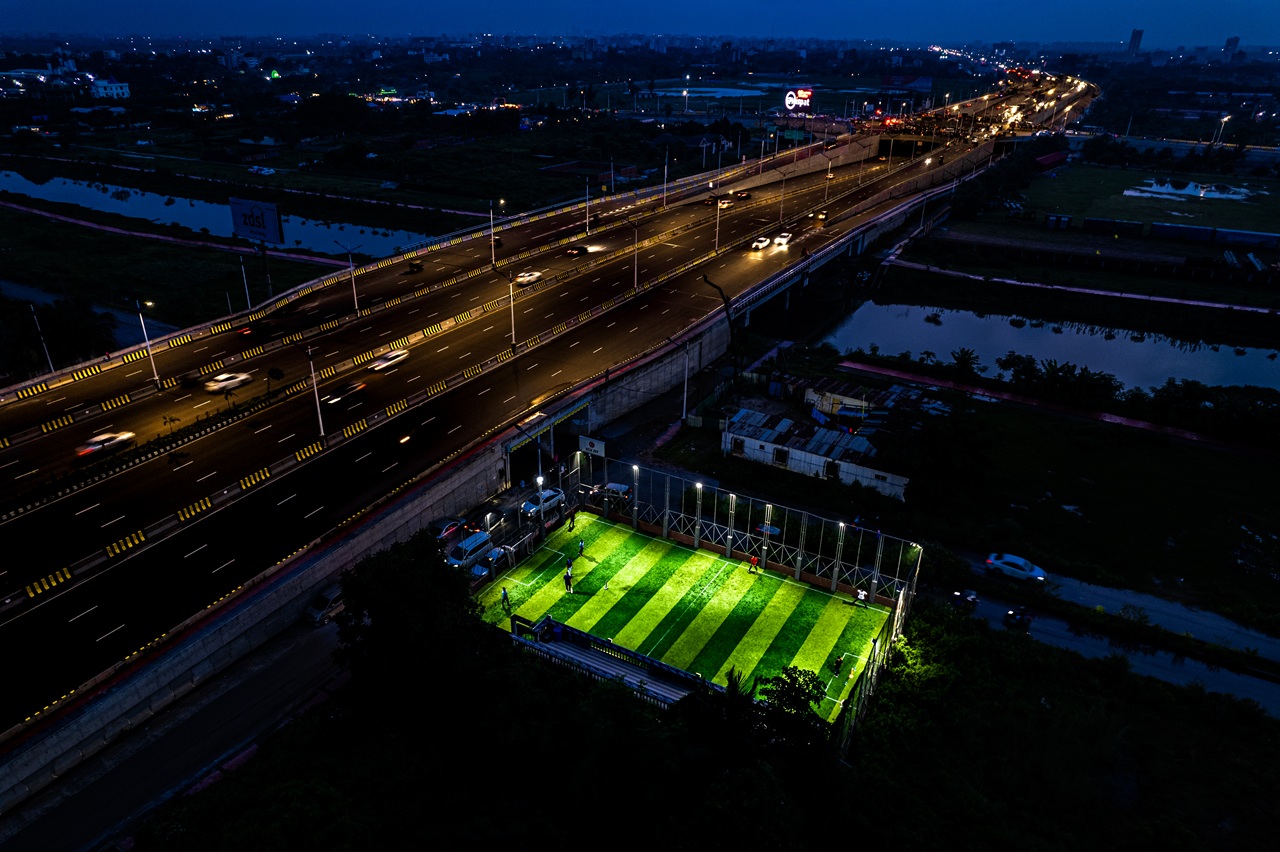
In this vacuum, a strange substitute has emerged. High above the streets, on rooftops and building tops, small rectangles of artificial turf glow under floodlights. They sit in improbable spaces; wedged between warehouses, perched on shopping plazas, squeezed onto office blocks. These are Dhaka’s borrowed grasslands, a commercial response to a public failure.

From noon’s glare to midnight’s hum, they draw students, workers, friends and strangers. Yes, it is a business model. But the demand speaks to something deeper: a city that desperately craves the simple act of play. A banker leaves behind his losses. A tailor forgets his aching fingers. A student outruns exam anxiety. For ninety minutes, the city’s burden loosens.



Yet the existence of these rooftop pitches is a reminder of what has been lost. Dhaka has been forced to invent play where natural play once flourished. Children without access to paid turfs grow up confined indoors, their world reduced to screens and narrow lanes. Parents talk of a childhood that feels smaller, tighter, more brittle.
On these rented patches of green, triumph and frustration echo through the night. A cheer carries the weight of a week. A missed shot draws a sigh big enough to belong to the city itself. Turfs have become emotional oases, offering fleeting community in a metropolis that often feels impersonal and relentless.
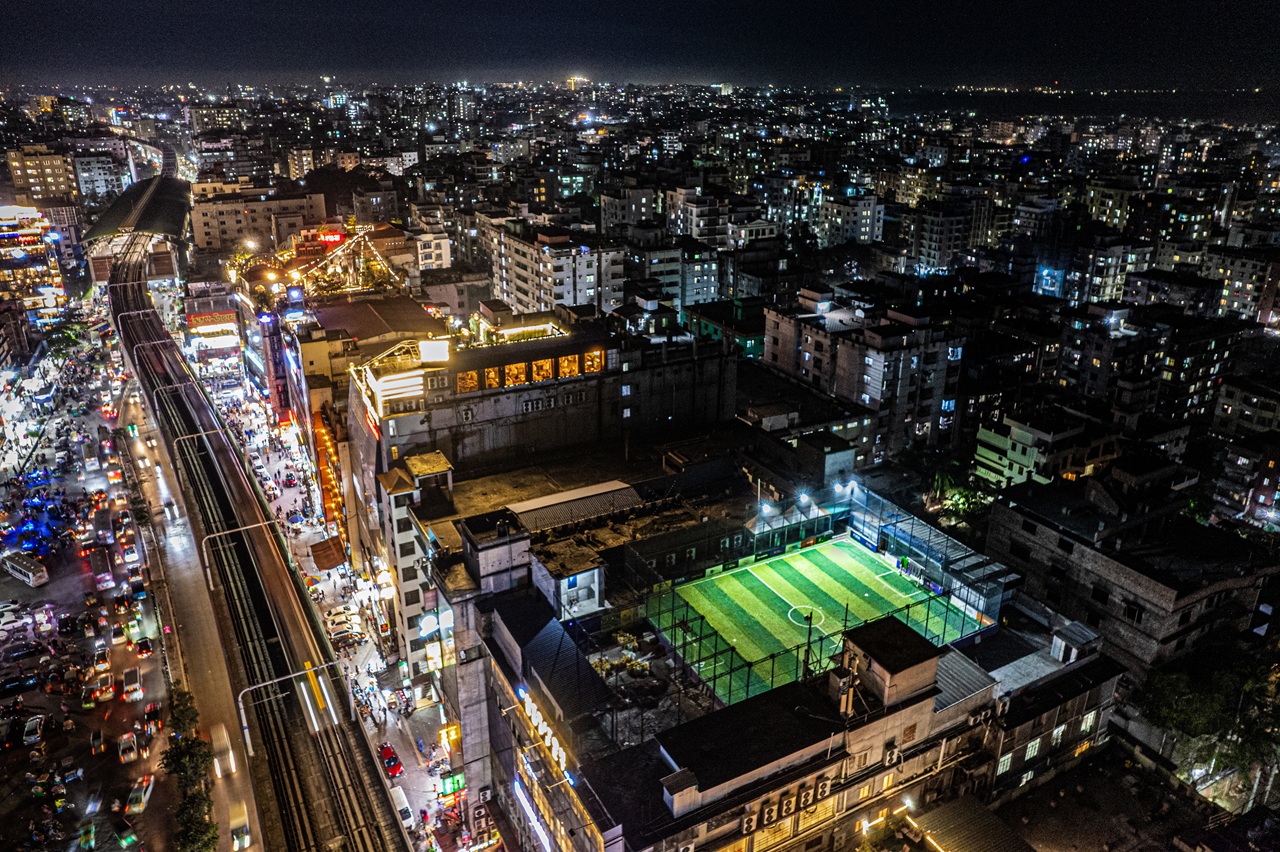
But rooftops cannot replace fields. They cannot substitute for the openness, accessibility and equality of real public playgrounds. Dhaka’s children deserve more than borrowed spaces bought by the hour.
Still, they play at dawn, at dusk, under the searing sun and watchful stars. On these elevated scraps of artificial green, the city remembers something it’s trying hard not to forget that a place to play is not a luxury. It is a lifeline. A city without playgrounds is a city forgetting how to breathe.