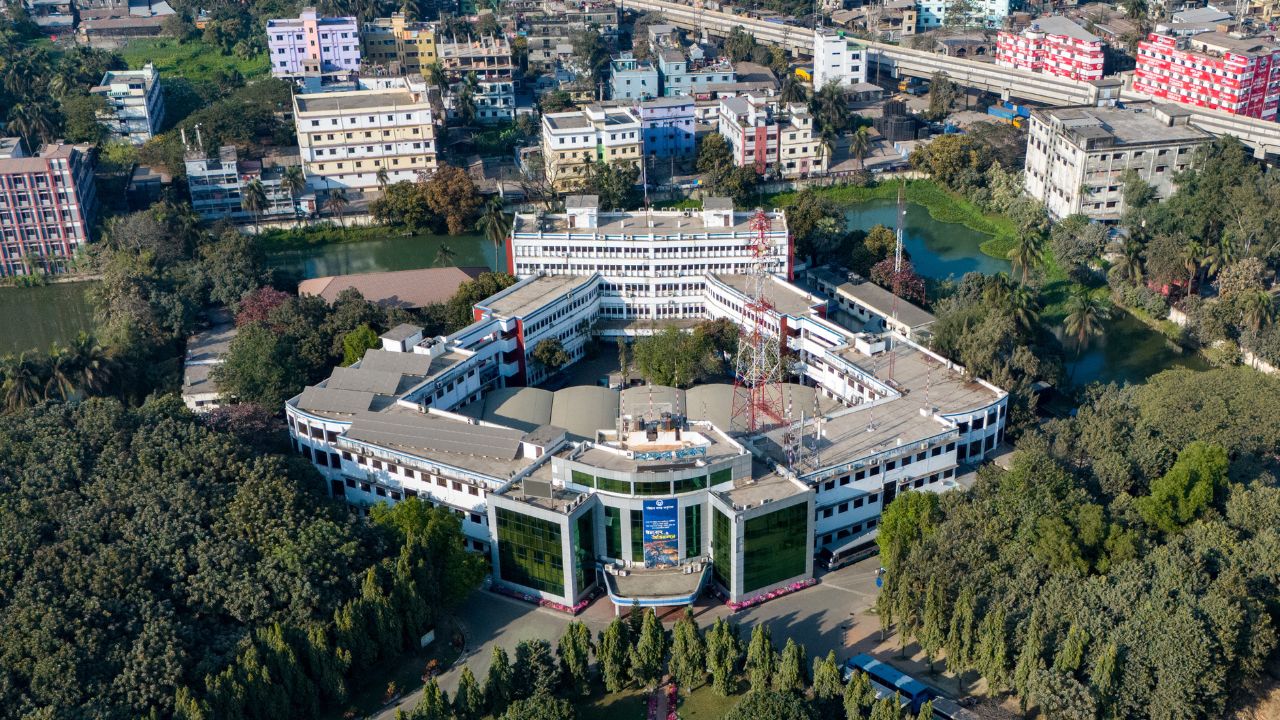



The government has decided to establish a joint committee comprising officials from Chittagong Port Authority (CPA) and Customs to eliminate trade barriers, accelerate cargo clearance, and lower the overall cost of doing business.
The new co-ordination body aims to quickly resolve operational issues and streamline processes between the two agencies, Finance Minister Amir Khosru Mahmud Chowdhury announced on Tuesday.
He was addressing journalists at Chattogram Port Building around 3pm, following a high-level meeting with key officials.
The session was attended by National Board of Revenue (NBR) chairman, CPA chairman, and other senior officials concerned.
Prioritising trade and deregulation
Khosru emphasised that the government’s primary focus is to facilitate trade, stimulate exports and industrialisation, and bolster the national economy.

“Deregulation has already been initiated to remove the obstacles and complications that traders have faced due to various regulations and procedures,” he said.
To address bottlenecks, the meeting mapped out existing operational issues within port and customs procedures, adopting specific measures to tackle them.
He confirmed that written decisions have been finalised with concrete implementation timelines.




“Nothing has been left open-ended or indefinite. A deadline has been set for every decision,” he said, noting that the joint committee will actively monitor co-ordination and address fresh issues immediately.
Benefits to consumers and national economy
Highlighting the financial impact of port delays, Khosru explained that reducing cargo unloading, clearance, and delivery times directly lowers operational costs for businesses.
Currently, delays at customs and ports elevate the cost of imported commodities, creating an extra financial burden on consumers.
“If the costs are reduced, consumers will also benefit,” Khosru pointed out.
He said faster, more economical import-export procedures are critical to improving Bangladesh’s international competitiveness. According to him, streamlining these processes will pave a smoother path for Bangladesh to achieve a trillion-dollar economy by 2034.
Port operations and anti-corruption stance
When questioned about the operation of the New Mooring Container Terminal (NCT, Khosru remarked that the specific operator’s identity is not the primary concern.
“Who runs the port is not the main issue,” he declared. “Whether domestic or foreign, whoever is in charge of the port has to work under the same rules while protecting the interests of the country’s economy, people and businesses”.
In relation to restarting closed industrial units, he explained that government decisions are geared toward creating a business-friendly environment where industries can operate seamlessly and at a reduced cost.
Khosru also expressed a zero-tolerance policy regarding the seizure of illegal goods and customs irregularities, warning that the government will take a strict stance against corruption, nepotism, and political patronage.
“There will be no scope for any kind of corruption, nepotism or patronage under the current government,” he asserted, adding that no individuals involved in malpractice would be spared, regardless of their status or influence.
Chattogram is also set to receive a major developmental boost, with Asian Development Bank (ADB) vice president currently visiting the city. The ADB has drafted a comprehensive plan to transform the port city into a central logistics hub and a broader centre for economic development.
Khosru added that an important meeting bringing together ADB and relevant stakeholders was scheduled to take place in Chattogram later to discuss the implementation of this development plan.