The sea at Cox’s Bazar attracts thousands of visitors every day. Families, children, and tourists from across Bangladesh gather to experience the country’s most celebrated coastline.
But behind the excitement lies a pressing concern: The growing gap between the number of visitors and the level of safety available to protect them.

A pair of lifeguards sit atop a watchtower, scanning an endless crowd spread across the shoreline. Below them, hundreds of people venture into rough waters while others queue for water sports. Across: A restless sea. Above: A sky heavy with clouds. Yet, only a handful of trained rescuers stand between recreation and tragedy.


Their task is nearly impossible. On busy holidays and weekends, the beach becomes so crowded that lifeguards must monitor thousands of people simultaneously. Dangerous rip currents, unexpected high waves, and visitors unfamiliar with sea safety create conditions where accidents can occur within seconds.



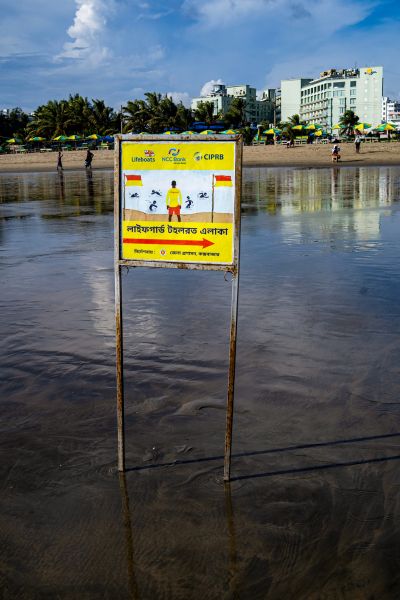
Despite their dedication, limited manpower and equipment leave rescuers struggling to respond as quickly as every emergency demands. Many visitors ignore warning flags, underestimate the power of the ocean, or venture beyond designated swimming areas for photographs and social media. By the time distress is noticed, every second matters.
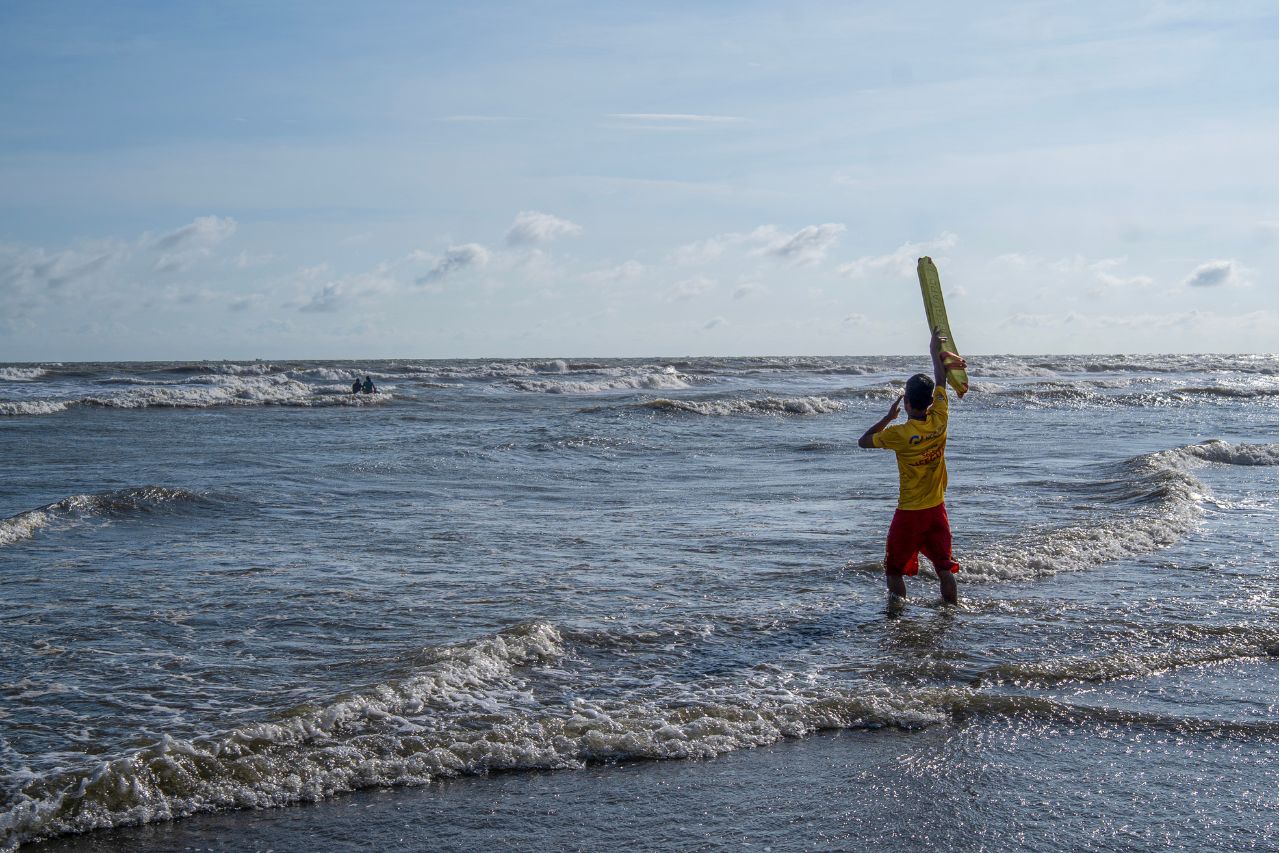
Ensuring safety at Cox’s Bazar requires more than courageous lifeguards. It demands greater investment in rescue infrastructure, increased recruitment and training of lifeguards, clearly marked swimming zones, multilingual warning signs, public awareness campaigns, and stricter enforcement of safety regulations.
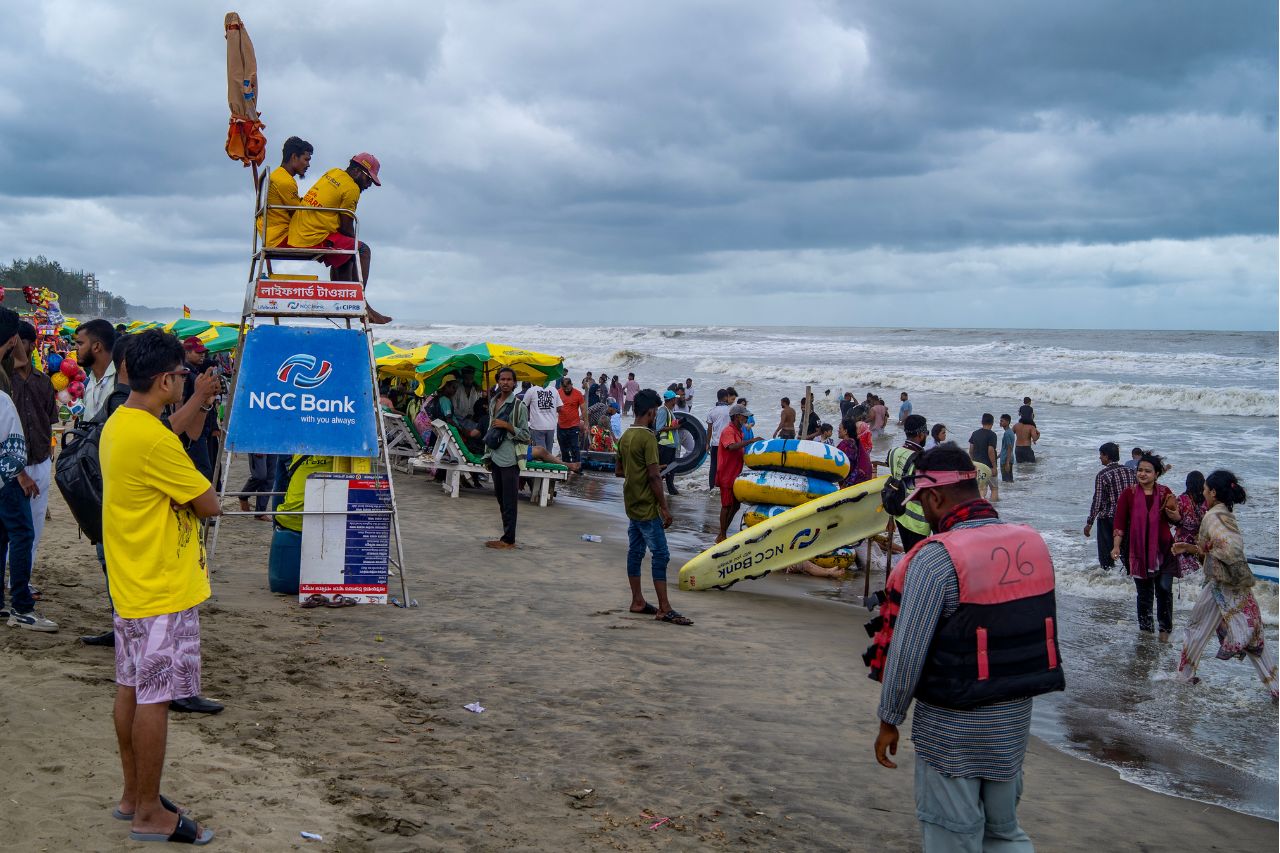
As tourism continues to grow, so must the systems designed to protect those who come to enjoy the sea. The lifeguards in this image symbolise both vigilance and limitation. They remain alert from morning until sunset, yet no small team can effectively safeguard an entire coastline crowded with thousands of visitors.
Cox’s Bazar is a national treasure. Preserving it means not only protecting its natural beauty but also ensuring that every visitor returns home safely.