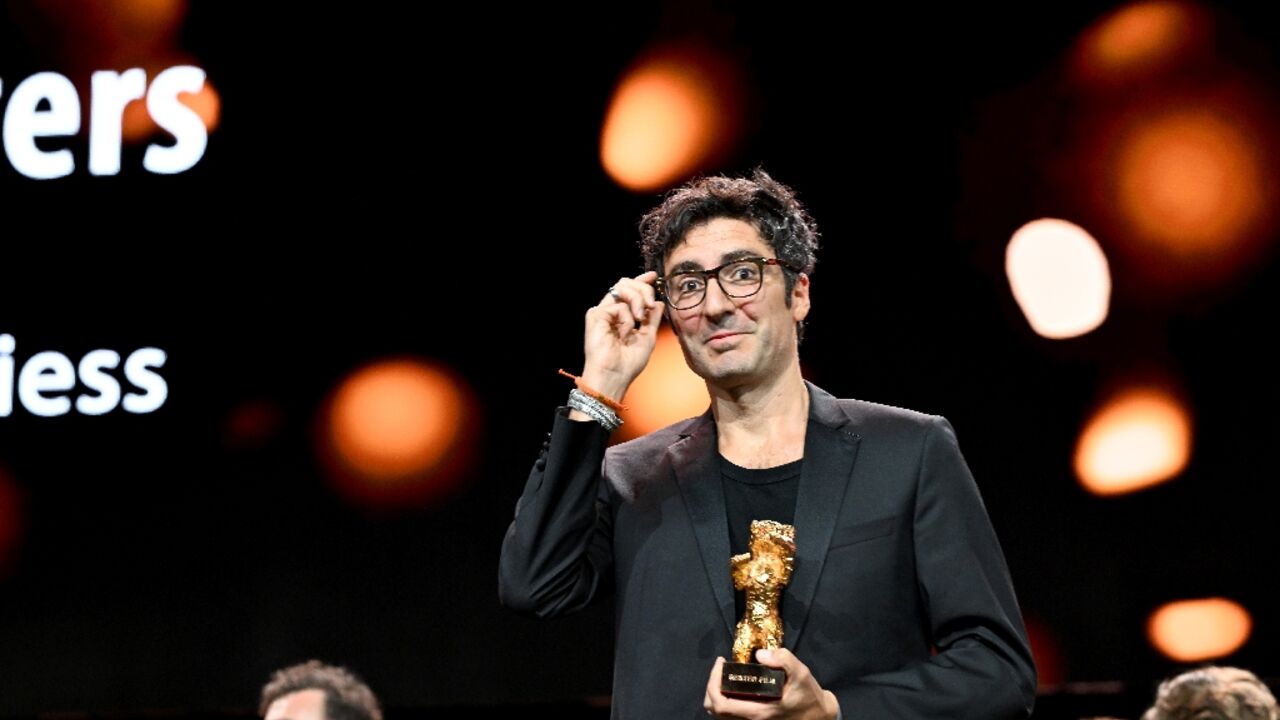

German filmmaker Ilker Catak’s political drama ‘Yellow Letters’ has won the Golden Bear for Best Film at the Berlin Film Festival. The ceremony, held on Saturday, unfolded against the backdrop of ongoing controversy over Gaza that has overshadowed this year’s edition of the festival.
Yellow Letters tells the story of a Turkish director and his actor wife who are suddenly barred from working due to their political opinions. Jury president Wim Wenders praised the film as “a terrifying premonition, a look into the near future that could possibly happen in our countries as well.”
He added, “This is a movie that speaks up very clearly about the political language of totalitarianism as opposed to the empathetic language of cinema.”
Catak described Wenders as “one of my teachers” and called receiving the award from him “an incredible honour.”

The runner-up Silver Bear Grand Jury Prize went to Salvation, directed by Emin Alper. In his acceptance speech, Alper expressed solidarity with several high-profile opposition figures imprisoned in Turkey, including jailed Istanbul mayor Ekrem Imamoglu.
Earlier in the festival, Wenders sparked controversy when, in a press conference, he was asked about the German government’s support for Israel. He stated, “We cannot really enter the field of politics,” and added that films have the power to “change the world” but in a different way from politics.




His comments prompted widespread criticism. Indian novelist Arundhati Roy, who was scheduled to present a restored version of a 1989 film she wrote, withdrew from the festival, calling Wenders’ remarks “unconscionable” and “jaw-dropping.”
An open letter signed by dozens of film industry figures, including Javier Bardem, Tilda Swinton and director Adam McKay, accused the Berlin festival of “silencing” artists who oppose Israel’s actions and failing to speak out on the plight of Palestinians.
Berlinale director Tricia Tuttle, in her second year leading the festival, rejected the accusations. Speaking at Saturday’s ceremony, she said, “Speaking up is part of democracy. We respect people speaking out because it takes a lot of courage to do it. We do not always agree with every claim that is made about us.”
Other major award winners included German actress Sandra Hüller, who received the Silver Bear for Best Performance for her title role in Markus Schleinzer’s ‘Rose’. The black-and-white drama follows a woman who passes herself off as a man in 17th-century rural Germany to escape patriarchal constraints.
American director Lance Hammer’s ‘Queen at Sea’, starring Juliette Binoche as a woman caring for her mother with dementia, also won multiple awards. Tom Courtenay and Anna Calder-Marshall, who plays the ailing mother, shared the Silver Bear for Best Supporting Performance. The film additionally received the Silver Bear Jury Prize, considered the festival’s third most prestigious award.
The Berlinale also served as a platform for Iranian filmmakers to address the deadly crackdown on anti-government protests in their home country.
Dissident director Jafar Panahi, who won the Cannes Palme d’Or for ‘It Was Just an Accident’, denounced the Iranian government’s repression, which rights groups say left thousands dead.
“An unbelievable crime has happened. Mass murder has happened. People are not even allowed to mourn their loved ones,” Panahi said during a festival-organised talk.