
Bangladesh’s construction materials industry is facing a severe downturn, with key sectors like steel, cement, and stone experiencing significant disruptions.
The crisis has been exacerbated by a slowdown in the country’s mega projects and infrastructure activities following the regime change in August 2024.
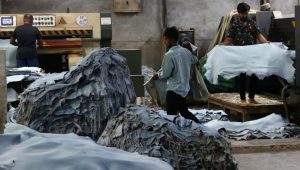
As such, most factories are operating at less than half of their overall production capacity.
Large contractors have either cancelled or suspended operations, and no new projects have been launched. As a result, the demand for construction materials has sharply declined, production has slowed, and sales have plummeted, according to industry people.
They warned that unless political stability is restored, the construction sector will remain in crisis, potentially harming the broader economy.

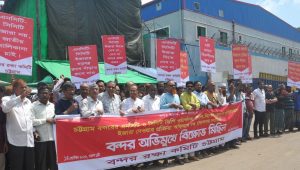
The steel sector has been particularly hard hit as the rod manufacturing industry relies heavily on two sources of raw materials: steel scrap imports and steel extracted from shipbreaking.
Official data shows that around 60-70 percent of the raw material comes from shipbreaking. However, imports have sharply fallen, with Bangladesh buying only 130 scrap ships in 2024, down from 170 the previous year.
Tapan Sengupta, deputy managing director of BSRM, one of Bangladesh’s largest steelmakers, said that government mega projects are the main consumers of rods.




“So, since no new projects have been initiated in the past year, demand has not grown, and imports of raw materials have slowed accordingly,” he added.
BSRM’s annual production capacity is 2.5 million tonnes, but it is currently operating at only 80 percent of that.
“Due to weak demand, the price of rods has also fallen. Factories like ours are producing well below potential,” Sengupta said. Last year, rods were sold at more than Tk 100,000 per tonne, but this year, the price has dropped to Tk 85,000 per tonne.
Baizid Steel, a company based in Chattogram, with an annual capacity of 120,000 tonnes, is now running at just 30 percent of capacity.
“The demand for rod has decreased abnormally. Supplies from shipbreaking yards have also dried up. Unless political stability returns, this stagnation will persist,” said Mohammad Amzad Hossain, assistant manager at Baizid Steel.
The Bangladesh Ship Breakers and Recyclers Association cited the foreign exchange crisis, weak domestic demand, and falling production at re-rolling mills as reasons for reduced scrap imports. However, direct scrap imports via Chattogram port remain stable, with a slight increase in imports to 52.75 million tonnes in FY25, up from 51.38 million tonnes in FY24.
The stone import sector, another essential part of the construction supply chain, has seen a decline for the first time in years. From FY22 to FY24, imports of crushed stone steadily rose, but in FY25, they fell by 7.35 percent year-on-year to 12.49 million tonnes. This drop reflects reduced activity in private housing and stalled infrastructure projects.
Similarly, the cement industry is under significant strain. Representing an investment of around Tk 60,000 crore, the cement sector has experienced a drop in demand, falling prices, and slowed production. The Bangladesh Cement Manufacturers Association (BCMA) reports that the price of a 50-kilogram bag of cement has fallen to Tk 490–520, with factory owners losing Tk 40 per bag.
Amirul Haque, president of BCMA and managing director of Premier Cement, linked the cement sector’s crisis to political instability.
“Bangladesh’s infrastructure development cannot progress without political stability. In the absence of an elected government, new investments and factory expansions are on hold,” he said. “This has affected both production and sales in the construction sector.”
Imports of cement clinker, a key raw material for cement production, have also seen a decline. In FY25, clinker imports dropped to 16.17 million tonnes from 16.58 million tonnes in FY24, indicating further strain on the sector.