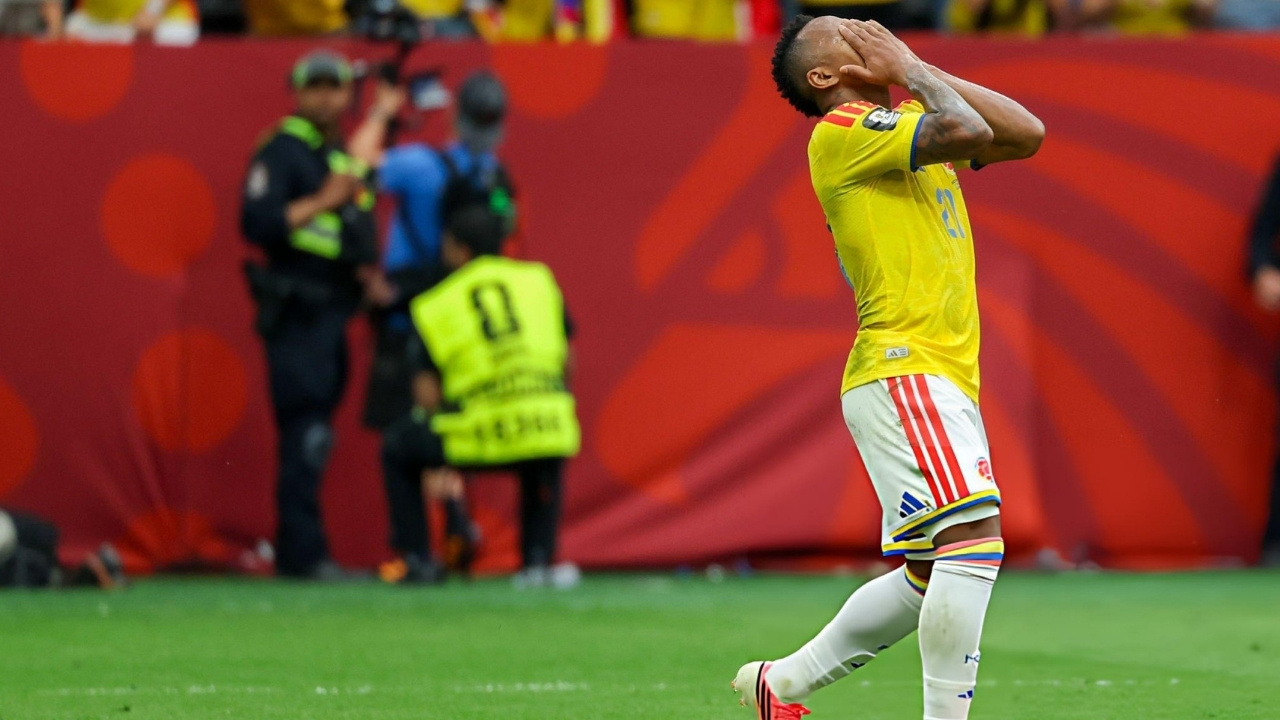

Colombia forward Jaminton Campaz has received death threats against himself and his family following the country’s elimination from the World Cup, with reports suggesting he chose not to fly home with his team-mates over safety concerns.
Colombia were knocked out in the round of 16 after a penalty shootout defeat to Switzerland on 8 July, with the tie finishing goalless after extra time. Campaz had a golden opportunity to win the match in the closing stages of extra time but fired his effort over the crossbar. He later converted his own penalty in the shootout, but Colombia lost 4-3 on spot kicks as Switzerland progressed.
Despite scoring during the tournament and playing his full part in the shootout, Campaz became the target of abuse on social media in the aftermath, with the missed chance singled out for particular vitriol. According to Argentine outlet Infobae, the 26-year-old, who plays his club football for Rosario Central, did not return to Colombia with the rest of the squad, with his current whereabouts unclear.

The Colombian Football Federation condemned the threats in a statement, insisting that no player or member of their family should face intimidation for representing their country, and said it had asked the national attorney general’s office to speed up an investigation to identify those responsible.
Campaz addressed the abuse directly in a message posted on Instagram alongside a photograph of himself covering his face in visible distress.
“My Colombia, please let us never lose sight of respect. We may hold different views or feel frustration and sadness, but no passion justifies hatred or living in fear,” he wrote.
He went on to thank supporters and family for their backing throughout the tournament, saying he shared the nation’s disappointment at the early exit but that his commitment to the shirt had never wavered.
“I deeply regret not being able to bring you the joy we all hoped for, but I want you to know that there was never a lack of dedication, commitment, or love for this jersey,” he added.
The episode has revived painful memories in Colombian football of Andres Escobar, the defender murdered in Medellin in 1994 days after scoring an own goal that contributed to Colombia’s group-stage exit from that year’s World Cup in the United States. Observers have pointed to the stark disconnect between a missed chance in open play and the scale of the response directed at Campaz, who fulfilled his responsibilities in the shootout itself.
The Colombian federation urged supporters to keep sporting disappointment separate from real-world hostility, describing football as a space that should stand for unity and hope rather than hatred or violence.