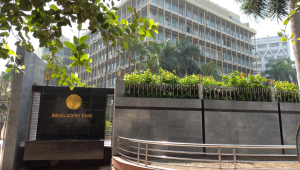



Bangladesh Bank (BB) has cleared the way for a Tk3,000 crore syndicated working capital facility for five loan-defaulting City Group companies, allowing them to maintain business operations under strict conditions designed to protect participating lenders.
In a circular issued on Wednesday, the central bank said the financing would be arranged through a syndicate led by City Bank for City Seed Crushing Industries, City Sugar Industries, City Edible Oil, City Dal Mills and Shapla Flour and Rice Mills.
To facilitate the arrangement, Bangladesh Bank has allowed the provision under Section 27(Ka)(3) of the Bank Company Act, 1991, to remain ineffective for this particular case until 31 December 2027, creating a regulatory window for the proposed financing.
The move comes as City Group faces outstanding bank liabilities of more than Tk26,600 crore, with 36 banks, including two foreign lenders, considering a coordinated restructuring plan for the conglomerate’s loans.

The decision is significant as it allows fresh working capital support to companies already facing loan defaults, at a time when Bangladesh’s banking sector is struggling with mounting non-performing loans (NPLs) and limited lending capacity.
However, the central bank has imposed safeguards to prevent the new financing from becoming another source of financial exposure for banks.
Neither the government nor Bangladesh Bank will bear any liability arising from the proposed facilities. City Bank PLC and other participating banks or financial institutions will also be unable to claim financial assistance from the government or the central bank in the future.




The five companies must provide unencumbered properties as registered mortgage security against the facilities, meaning the assets cannot already be pledged against other loans or claims.
The circular also requires all proceeds from the sale of goods financed through the syndicated loan to be deposited into a designated bank account. Payments to participating lenders must then be made regularly from that account in proportion to their respective contributions to the syndicate.
The central bank has also set conditions for purchasing and handling raw materials. The borrower companies will purchase imported raw materials as representatives of the lending banks’ security agent and process them in their capacity as custodians.
The arrangement is intended to keep the fresh financing tied to actual business activities, rather than allowing funds to be diverted to other purposes or used to repay unrelated liabilities.

The central bank’s move reflects an effort to balance two competing priorities – maintaining industrial production and protecting the banking sector from further loan losses.
For businesses involved in edible oil, sugar, flour and agricultural processing, uninterrupted working capital is essential to finance raw material imports, maintain inventories and manage production cycles.
Nevertheless, the success of the arrangement will depend on effective monitoring by the lead bank, strict control over cash flows and timely repayment to all participating lenders.
The central bank’s conditions make clear that the financing is not a government-backed bailout but a risk-managed commercial lending arrangement.