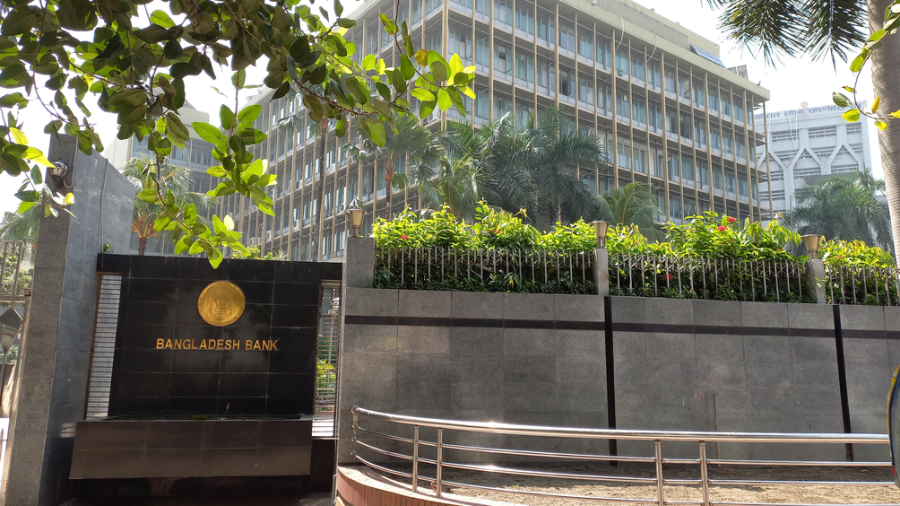



Bangladesh Bank (BB) will no longer automatically renew the Tk200 crore special investment funds that banks were allowed to set up for the stock market.
Instead, it will consider extension requests individually, leaving the future of the facility dependent on applications from individual lenders.
No bank has applied for an extension so far, although the current approval runs until 31 December, according to central bank sources.
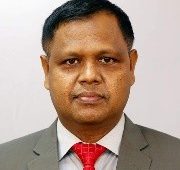
“We will not extend the tenure across the board as before. Extensions will be considered on a case-by-case basis. If a bank applies, Bangladesh Bank will certainly approve it,” Bangladesh Bank spokesperson and Executive Director Arief Hossain Khan told TIMES.
The shift comes as the Bangladesh Securities and Exchange Commission (BSEC) seeks to keep the facility in place.
Its spokesperson, Md Abul Kalam, said the commission had written to Bangladesh Bank about a week earlier, recommending an extension in the interest of the stock market.
A senior BSEC official said the central bank was expected to extend the facility by one year following applications from banks, but the commission had not received final confirmation that the extension had been approved.

The facility was introduced in 2020, during the Covid-19 pandemic, to channel more liquidity into the stock market. Under the arrangement, each scheduled bank could create a special fund of up to Tk200 crore for investment in listed securities. The initial tenure was five years.
The incentive was significant: investments made through the funds were excluded from the banks’ usual capital-market exposure limits, allowing them to invest beyond the prescribed ceiling.
The original guidelines also restricted eligible investments. Banks and their subsidiaries could buy shares of companies that had paid at least 10 per cent in cash or stock dividends in each of the previous three consecutive years.
The combined shareholding of a company’s sponsors and directors also had to be at least 30 per cent.




The facility was initially due to expire in February 2026.
But on 8 April 2025, Bangladesh Bank extended its tenure to 31 December 2026, citing the condition of the stock market.
The extension came with an exit requirement. Banks were instructed to reduce their investments gradually and submit board-approved plans to Bangladesh Bank within 30 days of the circular.
The central bank also warned that any investment remaining under the facility after 31 December 2026 would be counted towards a bank’s capital-market exposure under Section 26Ka of the Bank Company Act, 1991.
Now, the Dhaka Stock Exchange Brokers Association of Bangladesh (DBA) wants the facility expanded rather than allowed to wind down. In a letter to Bangladesh Bank Governor Md Mostakur Rahman on 6 October, the association proposed raising the fund limit from Tk200 crore to Tk300 crore per bank and extending its tenure by another five years, until 30 November 2031.
DBA argues that the facility has helped strengthen institutional investment capacity, support market liquidity and stability, and improve investor confidence. It says withdrawing the support would be counterproductive when the market is facing a liquidity shortage and global uncertainty stemming from tensions in the Middle East.
The association believes a higher ceiling and longer tenure would encourage institutional investment, deepen the market and support its long-term development.
DBA had made a similar push in early 2025, warning that prolonged market declines had left banks and other institutional investors with portfolio losses of 40 per cent to 60 per cent. If the funds expired, banks might be forced to sell their holdings, adding to market pressure, it argued.

More than 20 banks had invested over Tk1,600 crore through the special funds by mid-2024, according to DBA.
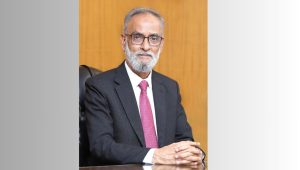
But extending the facility may do little to address the market’s structural weaknesses, said North South University School of Business and Economics Dean AKM Waresul Karim.
“All these measures are destined to fail to lift the market index. There seems to be a lack of understanding of the role of a regulator in preserving and promoting a healthy capital market,” he told TIMES.
He said Bangladesh Bank and BSEC should focus on market integrity and efficiency rather than trying to influence whether the index rises or falls. Their priorities should include low-cost settlement, narrower bid-ask spreads, transparent disclosures, preventing insider trading and making the initial public offering process easier and fairer, he said.
“The indices should be allowed to move up and down as the performance of the companies behind the securities changes,” he said. A broad-based market rally when the underlying companies are not performing well could itself be a warning sign, he added.
“It is time to stop throwing more money behind bad money. It is a slippery slope.”
Karim also questioned the use of public funds to support the market through the Investment Corporation of Bangladesh (ICB). He said the interim government had provided ICB with a Tk3,000 crore loan, apparently to help lift the market, but the corporation had lost that amount as well and was now seeking to convert the loan into equity.
He described the move as a waste of public funds and warned that artificially supporting share prices could allow market manipulators to sell their holdings at a profit while leaving other investors exposed.