Iran has warned it could prevent oil shipments from passing through the Strait of Hormuz, the world’s busiest crude transit corridor, escalating fears of a wider energy shock after US and Israeli strikes, says BBC.
About one fifth of global oil and gas consumption moves through the narrow waterway linking the Gulf to the Arabian Sea. Iran’s General Sardar Jabbari said Tehran would “not let a single drop of oil leave the region” and threatened to “set fire” to vessels attempting to cross.
Oil prices have already climbed on uncertainty over Iran’s response. Analysts say any sustained disruption would raise fuel and transport costs globally, affecting major importers such as China, India and Japan.
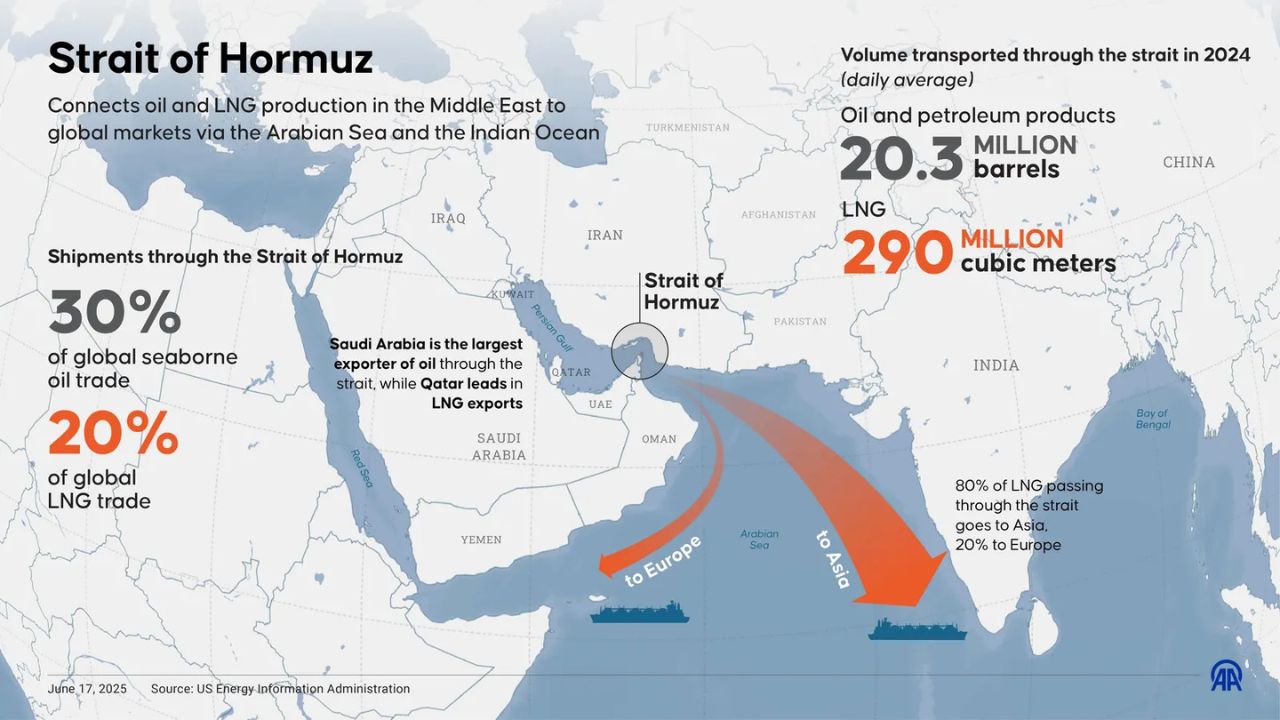
Why the strait matters
The Strait of Hormuz is bounded by Iran to the north and Oman and the United Arab Emirates to the south. Roughly 50 km wide at its entrance and exit, and about 33 km at its narrowest, it is deep enough for the largest crude carriers.
The route is used by producers including Iran, Iraq, Kuwait, Qatar, Saudi Arabia and the UAE. In 2025, around 20 million barrels per day transited the strait, according to estimates from the US Energy Information Administration (EIA), representing nearly $600 billion (£447 billion) in annual energy trade.

Around 3,000 ships pass through each month.

Market impact
Even without a formal blockade, threats to shipping have driven up prices and insurance costs. Tanker owners have grown wary after drone and missile attacks near the waterway.
Brent crude briefly reached $82 (£61) a barrel on Monday after at least three ships were attacked near the strait over the weekend. About 150 tankers have been left stranded, according to Reuters.




Data from the London Stock Exchange Group show the cost of chartering a supertanker to carry Middle East crude to China has nearly doubled in a week to more than $400,000 (£298,300), a record high.
A prolonged halt in flows would disrupt global supply chains. In 2022, about 82 per cent of crude oil and condensates leaving the strait were destined for Asian markets, EIA data show.
China alone is estimated to buy roughly 90 per cent of Iran’s exported oil. Higher crude prices could ripple through manufacturing and trade, pushing up costs for consumers worldwide.
Gulf producers would also suffer. Saudi Arabia’s economy depends heavily on energy exports routed through the strait. Iran exports about 1.7 million barrels per day, according to the International Energy Agency, and earned an estimated $67 billion (£50 billion) from oil in the financial year ending March 2025, its highest revenue in a decade, according to Iran’s central bank.

How Iran could act
Under United Nations rules, coastal states control territorial waters up to 12 nautical miles from shore. At its narrowest, the strait and its shipping lanes lie within the territorial waters of Iran and Oman.
Experts say Iran could attempt to lay naval mines using fast attack craft or submarines. Its regular navy and the Islamic Revolutionary Guard Corps navy operate anti-ship missiles, surface vessels, semi-submersibles and submarines capable of targeting commercial shipping.
However, larger vessels could be vulnerable to US air strikes. US President Donald Trump has said destroying Iran’s navy is among Washington’s aims.
The United States has previously intervened to secure passage. During the 1980-1988 Iran-Iraq war, attacks on oil facilities escalated into a “tanker war” in which both sides struck neutral shipping. US warships later escorted Kuwaiti tankers carrying Iraqi oil in one of the largest naval operations since the Second World War, according to the US Naval Institute.
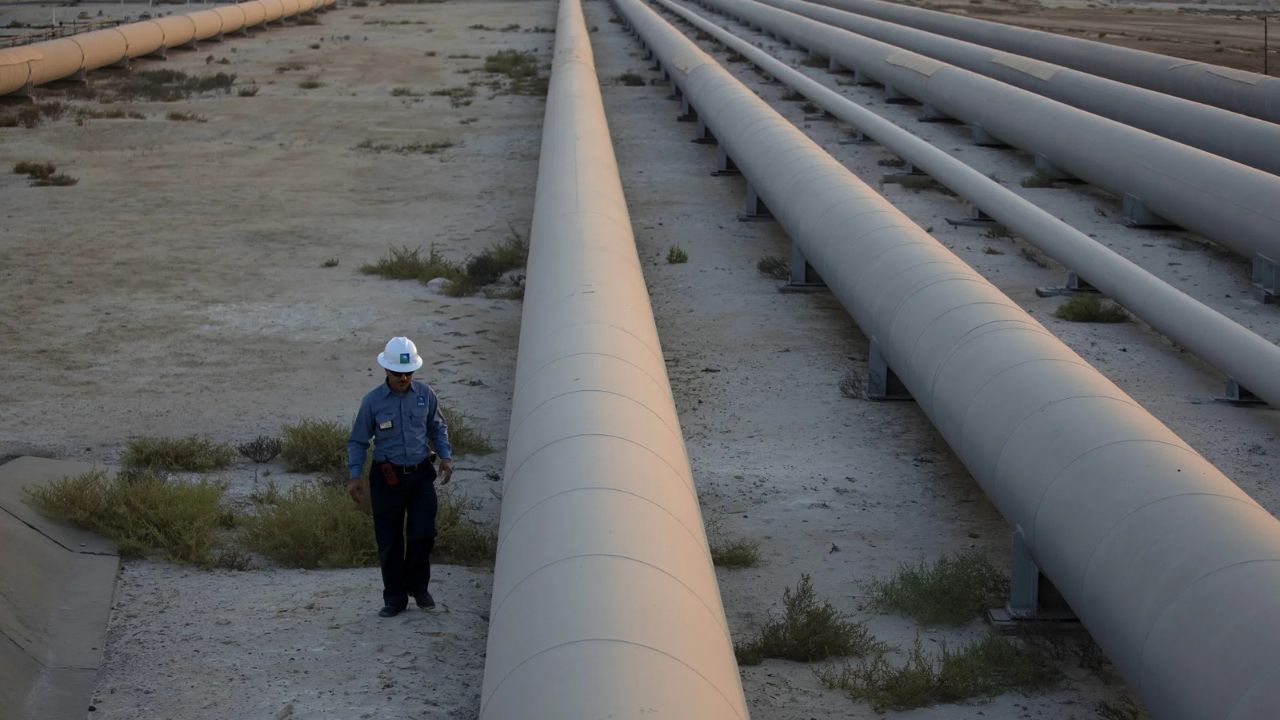
Alternative routes
The recurring risk of closure has prompted Gulf states to build bypass infrastructure.
Saudi Arabia operates a 1,200 km pipeline with capacity of up to 5 million barrels per day and has previously repurposed a gas pipeline to carry crude. The UAE has linked inland oilfields to the port of Fujairah on the Gulf of Oman via a pipeline capable of at least 1.5 million barrels per day.
Even so, Reuters reports that diverting supplies through these routes would still leave a shortfall of 8–10 million barrels per day compared with normal flows through the strait.