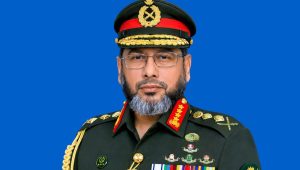
Transport expert Md Hadiuzzaman has said that the Bangladesh Road Transport Authority is effectively giving bus owners a “blank cheque”.
The professor from the Department of Civil Engineering at Bangladesh University of Engineering and Technology also said that commuter suffering in the capital cannot be resolved without a complete overhaul of the bus system—something he believes can be achieved at far lower cost than the metro rail.
In an interview with Md Raiyan Tahrim of TIMES of Bangladesh, he also called for a comprehensive restructuring of the Bangladesh Road Transport Authority.
When setting new bus fares, is the authority simply meeting the demands of bus owners?
The authority is a regulatory body. It handles route permits, vehicle fitness certification, and driver licensing. Its responsibility is not limited to announcing fares; it must also assess whether those fares are justified.
Minibuses in Dhaka are designed to carry 30 passengers, yet in practice 45 seats are often installed. Despite this, owners continue to claim they are operating at a loss.
Bus chassis are designed for a specific number of seats, and transport law clearly states that seating capacity or vehicle structure cannot be altered without approval.
Yet these buses continue to receive fitness certificates from the authority every year. If you keep handing out “blank cheques”, it is only natural that operators will exploit the system.
The biggest farce is that fares are calculated based on 70% occupancy. In reality, during peak hours, passengers are crammed into buses far beyond capacity.

Why does such a fragile and dysfunctional bus system exist in a city that now has metro rail?
Large-scale infrastructure like metro rail is certainly beneficial. However, for a megacity like Dhaka, affordable and efficient public transport—particularly buses—remains indispensable.
What we are seeing is a stark contrast: a modern metro system overhead, while below it operates a skeletal and deteriorating bus network.
Policymakers have failed to address the core issue. This is not a technical problem; it is a political one.
Between Tk 3 lakh crore and Tk 5 lakh crore is being spent on metro rail. Yet a complete transformation of Dhaka’s bus system—with London-style low-floor, double-door, air-conditioned buses—could be achieved with an investment of just Tk 5,000 crore. The barrier is a lack of political will.
There have been repeated announcements about phasing out minibuses, removing old buses, and introducing designated stops. Why are these not being implemented?
As I mentioned, this is a political problem. On many routes, there are more buses than passenger demand.

Introducing bus stops alone will not solve the issue. The entire ecosystem needs reform. Route permits must be issued based on scientific assessment of demand.
Currently, route permits are granted on political considerations rather than data-driven analysis.
Even with new buses introduced, services like “Nagar Paribahan” have failed. Why can passengers not be made to queue properly for buses?
We need to assess why Nagar Paribahan failed.
You may introduce new buses, but if unlicensed and unfit vehicles continue to operate on the same routes, regulated operators cannot survive in such unhealthy competition.
Why are large private companies investing in long-distance bus services but not in urban public transport?
Investors in long-distance services factor in safety and operational stability.
But within Dhaka, there are thousands of individual owners and hundreds of routes. The system is so chaotic that reputable companies lack the confidence to invest. Those that did invest have already withdrawn.
In developed countries, governments build infrastructure, determine routes, and establish bus stops and ticketing systems. They then contract competent operators through open tenders.
Here, anyone wishing to operate a bus simply applies for a route permit. This creates a clear conflict of interest.
CNG auto-rickshaws are required to operate on meters, yet this is widely ignored. Have drivers become more powerful than the government?
The government does not act alone; there are regulatory bodies like the authority.
The problem is that those who are supposed to be regulated have effectively become the regulators. The state has lost control. Transport owners and workers all have political affiliations.
You may set fares per kilometre, but drivers are financially bound to vehicle owners. If a driver must deposit Tk1,500 daily, they will not follow the meter.
Fixing this requires political will and systemic reform.
There have long been allegations of extortion involving police and political actors in the transport sector. What role is the authority actually playing?
Where the authority is weak, it must be strengthened. That does not mean hiring more staff or magistrates; it means moving towards automation.
Greater automation reduces opportunities for corruption.
Despite automation in driving licence processes, middlemen remain active. What has automation achieved?
The purpose of automation is to reduce public suffering and minimise direct contact.
The issue is that we stop at automation without reforming the broader ecosystem. In most countries, authorities do not directly conduct driving tests.
Independent third-party agencies carry out scientifically designed assessments.
While licence printing has been outsourced, testing remains under the authority. This is where irregularities occur.
Dhaka should designate around 50 certified third-party institutions capable of conducting tests and issuing licences. When power is concentrated in one place, corruption is inevitable.
Decentralisation is essential. Expecting full solutions from partial reforms is unrealistic.