Founded in 2003, Bangladesh University of Business and Technology (BUBT) has recently come into discussion for its growing focus on artificial intelligence-based academic and research activities.
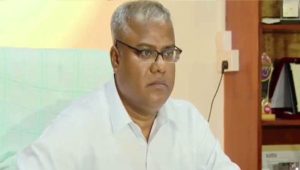
Professor Dr ABM Shawkat Ali joined as vice-chancellor on 1 October 2024. In an interview with Aleem Haider of TIMES of Bangladesh, he discussed the university’s plans, academic approach and efforts to develop graduates who meet global industry standards.
You have completed one year as vice-chancellor. Congratulations. How was the experience?
Wonderful. In short, it was a very good experience. Students are far ahead in smartness, dress-up, appearance, and creativity. Compared to when we were students, much has changed. Students these days have much stronger communication skills. They are talented and futuristic. In short, this generation is totally different—a community with unlimited power.
You taught for many years in universities in Australia, New Zealand, Japan, South Korea and Fiji. How does BUBT compare after one year? What are the advantages and challenges here?
Universities in developed countries do not allow political activities. Their student unions are very strong. I like it that BUBT has a strong student union too. It’s politics and tobacco free campus.
We offer many co-curricular activities to build student quality. The clubs are very active.
I believe national development comes from individual development. So, we focus on club-based activities to improve personal qualities.
Beyond academics, what skills do you prioritise for students?

Our Cultural Club, IT Club, Business Club, Social Welfare Club and Debate Club are very strong. The Debate Club won several national championships.
Last year the university allocated Tk80 lakh for the clubs. That is significant for the university.
After 5 August last year, the Social Welfare Club managed traffic at nearby signals. The club supports vulnerable people during winter, floods and disasters.
We are hosting the ICPC Asia Dhaka Regional Contest 2025, in which Buet, Ruet, Cuet, Dhaka University, Rajshahi University and institutions from 64 districts will join.
These events help our students connect with other universities and communities.


How successful are your graduates? Do you track their progress in the job market?
We try to produce ‘sellable graduates’. If you produce 10,000 graduates and 8,000 cannot get jobs, society will suffer. Education must meet industry standards.
We strengthen students, especially in physics and mathematics, then connect them to industry. That helps the students to learn self-assessment. Developed countries prepare ‘industry-ready’ graduates, so we are trying to priorities this approach too.
Through the alumni, the university can stay updated on graduates’ service life after they complete their studies. This is essential for assessing how education connects to their professional careers. So, we have recently passed the constitution to form the alumni body. We are now in the process of building a strong alumni network.
BUBT promotes quality education at low cost. How does the expense compare with other universities?
Last year we provided scholarships worth Tk25 crore for students, which is a major achievement. The cost of studying at BUBT is also much lower than at other private universities. For this, I offer special thanks to the university’s Board of Trustees.
The amount of scholarship we offer is not even matched by many foreign universities. Their governments give subsidies, and with those subsidies they bring in top students from different countries and keep them there.
How do you determine scholarship eligibility?
In many cases we offer 100% scholarships. Students who achieve GPA-5 in both SSC and HSC and then score a perfect 4 out of 4 in their semester exams after admission, qualify. Children of freedom fighters are also included.
We are also working to bring top performers in sports and cultural fields under full scholarships.
If someone is from a financially disadvantaged background but is academically bright, we arrange scholarships for them as well.
One of a university’s key responsibilities is to conduct research and drive innovation. Do you have any achievements that can benefit people?
In terms of innovation, the Smart True Caller device sitting on my table was developed by our team.
In addition, our IT and EEE departments are creating an integrated computer for blind users. A similar device sells for Tk120,000 in India, but we will offer ours for only Tk50,000.
For fish farmers, we are developing AI-based tools to monitor pond water health. When the oxygen level drops, the system will automatically detect it and release oxygen tablets into the water. We are conducting these innovations with plans to bring them to the market in the future.
The university also covers the full publication cost for research papers published in Q1, Q2, Q3 and Q4 categories in international journals. Researchers receive a Tk30,000 incentive for publishing in a Q1 category journal.
Are students involved in these research papers?
So far, teachers lead the research. However, students work with them as associates and learn how to conduct research at an international standard.
These efforts helped BUBT rank 454th in South Asia and it has risen to a position from 1401 to1500 in Asia on this year’s QS Rankings. Next year, we will climb even higher. I can assure you—we will surprise everyone. We are working with that ambition.
Many people believe private universities have poor academic standards. How do you evaluate your own university?
I want to say—my graduates are different from others. I always want to say this with pride, and that is why I plan and work accordingly. Our goal is for students to enter the workforce as “industry-ready” graduates after graduation.
Through the Language Club, we run special programmes to improve students’ English skills. Recently, we received approval for a temporary British Council centre on our campus. If it proves successful, we will make it permanent.
Our teachers and students are working on taking AI to the product level. We are opening the country’s first “Faculty of Computer Science and Artificial Intelligence” course, targeting the job market.
BUBT promises to develop international-standard human resources. How will you achieve this?
In 2027, we will start a Nursing Diploma programme. Before completing the diploma, we will ensure that students gain proficiency in English and achieve a good score in IELTS. The curriculum is being designed accordingly. In this sector, we aim to export graduates who meet international standards. The demand for nurses in Japan and South Korea alone cannot meet our target.
After skilled nurses, we will also export medical technologists. There is high demand abroad for sonographers and X-ray machine operators. Exporting educated skilled professionals will significantly increase remittance income.
Additionally, we involve students from every faculty in co-curricular activities alongside their classes so that they at least learn research. Knowledge of research improves communication. Even at the national level, our goal is to produce “industry-ready” graduates.