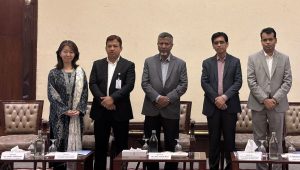
Bangladesh on Monday inaugurated the Center of Research Excellence in Semiconductor Technology (CREST) at BRAC University, positioning the centre as a national hub for advanced semiconductor research and talent development.
The centre was launched under the Silicon River Ecosystem, a national framework integrating Biotech, Electronics, Artificial Intelligence and Robotics (BEAR), the press release said.
Ministry of Science and Technology Secretary Md Anwar Hossain attended the programme as the chief guest, highlighting the government’s focus on research-led technological advancement and innovation-driven economic transformation.

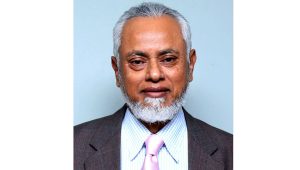
Bangladesh Semiconductor Industry Association President and Neural Semiconductor Managing Director M A Jabbar said building indigenous capability and strong industry–academia collaboration will be critical for export-oriented growth in the semiconductor sector.
CREST will focus on advanced areas including artificial-intelligence-centric chip design, robotics, materials, packaging, testing and next-generation hardware platforms, with the aim of shifting Bangladesh from technology consumption to technology creation.



A key announcement at the event was the launch of the inaugural CREST Fellowship, which will support eight graduate and two undergraduate students to carry out year-long research on advanced semiconductor topics under faculty supervision.
The fellows represent multiple universities across the country, reflecting a nationwide research collaboration, according to the press release.
In a video message, GlobalFoundries Vice President Mahbub Rashed said long-term investment in research talent and coordinated national vision are essential for Bangladesh to integrate into the global semiconductor ecosystem.
The programme also highlighted BOOST, the country’s national semiconductor virtual hub to be developed and led by the Military Institute of Science and Technology, focusing on workforce development and structured training.
The Silicon River vision and the CREST initiative were architected by Purdue University Professor of Electrical and Computer Engineering Muhammad Mustafa Hussain, who said Bangladesh’s innovation ambitions will depend on focused execution and global trust.
The event concluded with a panel discussion on patent law and intellectual property protection, where speakers called for a comprehensive policy to safeguard innovation in the semiconductor sector.