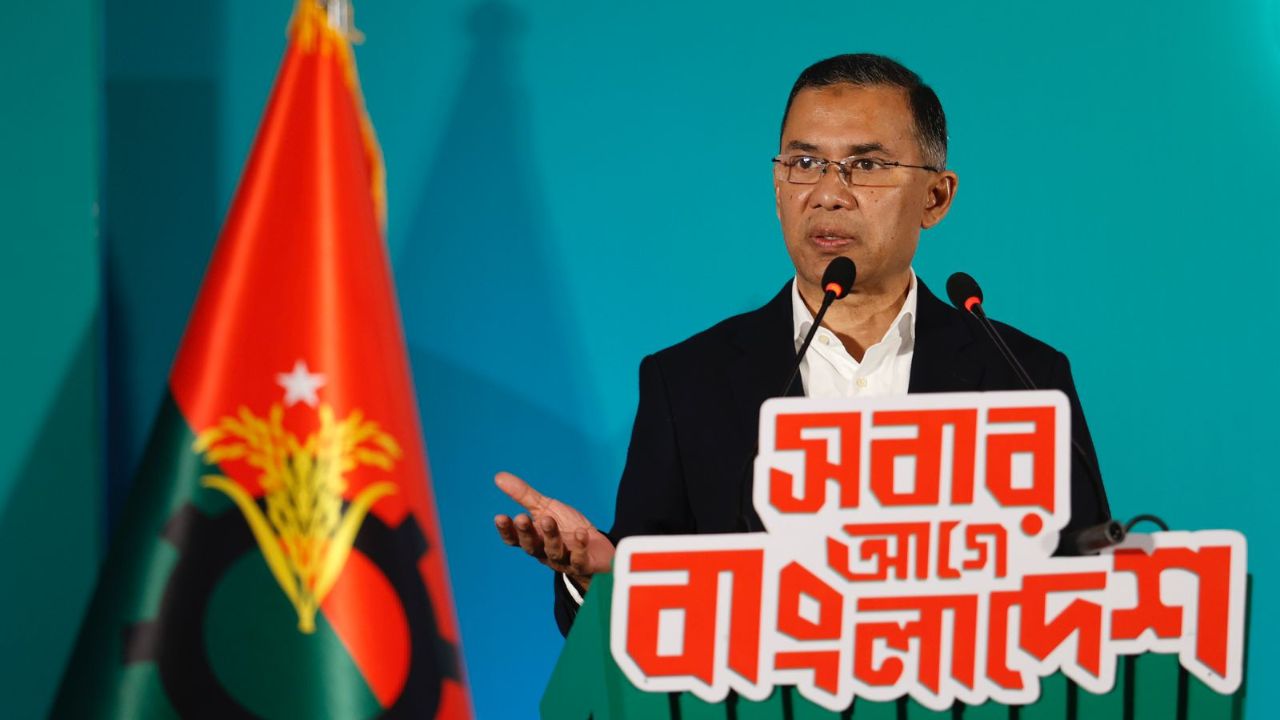

BNP has released its manifesto for the 13th Parliamentary Election, pledging to establish a justice-based, humane, and prosperous nation under the core principle of “Bangladesh First.”
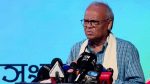
BNP Chairman Tarique Rahman formally announced the manifesto at a ceremony held in a city hotel on Friday afternoon, six days ahead of the national polls.
This marks the first time Tarique has led the party’s manifesto launch; in previous elections, including the fifth through ninth, the documents were unveiled by the then party chairperson Khaleda Zia.
Ideological framework, democratic reforms
The manifesto serves as a comprehensive roadmap, integrating the 19-point programme of BNP founder Ziaur Rahman, Khaleda Zia’s Vision-2030, Tarique Rahman’s 31-point state restructuring proposal, and the July National Charter.
The party’s vision is anchored in justice (Insaaf), ethical governance, and the protection of religious values.

Central to the BNP’s platform is a commitment to constitutional and electoral reform, with a vow to restore voting as the only legitimate source of state power and a promise of “zero tolerance” for authoritarianism or foreign subservience.
Key pledges include ensuring media freedom, guaranteeing freedom of expression, and eliminating social discrimination.
Justice for the ‘July Uprising,’ national reconciliation
The BNP has committed to delivering justice for the July mass uprising and the 16-year anti-authoritarian movement, which includes the rehabilitation and treatment of injured activists and support for the families of martyrs.
Furthermore, the party intends to establish a Truth and Healing Commission as part of a National Reconciliation framework aimed at restorative justice and national unity.



The manifesto also promises a state-led survey to compile an accurate list of Liberation War martyrs, alongside measures to preserve the war’s correct history and encourage investment by freedom fighter entrepreneurs.
Anti-corruption measures, economic vision
Reaffirming a no-compromise stance on corruption, the BNP pledged institutional reforms, real-time audits, and the recovery of laundered money siphoned abroad during the “fascist era.”
The party outlined an ambitious economic strategy to transform Bangladesh into a $1 trillion economy by 2034, shifting from consumption-driven growth to investment-driven growth.
Targets include increasing Foreign Direct Investment (FDI) to 2.5% of GDP and forming an Economic Reform Commission to control inflation and rationalise interest rates.
The party also plans to ensure the autonomy of the Securities and Exchange Commission and conduct a special probe into financial irregularities over the last 15 years.
Social welfare, women’s empowerment
A key pillar of the manifesto is the introduction of a rights-based social protection system, featuring Family Cards for every household – issued in the name of the female head of household – and Farmer Cards for agriculturalists.
Other welfare commitments include free education for women up to the postgraduate level, the waiver of agricultural loans up to Tk 10,000, and the establishment of an effective pension fund for private-sector employees.
To tackle unemployment, the party pledged to launch government employment exchanges and provide special support for orphans and persons with disabilities.
Infrastructure, ICT, and religious freedom
The party aims to position Bangladesh as a global hub for ICT and Artificial Intelligence, with a goal of creating one million new jobs in the sector and raising the tax-GDP ratio to 15% in phases.
Infrastructure plans include developing the Chattogram and Mongla ports and expanding power generation to 35,000MW by 2030, while reviewing costly rental power contracts.
On the issue of faith, the BNP reiterated the principle that “religion is personal, the state belongs to all,” promising full religious freedom and increased honourariums for imams, khatibs, and muezzins.
For the media, the manifesto promises an end to harassment and the formation of a National Journalists’ Welfare Board.