BNP Standing Committee member Amir Khosru Mahmud Chowdhury has said the party’s economic roadmap centres on rapid job creation, economic democratisation and structural reforms aimed at transforming Bangladesh into a trillion-dollar economy if voted to power.
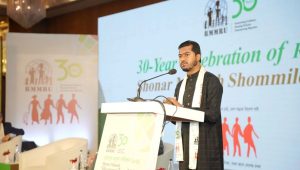
Speaking at a session on the country’s economic outlook during the Fourth Bangladesh Economic Conference 2025: Future Economic Roadmap and Political Commitment at a hotel in the capital, he reiterated BNP’s pledge to create one crore new jobs within 18 months.
Outlining BNP’s economic strategy, Amir Khosru emphasised inclusive growth, deregulation, revitalisation of the capital market, grassroots industrialisation and a technology-driven transformation. He said skill-development centres would be set up in every district to prepare the youth for domestic industries and higher-value overseas jobs.
“Bangladesh’s young generation has extraordinary potential. With enhanced skills, their income abroad can rise three to four times,” he said.

He stressed that Bangladesh must rethink its development approach to ensure the benefits reach ordinary people. “We have pledged one crore jobs and a trillion-dollar economy. These are not political statements. We have calculated the sectors, the investments and the reforms required.”
Bangladesh, he said, must shift from debt-fuelled expansion to investment-led growth by mobilising domestic and international capital and empowering citizens as economic participants. “Ambition is necessary for a nation’s future. We are confident because BNP governments have always delivered employment-oriented growth.”


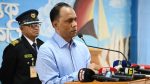

He said the next phase of national development must be inclusive, technology-enabled and investment-focused, with opportunities extending “from rural craftsmen to digital youth, from athletes to cultural workers.”
Emphasising “democratisation of the economy,” he said political democracy alone cannot deliver sustained progress without economic inclusion. He noted that past growth had not sufficiently reached ordinary people due to structural and political barriers. “We must shift to an economic model where every citizen has access, opportunity and participation.”
“These rural producers can become exporters from their homes if given the right tools,” he said. “This will expand employment, raise incomes, create domestic demand and boost foreign-exchange earnings—this is GDP.”
To achieve broad-based economic participation, he identified two priority infrastructure needs: uninterrupted power and energy supply, and nationwide strong internet connectivity. These, he said, are essential for expanding the digital economy, including call centres, data centres and real-time online enterprises. “If we ensure power and broadband in every union, every young person can access digital opportunities.”
He outlined four guiding principles for future public investment: value for money, return on investment, employment generation and environmental protection. He said Bangladesh can no longer afford projects without measurable benefit.
Amir Khasro also highlighted the economic potential of sports and culture, citing examples from Brazil and Australia. BNP plans to set up sports centres in every upazila to develop talent in football, cricket, swimming, shooting and archery. He said cultural industries—including music, theatre and entertainment—also hold major potential for job creation and revenue.
Criticising overdependence on the banking sector and the weakening of the capital market, he said no modern economy grows without a strong capital market. “Without capital-market financing, we can’t achieve high growth,” he said, adding that the BNP intends to upgrade the market to emerging-market standards and attract billions of dollars in global investment. State-owned enterprises like Biman and BSC, he argued, should raise funds from the market rather than relying on the national budget.
the Securities and Exchange Commission require professional leadership with global exposure and technical expertise.