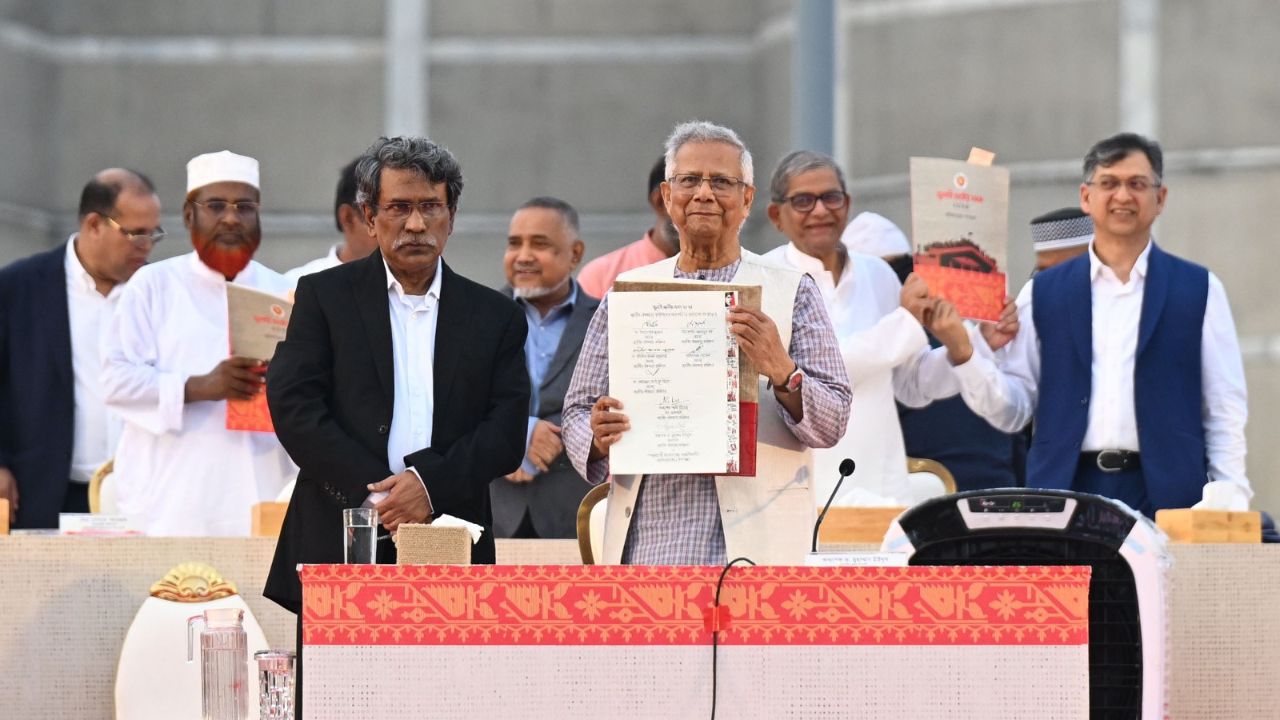

Despite its strong resentment over the July Charter submitted to the government, BNP appears unwilling to take a tough stance against the Yunus-led interim administration.
BNP leaders have expressed frustration, claiming that the Charter has gone against the party’s interests while favouring Jamaat-e-Islami and the National Citizen Party (NCP). They have also criticised the government and questioned its neutrality.
However, the BNP’s top leadership has decided not to go for any tougher programmes for now. The party will determine its next course of action after seeing how the government responds to the July Charter and what official statement it makes regarding it.
BNP insiders said the issue was discussed among senior leaders. On Tuesday night, the party’s acting chairman Tarique Rahman presided over a virtual meeting of the BNP’s Standing Committee—the party’s highest policymaking body.
In the meeting, leaders strongly criticised the National Consensus Commission (NCC), calling its actions a “deception.”
According to the BNP leaders, the commission sided with Jamaat and NCP. For this reason, the commission excluded the BNP’s recommendation for a “note of dissent” about PR in upper house.

On the issue of the referendum, BNP had demanded that the national election and referendum should not be held on the same day, but the commission instead included provisions for both to take place—either on election day or before it.
BNP leaders said they were “frustrated, concerned, and outraged” over the commission’s unilateral actions.
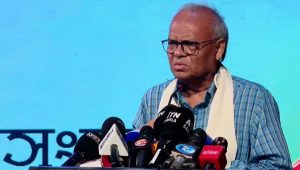
BNP standing committee member Salahuddin Ahmed said on Wednesday that the government, the Commission, and two or three political parties formed one side, while BNP stood on the other.




“The purpose of the Commission was to build national unity. But the proposals made in the July Charter will divide the nation and create discord instead of consensus,” he said.
“We do not know what they are trying to achieve. We are disappointed by the actions of NCC and the government, and the people are equally disheartened by their bias towards two political parties.”
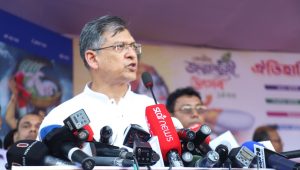
Expressing his frustration, party secretary general Mirza Fakhrul Islam Alamgir said the BNP’s “note of dissent” was completely ignored in the commission’s recommendations for implementing the July Charter. “This cannot be called unity. Then why was this commission formed at all?” he asked.
Speaking at an event at the National Press Club, he said, “This is deception—both with the people and with the political parties.”
Talking to TIMES of Bangladesh, he further stated, “The National Consensus Commission acted dishonestly by excluding BNP’s proposals from the July Charter recommendations.”
Fakhrul added that BNP will be waiting for the government’s “right decision.” “We will see what initiative the government takes. If necessary, we may bring the issue to their attention.”
When asked whether the gap between BNP and the government had widened, he replied, “We still believe the government will hold the election on time. But if it fails to keep its promise, it will have to bear full responsibility.”
BNP leaders alleged that the July Charter would not be implemented properly if it relied only on the recommendations of Jamaat and NCP. All political parties’ suggestions must be reflected in the Charter, they said.
Sources said the BNP now faces a major dilemma as the July Charter excludes the referendum date and the note of dissent. Many of the proposals made during the NCC’s were left out of the final document.
Party insiders also mentioned that if the government fails to take the right steps, BNP might have to consider returning to the streets. However, leaders are unwilling to delay the February election, which prevents them from launching a hard movement against the government. As a result, BNP finds itself trapped in a dual crisis.
Its leadership still hopes the government will take the right initiative by considering all political parties’ recommendations and proposals.
Meanwhile, Jamaat’s Nayeb-e-Ameer Dr Syed Abdullah Mohammad Taher said that the referendum must be held before the national election. “That is the appropriate and correct decision. If the referendum does not take place by November, the February national election may also be uncertain, along with the July Charter,” he warned.
On the other hand, NCP leader Nasiruddin Patwari accused BNP of attempting to sabotage the referendum. “BNP is trying to foil the referendum,” said Nasiruddin, the NCP’s chief coordinator. “The national election will take place after the referendum,” he added.
At a press conference on the July Charter, he said that based on the people’s uprising, a directive signed by Muhammad Yunus must be issued, under which the referendum will be held.