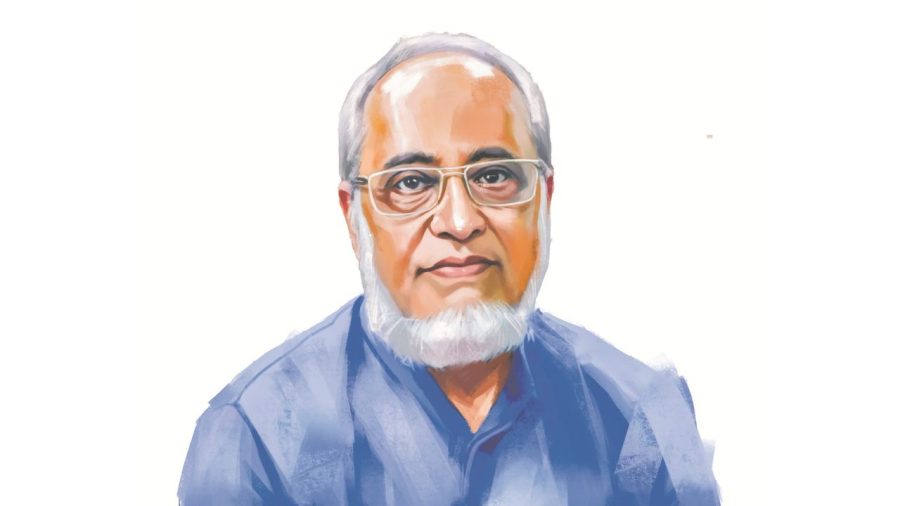

A bigger health budget alone will not improve healthcare unless Bangladesh strengthens the manpower, management capacity and accountability needed to use the funds effectively, said Dr Mohammad Zakir Hossain, a former member of the Health Sector Reform Commission and former senior WHO official at its South-East Asia Regional Office.
In an interview with Md Al Amin Sadman of Daily TIMES of Bangladesh, Dr Zakir said increasing health allocations without improving the system’s capacity to spend the money effectively would not necessarily translate into better healthcare.
“Around the world, most of the budget goes towards human resources,” he said. Bangladesh continues to have vacant posts and shortages of specialist doctors, nurses and technicians, he said, arguing that strengthening the health workforce should receive greater priority than spending mainly on buildings and equipment.
District-level hospitals also lack specialised services in fields including cardiology, nephrology, mental health and ophthalmology, he said. Buying modern equipment without ensuring trained personnel to operate and maintain it can also leave expensive machines unused.
“Per se, I bought the equipment, but it remained in storage and eventually became unusable. There are many such cases,” he said.
The shortage of technicians is particularly acute at the upazila level, according to Dr Zakir. Doctors cannot provide effective services without adequate nurses, technicians and other support staff, while advanced services such as intensive care require specially trained personnel.Health spending should therefore include maintenance and supervision as well as construction and equipment purchases, he said.
More than a year after the Health Sector Reform Commission submitted its report, its recommendations have yet to be translated into clear policy decisions or concrete implementation plans, Dr Zakir said. Although officials and policymakers have continued to discuss reforms, their commitments have not yet been reflected in formal decisions, he said.

“Nothing about the reforms is clear to me,” he said. “Whatever the people in the ministry and the policymakers are saying verbally about the reforms has not yet been put on paper,” he added. “First, it has to be put on paper, and then implementation will become visible. We cannot even see it on paper yet,” he said.
He said the lack of progress was especially visible in frontline healthcare, where shortages of manpower, training, supervision, medicines and equipment, along with weak accountability, continue to affect service delivery.
Bringing health assistants, family welfare assistants and community clinic workers together to provide similar services will not be enough unless their responsibilities are clearly defined, Dr Zakir said. The authorities must determine who will provide which services, how workers will be trained and supervised, how they will coordinate with communities and elected representatives, and when patients should be referred to higher-level facilities, he said.
A mechanism should also allow patients to be referred back to lower-level facilities after receiving treatment at higher levels, he added. The responsibilities of frontline workers should also be reflected in their salaries and benefits, Dr Zakir said. These workers are expected to handle vaccination, treatment, health education, reporting and record-keeping. Their pay, status and technical allowances should therefore be considered as part of the reform process, he said.
The recent measles outbreak exposed weaknesses in Bangladesh’s frontline health system, Dr Zakir said. “The people in the field health system who administer vaccines did not give vaccinations for one and a half months,” he said.




Issuing orders from the centre will not solve field-level problems unless authorities understand the difficulties faced by health workers, he said. “There have been many orders, but those orders have not been followed,” he added.
According to Dr Zakir, delays in the measles vaccination campaign reflected weaknesses in health-sector management. Such campaigns should take place at predetermined intervals, but the programme was delayed and postponed several times, he said. He attributed part of the delay to decision-making involving several committees under the health ministry.
Policy decisions should therefore incorporate the practical experience of frontline workers rather than relying solely on administrative or theoretical considerations.
“If those who have practical experience, those who have been through it firsthand, are not consulted and their help is not taken, these things will not work,” he said.
Strengthening primary healthcare will require area-specific planning rather than applying an identical structure across the country, Dr Zakir said. The number and type of health facilities required in an area should depend on its population, geography and healthcare needs, he said. Upazilas cannot all be treated in the same way because their populations and geographical conditions differ, he added.
The government must also ensure funding for maintenance, doctors and other health workers, equipment, medicines and uninterrupted service delivery. Without adequate support, health facilities could remain unused and eventually deteriorate, he said. If primary healthcare is to be provided free of charge, the government must also determine how the service will be financed, he added.
The Health Sector Reform Commission recommended additional financial incentives to retain doctors in remote and hard-to-reach areas. Explaining the proposed structure, Dr Zakir said, “If an area is very remote and difficult to reach, they should be given double their salary. If it is less remote, they should be given 50% more. If it is even less remote, they should be given 30% more.”
Financial incentives alone, however, would not be enough, he said.
Doctors serving in difficult areas should also receive professional incentives, including promotion, salary increases and opportunities for overseas training after completing a specified period of service.
Dr Zakir also questioned the administrative structure of the health ministry. Adding more administrative layers can slow decision-making as files have to pass through multiple levels. It can also make it difficult to identify who is responsible for a particular decision, he said.
The health administration should therefore remain streamlined enough to allow faster decisions and clear accountability. He also called for an independent commission for the health sector.
Healthcare cannot be treated as the sole responsibility of the health ministry or the Directorate General of Health Services because it is linked to multiple ministries, institutions and sectors, he said. “Health is not an individual sector. It is connected with many other sectors,” he said.
An independent commission could help establish accountability in areas including recruitment, procurement, construction, management and handling public complaints, he said.
Dr Zakir also highlighted the commission’s recommendation to expand the list of essential medicines. A broader list could reduce people’s expenditure on medicines, he said, although any changes should be made after consultation with relevant councils and stakeholders. He also questioned the existing medicine pricing mechanism, particularly the process of determining and verifying import prices of raw materials. Greater transparency is needed in that process, he said.
Dr Zakir said his main expectation from the government was that it should sit with members of the Health Sector Reform Commission and discuss how the recommendations could be implemented. The recommendations were prepared based on extensive experience, consultations with individuals and institutions and reviews of different aspects of the country’s health system, he said. The experience of commission members should therefore be used during implementation rather than treating the report as a standalone document.
He proposed forming a technical committee or working group to translate policy decisions into an actionable plan. “How can the government’s thinking be implemented step by step? How can this be put into practice?” he said.
For Dr Zakir, the ultimate objective is to ensure that the knowledge and experience accumulated over decades is used to improve the country’s health system. “At this stage of our lives, we want our knowledge and experience to be put to use in the country, for the people and for the government. That is what gives us peace,” he said.