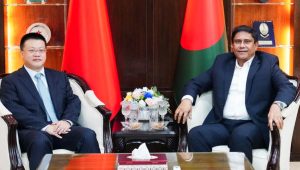
Bhutanese Ambassador to Bangladesh, Dasho Karma Hamu Dorjee, has said that both Bangladesh and Bhutan can benefit from importing hydropower from Bhutan.
He pointed out that Bhutan has immense potential for hydropower generation, which can contribute to regional prosperity.
He made these remarks on Monday at a seminar titled “Bangladesh-Bhutan Relations: Promoting Bilateral Ties for Shared Prosperity,” held at the Bangladesh Institute of International and Strategic Studies (BIISS) auditorium.
In his speech as a special guest, Hamu Dorjee said, “There is great potential for hydropower generation in Bhutan. Importing electricity from Bhutan can be mutually beneficial for both countries.”

He expressed satisfaction regarding the ongoing partnership between the two nations and emphasised the importance of common priority areas such as environment, hydropower cooperation, tourism, and education.
He further added, “Bhutan is committed to working closely with Bangladesh to build a future-oriented relationship based on mutual trust, respect, and regional harmony.”


Regarding education and connectivity, the ambassador noted that around 230 Bhutanese medical students are currently studying in Bangladesh.
Furthermore, due to easier travel procedures to Bhutan, nearly 1,500 Bangladeshis visited Bhutan over the past year.
In the welcome speech, Director General of BIISS Major General Iftekhar Anis highlighted the historical bond between the two nations.
He said, “Bhutan was the first country to recognise Bangladesh’s independence in 1971. To strengthen this long-standing friendship further, it is essential to enhance economic, cultural, and developmental cooperation.”
The keynote paper was presented by former ambassador Mashfee Binte Shams.
She discussed the evolution of Bangladesh-Bhutan relations and highlighted emerging opportunities in trade, connectivity, and renewable energy cooperation.
She believes these collaborations can play a crucial role in achieving sustainable growth in the region.
The event was moderated by Fellow at the Centre for Policy Dialogue (CPD) Professor Mustafizur Rahman.
Senior officials from various ministries, diplomatic missions, researchers, academics, and representatives from international organizations participated in the discussion.