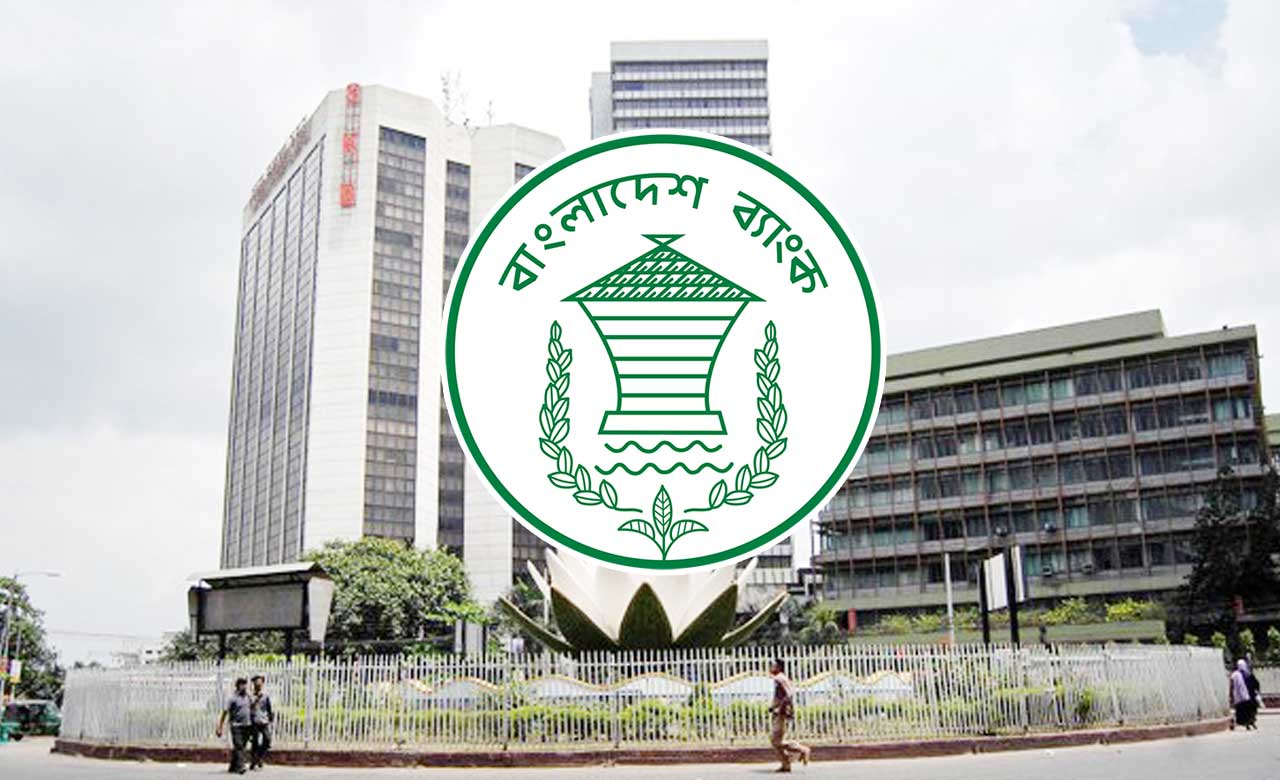



Bangladesh Bank (BB) has decided to cease five of its government-operated retail services offered to the public, including the sale of savings certificates and prize bonds, effective from the end of November.
The decision, confirmed by BB officials, is rooted in the need to mitigate security risks and to facilitate the modernisation of the bank’s headquarters, alongside developing enhanced vault facilities.
From 30 November, these specific retail services will be fully discontinued across the BB’s Motijheel headquarters and its other branches, as stated by the central bank’s Executive Director and spokesperson Arif Hossain Khan.
He further said, “The matter has been communicated to the Ministry of Finance, and a public notice will be issued soon.”

Services being withdrawn
The central bank delivers 10 distinct government services to citizens through 28 counters. The five services being phased out are: handling savings certificates, selling prize bonds, exchanging defective notes, payment against documents (PAD) handling, and providing change against challans.
This discontinuation will lead to the closure of 12 counters currently dedicated to these public services.




However, to accommodate official and internal requirements, a single internal counter will remain operational for transactions related to savings certificates, prize bonds, or challans.
Security review led to decision
Sources revealed that this strategic move was finalised following an extensive review process conducted in several high-level meetings over recent months. The initiative gained momentum after Governor Ahsan H Mansur inspected the cash division at the bank’s headquarters on 22 June and raised specific security concerns.
Subsequently, a committee was formed to assess the situation. Its report, presented during a progress meeting in September, provided the rationale for the decision. The report emphasised that the BB’s main building is classified as a Key Point Installation (KPI), housing critically sensitive operations including currency issuance and distribution, vault management, foreign exchange reserve oversight, and banking supervision.
The committee’s findings noted, “Excessive public gathering in such areas poses security risks.” It also referenced past security incidents, including reserve hacking, savings certificate fraud, unauthorized photography and videography inside the building, and altercations involving security personnel.
No public inconvenience expected
The report also highlighted that services like selling savings certificates and prize bonds are readily available through the extensive branch networks of over 60 commercial banks nationwide.
It further pointed out that no other central bank globally provides such retail services directly to the public. Therefore, discontinuing these services would not cause public inconvenience.
Clarification on existing savings certificates
While the sale of new savings certificates will be halted, the central bank has clarified that services for certificates already in the hands of the public will continue until their maturity dates. However, upon maturity, these certificates will not be eligible for reinvestment.
All other administrative processes for existing savings certificates will remain unaffected. These include procedures such as changing bank accounts, updating mobile numbers, adding or altering nominees, nominee operations following the death of the certificate holder, premature encashment, and other legal formalities.