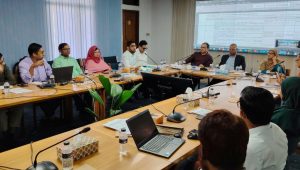
Dhaka South City Corporation Administrator Md Abdus Salam chaired a meeting at Nagar Bhaban on Tuesday to address rising congestion and public suffering caused by illegal battery-run rickshaws, with the government now preparing a policy to regulate the sector and clear footpaths.
The discussion, attended by leaders of the Bangladesh Rickshaw-Van and Battery-Run Rickshaw-Van Owners Federation, focused on controlling unlicensed vehicles, improving urban traffic flow and balancing livelihoods with commuter safety, the corporation said in a press release.
Officials noted that DSCC issued licences to around 2,12,000 pedal-driven rickshaws and vans in 2021. However, the number of unlicensed battery-run rickshaws has surged sharply, worsening congestion and raising safety concerns across the capital.

Federation leaders said the rapid expansion of battery-run rickshaws is pushing traditional pedal rickshaws towards extinction, with many drivers no longer willing to operate them. Some owners have retrofitted licensed pedal rickshaws with batteries and called for legal recognition of such modified vehicles under a new policy framework.
They also demanded action against seasonal operators and businesses bringing battery-run rickshaws into Dhaka from outside, arguing it undermines the city’s registered drivers and owners.




Administrator Md Abdus Salam said rickshaws remain part of Dhaka’s heritage, but illegal battery-run vehicles have become a “death trap” for residents. He said the government is working to introduce a policy to remove illegal battery-run rickshaws and free occupied footpaths while maintaining a balance between public convenience and livelihoods.
“Under the policy, only a fixed number of rickshaws with approved design, speed and safety features will be allowed on roads to prevent disorder,” he said.
He urged legitimate rickshaw owners and drivers in Dhaka to speak out against illegal operations originating from outside the city.
The meeting also discussed delays in passenger movement, coordination gaps and procedural limitations in managing urban transport, with participants emphasising technology-based solutions, coordinated action and stronger engagement among agencies.
Dhaka South City Corporation Chief Executive Officer Md Zahurul Islam and other senior officials were present.