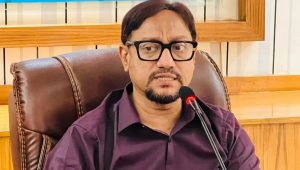
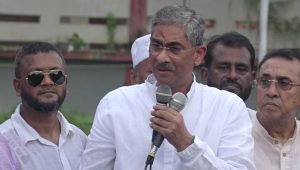
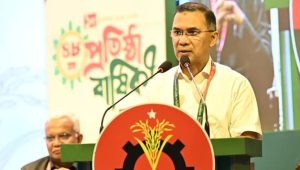
BNP Standing Committee member Amir Khosru Mahmud Chowdhury remarked on Wednesday that Bangladesh is facing a gradual decline as it has failed to establish a democratic system even after a year of the mass uprising.
“A year is a substantial period. The country should have moved to a democratic order by now, but this delay has led to a steady decline,” he said while addressing a seminar in a city hotel.
Drawing comparisons with historical contexts, Khosru noted that countries that quickly transitioned to democracy after uprisings or revolutions generally experienced better outcomes, whereas those that delayed this process often encountered economic collapse, societal unrest, and, in some instances, civil wars.
“Countries that failed to transition smoothly after uprisings, by making unnecessary demands or excuses, saw their democracy erode and their economies falter. Some even faced civil wars and internal divisions. This is why elections must be conducted as soon as possible,” he explained.

Khosru highlighted the worsening situation in Bangladesh due to the absence of democracy and an elected government. He pointed out the widening divide between the interim government and the people, which he said has led to ineffective governance.
“This gap is leading to a breakdown in law enforcement, insecurity, and an unsustainable business environment. Factories aren’t receiving fresh investments as investors are hesitant to commit resources amidst this uncertainty,” he added.
The seminar, titled “Post-July Political Thoughts: What Direction is Bangladesh Heading?” was organised by the School of Leadership USA (Bangladesh Chapter).




Khosru warned that the delay in implementing a democratic process has already cost Bangladesh over a year, deepening both political and economic instability. He also pointed out that despite hosting various international events, the country has not been able to attract substantial investments.
“At a recent summit, despite the presence of many current investors, no new investments were announced. However, with the upcoming election, there is renewed optimism. Investors are waiting for the elections before making any decisions. They are closely monitoring the situation and preparing to invest once the elections take place,” he explained.
The BNP leader urged all political parties to acknowledge the significant shift in public sentiment following the mass uprising. He highlighted the dramatic change in the mindset of the Bangladeshi people after the end of Sheikh Hasina’s authoritarian rule.
“Following the end of Hasina’s rule, the people’s expectations have soared. If political leaders fail to grasp these changes, the future of the country and the political parties will be at risk,” he warned.
The BNP leader stressed the importance of refraining from using the mass uprising as a political tool for personal gain.
“Arguing over who should take credit for the movement will only harm Bangladesh’s future. The credit belongs to the people who made sacrifices for the country, not to any individual,” he stated.
Khosru also reflected on the true freedom fighters who returned to their daily lives after the Liberation War of 1971, emphasising the need to move beyond using the freedom struggle for political advantage.
“After the Liberation War, real freedom fighters returned to their duties. Teachers went back to their schools and students returned to their colleges. Now, it is time for us to focus on the future of our country,” he concluded.