




In 2026, a viewer in Bangladesh can sit at home with a smartphone and move within minutes from a Korean romance to an American crime series, an Indian film, a Spanish thriller, pornography, political misinformation or an endless stream of short videos. The internet has made cultural borders almost meaningless.
Yet, in the same year, a legal notice has been sent to the Bangladeshi government asking for stringent restrictions on films and television dramas centred on romance. According to reports, the notice links excessive romantic content with cultural decline, adultery, loss of concentration among young people and even crimes such as rape.
For an international reader, this may sound almost satirical. Unfortunately, it also says something serious about where our cultural conversation is heading.
The timing makes the episode even more striking. In the FY2026-27 budget, Bangladesh for the first time made a major national allocation specifically for the creative economy.
The government announced a Tk 800 crore initiative, combining Tk 300 crore in direct allocation with another Tk 500 crore expected through Bangladesh Bank’s corporate social responsibility mechanism.
The ambition is large: nearly half a million jobs, a stronger contribution to GDP and a “Created in Bangladesh” identity covering film, music, publishing, design and digital content. For those of us who work in culture, this recognition matters. It finally acknowledges that creativity is not merely entertainment.
It creates employment, intellectual property, exports, identity and national influence.
But this is exactly where the contradiction begins. More than six months after the government took office, the creative-economy promise has not yet translated into a visible sense of recovery across the cultural sector.
There have been steps, and it would be unfair to say otherwise. Film-grant processes have moved after delays, and the budget commitment is substantial. But a coherent direction remains difficult to see.

The Information and Broadcasting Ministry itself has already changed hands, with Andaleeve Rahman Partho replacing Zahir Uddin Swapon in August. A new minister deserves time. Still, the first six months have shown us that announcing a creative economy is much easier than creating the conditions in which creative people actually feel secure enough to work.
This is why I do not see the legal notice against romantic drama as an important legal event in itself. A lawyer has every right to send a notice. It is not a court judgment, and it is not government policy.
If the matter eventually reaches the High Court, the court will decide whether there is a constitutional issue worth considering. My concern is elsewhere.
It is how quickly an individual opinion, apparently without any publicly presented research showing how much Bangladeshi content is “excessively romantic” or how romance causes rape or educational decline, can suddenly become a national debate about what stories a society should permit or discourage.
As a filmmaker, I find that process more troubling than the notice itself. Creative work rarely loses its freedom in one dramatic moment. It happens gradually. A writer develops a difficult scene.
A producer likes the script but worries that one part might create unnecessary controversy. An actor wonders whether a role could be misunderstood. During editing, another line disappears because nobody knows how it might be received politically or socially.




By the time the film is finished, nobody may have officially censored anything. Yet the original truth that made the story worth telling has been negotiated several times. The strongest censor can therefore be invisible. It begins operating inside the creator’s own imagination.
Bangladesh already has enough experience of this kind of pressure to take it seriously. Cultural programmes and performances have sometimes faced organised objections or been disrupted because of security concerns.
In 2025, a stage adaptation of Rabindranath Tagore’s Shesher Kobita at Dhaka’s Mohila Samity was initially cancelled after a threatening letter from people identifying themselves as “Towhidi Janata”; the performance later went ahead after police assurances.
These incidents are not all politically or religiously identical, and they should not be carelessly grouped together. But their cumulative effect matters. Artists learn that an event does not have to be formally prohibited to become difficult. Sometimes the possibility of confrontation is enough to make organisers, venues or producers retreat.
This pressure arrives at a time when the industry is economically weak. Bangladesh’s cinema exhibition network has fallen dramatically from the roughly 1,400 halls reported around the end of the 1990s to only around 50 operating regularly in a recent 2026 estimate.
Television professionals have also spoken publicly about shrinking work opportunities, while government-funded film projects have faced delays. I do not think we need dozens of statistics to understand the basic problem.
A filmmaker can make a film and struggle to find screens. A technician can have years of experience and still not know when the next job will come. A young writer can love cinema and still wonder whether choosing it as a profession is financially sensible.
That is why a creative economy cannot be built with money alone. A budget allocation can help finance projects, but it cannot create creative confidence by itself.
The economy works only when writers can earn from writing, technicians can build careers, producers can recover investments, intellectual property has commercial value and audiences have reliable ways to access local work.
Industry experts have already warned that Bangladesh needs a broader strategy involving copyright, taxation, financing, licensing and measurable outcomes. I would add cultural freedom to that list.
If creators must calculate political, administrative and social risk before they calculate artistic risk, the economy will remain fragile regardless of how much money is announced.
The global media environment makes this even more urgent. Bangladesh cannot realistically protect its culture by trying to reduce the range of stories produced at home. The opposite is necessary.
Local creators now compete for attention with virtually the entire world. The same young person who watches a Bangla drama can immediately switch to Netflix, YouTube or another global platform.
Restricting Bangladeshi storytelling will not make foreign content disappear. It will simply make the local alternative weaker.
We may eventually reach the absurd situation where viewers freely consume every imaginable representation of sex, violence, crime and desire produced abroad, while Bangla-language creators are expected to be particularly careful about two fictional people falling in love.
There is also a broader question of national attention. Imagine, only as an illustration, that one person spends three hours every day scrolling through a phone. Those are three private hours. Multiply that behaviour across tens of millions of people and it becomes an enormous amount of collective human time.
Some of it goes to useful information and great art, but much of it is absorbed by disposable entertainment, misinformation and content designed primarily to keep people scrolling. In such an environment, strengthening local storytelling should be a cultural and economic priority.
Our response should not be to make Bangladeshi creators more hesitant about what they can say.
The government still has time to make the next six months look different from the first. The appointment of a new Information and Broadcasting Minister can become an opportunity to define a clearer cultural direction.
The creative-economy allocation can become meaningful if it is connected to exhibition, copyright, financing, digital distribution, professional employment and genuine creative independence.
What Bangladesh needs now is not another argument about which genre deserves less space. It needs a serious effort to make cultural work sustainable again.
The legal notice against romantic drama is therefore interesting not because romance is under immediate threat of prohibition. It is interesting because of what the debate reveals.
In the same year that Bangladesh has formally recognised the economic value of creativity, we are still surprisingly comfortable debating whether particular kinds of imagination should be narrowed. That contradiction should concern us more than romance itself.
A country cannot build a creative economy while making its creators feel culturally claustrophobic. If Bangladesh wants its stories to compete with the world, the first requirement is quite simple: give its storytellers enough room to breathe.
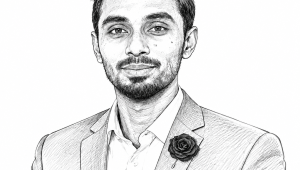
The author of this article, Abu Shahed Emon, is a filmmaker.