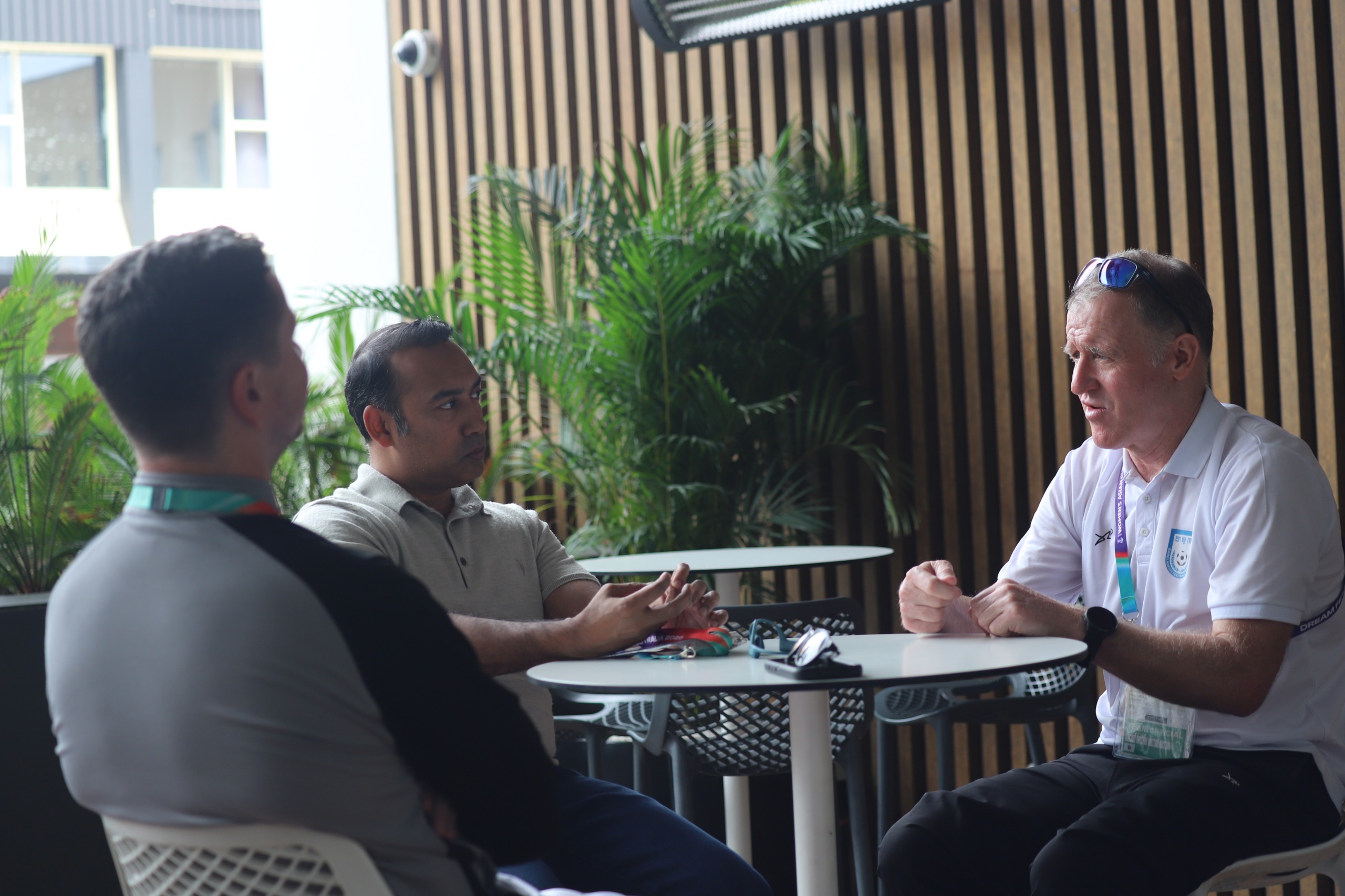



Bangladesh Football Federation president Tabith Awal arrived in Sydney on Saturday, met the Bangladesh women’s team at their hotel on Sunday afternoon, listened to their demands, and spoke openly before their Asia Cup match against China women’s national football team.
Bangladesh step onto the Asian Cup stage for the first time in their history. That alone explains why nearly 20 journalists travelled from Dhaka to follow the team. Everyone senses a moment that stretches beyond one match.
Tabith Awal met the coaching staff and players in a relaxed but focused setting. He wished them well, while the players clearly laid out where they stand and what they expect from the federation.
Speaking to reporters outside the team hotel, the BFF president framed the moment simply. “Tomorrow Bangladesh women will take the field against China. We have already created history, and hopefully tomorrow we can create another one.” Optimism flowed easily, but he avoided empty hype.

China carry heavyweight status in Asian football. They win Asian Cups, they reach World Cup finals, and they bully most opponents with tempo and physicality.
Awal refused to load his players with fear. “China play in the World Cup too, but we are confident we can put up a good performance tomorrow.” He positioned himself as a supporter first, not a boss. “I came to Sydney as a fan to watch them play. My message was simple: give your best.”




He also addressed resources without dressing it up. “We gave whatever resources we could. In return, they should give whatever they can for the country and for themselves.” It sounded fair, but it also quietly admitted the limits.
The players did not stay silent. They asked the president to announce a bonus before the next match. Awal confirmed the request directly. “They asked that the federation at least announce a gift or bonus for the next match. I told them we will do it, but you play for Bangladesh.”
That promise sits under a cloud. After winning the SAFF Championship in 2024, BFF announced a bonus of 15 million taka. The money still has not reached the players.
The tournament format keeps Bangladesh alive beyond the giants. Twelve teams play across three groups, with group winners, runners-up, and the two best third-placed sides reaching the quarter-finals.
Awal made his calculation clear. China and North Korea look strong, but Uzbekistan offer a realistic target. “According to the format, the best two third-placed teams qualify. So until the third match, there will always be an opportunity.”
He backed that belief with staff feedback. “I spoke with the physio, fitness trainer, and nutritionist. Everyone is very positive after watching training sessions.” He even pushed the comparison. “Bangladesh are at least at China or North Korea’s level tactically and in fitness.”
Bangladesh earned this stage by beating Myanmar in qualification. Awal once called it ‘Mission Australia’, though he admits preparation fell short. He refused to reopen old wounds. “Let’s not talk about the past now.”
Instead, he looked forward. “We must invest more in these girls. The more we invest with time, money, and technical quality, the more results they can give Bangladesh.” This time, his words carried a challenge aimed at his own federation.