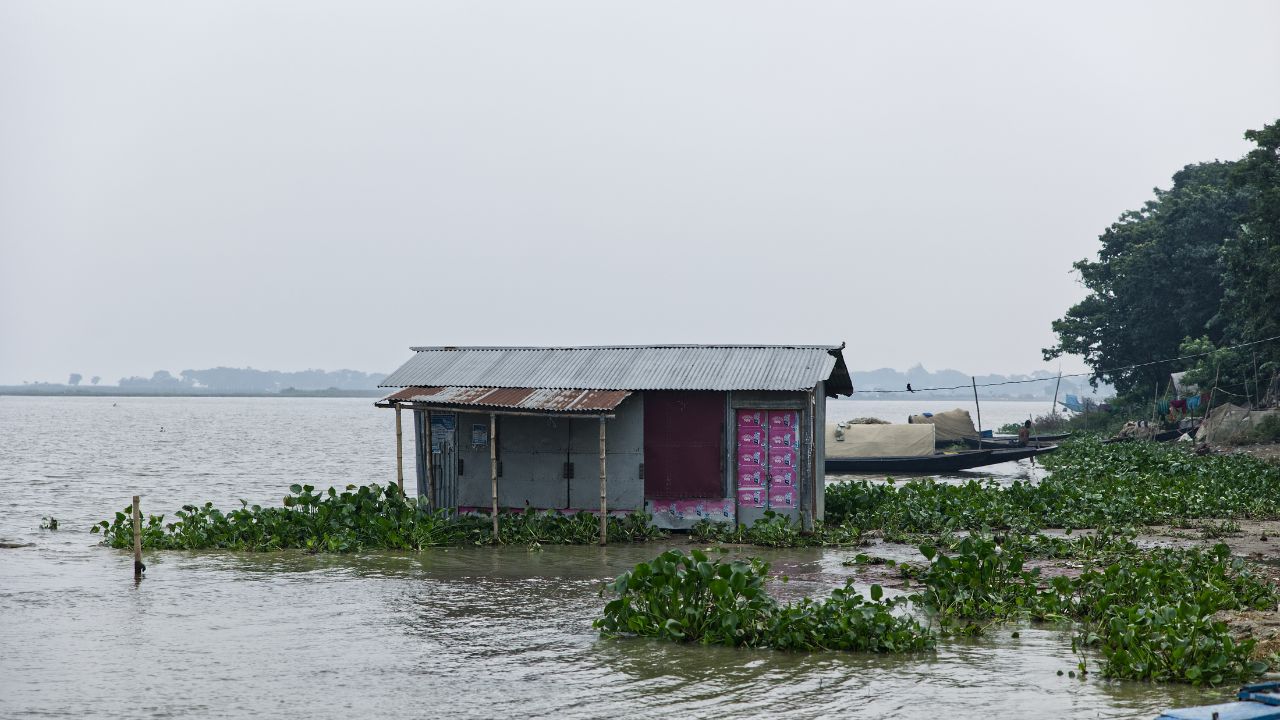

Severe flooding in India’s Assam has sent a surge of water into the Brahmaputra basin, raising concerns downstream in Bangladesh.
However, flood experts say there is no immediate threat of a major flood as river levels in Bangladesh still remain below danger marks.
The devastating floods in Assam have submerged 794 villages across 16 districts, killing at least 10 people and affecting more than 3,62,000 residents.
As the floodwaters move through the Brahmaputra basin, their impact is being felt at several monitoring stations in Bangladesh. But Partha Pratim Barua, a sub-divisional engineer at the Flood Forecasting and Warning Centre (FFWC), said the situation is still within control.
“Since Assam’s flooding is mainly centred around the Brahmaputra river basin, its effects are being observed at several monitoring stations in Bangladesh. However, there is no risk of a major flood in the country at this moment,” he told TIMES.
The Brahmaputra is currently flowing close to the warning level at some points in Bangladesh, but water has not crossed the danger mark anywhere.

According to Partha, river levels may remain near the warning level for the next three days before starting to fall, bringing relief to vulnerable areas.
“The water that has risen may recede within the next three to four days,” he said.
The Assam flood crisis has hit Sivasagar, Charaideo, Jorhat, Dibrugarh, Sonitpur, Biswanath, Golaghat, Dhemaji, Nagaon, Karbi Anglong, Cachar, Udalguri, Chirang, Kamrup and Kamrup Metropolitan districts.




Sivasagar, Charaideo and Jorhat have suffered the worst damage, with more than 3,00,000 people affected across the three districts.
The Assam State Disaster Management Authority (ASDMA) said large parts of Upper Assam have been inundated, disrupting road links and damaging livelihoods.
At least 19,100 hectares of farmland have gone underwater as relentless rainfall and mountain runoff pushed the Brahmaputra, Burhi Dihing, Disang and Dhansiri rivers far above their normal levels.
More than 100 relief camps have been opened in flood-hit districts, while rescue operations are underway to evacuate people trapped in the worst-affected areas.
Teams from India’s National Disaster Response Force (NDRF), Assam State Disaster Response Force (SDRF), the army and fire service are working together in rescue efforts.
Meanwhile, Bangladesh is keeping a close watch on several northern districts amid the possibility of rising river levels over the coming week.
The Dhaleswari, Teesta basin rivers and Kushiyara River are under a 24-hour watch, with Nilphamari, Lalmonirhat, Rangpur, Gaibandha and Kurigram placed under flood monitoring.
Partha said the rise in water levels was being driven not only by rainfall in Bangladesh but also by heavy rainfall across the wider river basin, especially in India.
“Rainfall across the entire basin, particularly in the Indian part, has contributed to the rise in water levels in rivers including the Kushiyara,” he said.
The Bangladesh Meteorological Department said the monsoon remains active over the country, with the monsoon trough stretching from Punjab, Haryana, Uttar Pradesh, Bihar and West Bengal through central Bangladesh to Assam.
Intermittent light to moderate rain or thundershowers are likely across most parts of Bangladesh over the next five days, while some areas of Rajshahi, Rangpur, Dhaka, Mymensingh, Khulna, Barishal and Sylhet divisions may experience moderate to very heavy rainfall.
Rainfall activity is expected to remain higher in Khulna, Barishal and Chattogram divisions throughout the week.
Despite the rising water levels, flood officials urged people not to panic.
“The situation is being reviewed every day. Water levels are currently within the warning range and may rise slightly further. But under the present circumstances, there is no possibility of a major flood,” Partha said.