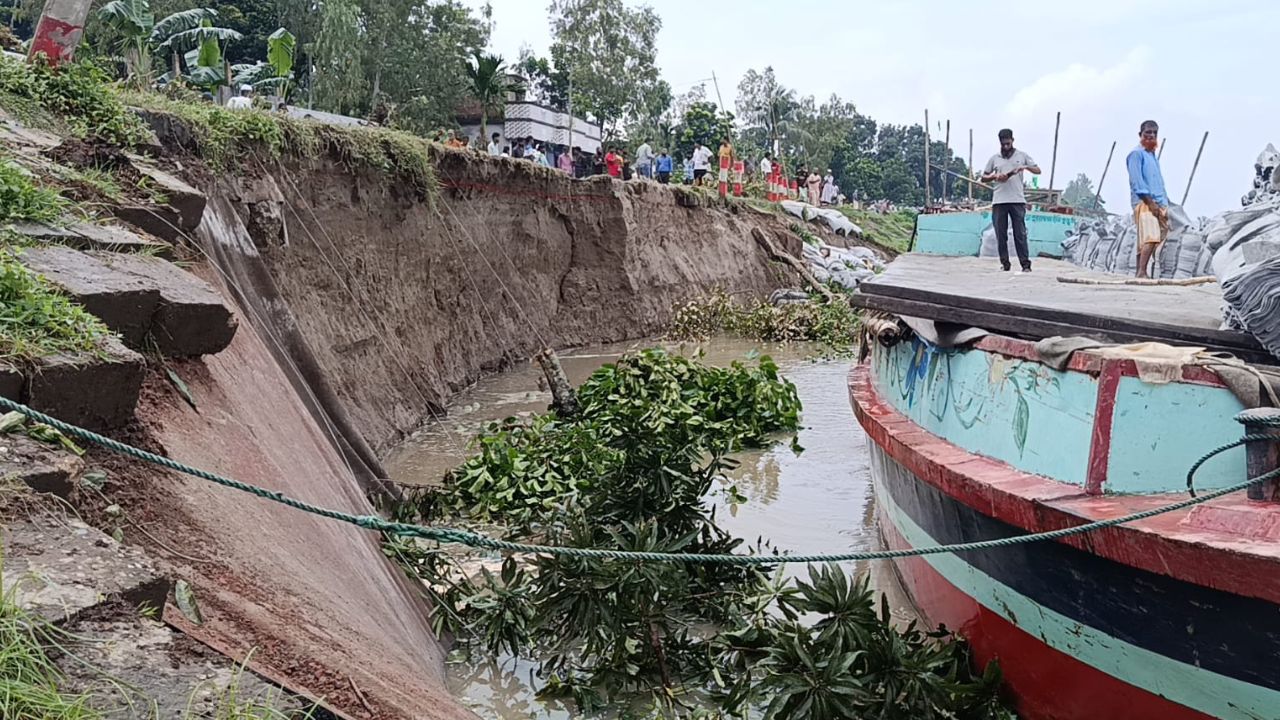

A 50-metre stretch of Tarakandi-Bhuapur-Tangail regional highway collapsed into Jamuna River on Monday night, cutting off vital communication and sparking flood fears in Tangail’s Gopalpur upazila.
The collapse, triggered by the continuous rise in water levels, occurred in Sakharia-Nalin area of Hemnagar union.
Fresh cracks have appeared in the centre of the highway, leading authorities to suspend all vehicular movement for the third consecutive day due to high risk. The suspension has caused immense suffering for thousands of passengers and residents.

The closure of the highway has forced commuters, including those in ambulances and goods-laden trucks, to take alternative routes. Many travel an additional 10 kilometres to reach their destinations, resulting in increased transport costs and significant delays.
Residents fear that a total failure of the road-cum-embankment would submerge vast tracts of land across Gopalpur and neighbouring upazilas, potentially affecting hundreds of thousands of people and permanently severing communication links. Many families living near the riverbank have begun moving their belongings to safer locations.




The Bangladesh Water Development Board (BWDB) is working day and night to protect the vulnerable embankment. BWDB Executive Engineer Md Maeen Uddin stated that they inspected the site on Sunday after being alerted by locals.
“We are dumping geo-bags to stem the erosion. So far, 5,000 bags have been used,” he said, adding that the situation is being monitored constantly and further preventive measures will be taken if necessary. In addition to geo-bags, large tree trunks are being dropped into the river to break the impact of the strong current.
Gopalpur Upazila Nirbahi Officer (UNO) Manjurul Islam noted that the BWDB has supplied an adequate number of geo-bags. He added that the ongoing dumping has helped reduce panic among the local population by showing positive progress in protecting the embankment.
Tangail-2 MP Abdus Salam Pintu visited the affected area on 20 July and directed officials to take immediate, effective action to halt the erosion.
Despite these emergency measures, residents expressed frustration, claiming that temporary fixes like geo-bags are used every year without addressing the root cause.
They alleged that the lack of sustainable river training initiatives leads to a recurrence of the crisis and demanded the construction of a permanent, sustainable riverbank protection embankment to ensure long-term safety.