


Bad Bunny delivered a Super Bowl halftime show that doubled as a cultural statement, transforming the biggest stage in American sport into a celebration of Latin identity, music and solidarity, with surprise appearances from Lady Gaga and Ricky Martin and an on-stage wedding that left viewers talking long after the final whistle.
Introduced by Apple Music promos promising that “the world will dance”, the Puerto Rican superstar more than kept his word. Racing through a high-energy medley of his hits, Bad Bunny reached an estimated global audience of more than 125 million, many of whom were encountering his work for the first time. What they saw was not just a pop spectacle, but a carefully constructed homage to his roots and a pointed response to the political moment.
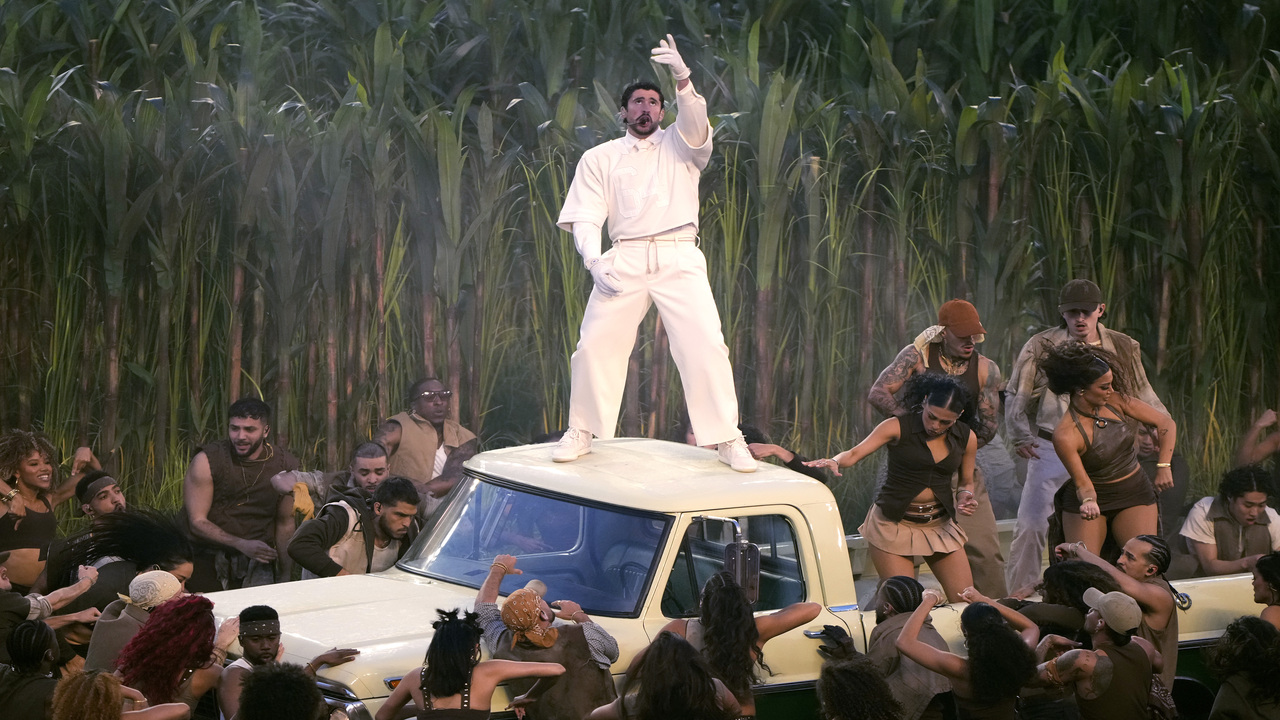
The elaborate set evoked everyday life in Puerto Rico, shifting from a sugar-cane field to a neighbourhood vecindad complete with a barber shop, liquor store and a casita inspired by the house used during his Puerto Rico concert residency last summer. As the performance unfolded, the space filled with dancers, musicians and celebrity guests, including Pedro Pascal, Jessica Alba and Karol G, all visibly enjoying the party-like atmosphere.

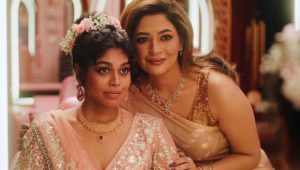
One of the night’s most unexpected moments came midway through the show, when Lady Gaga joined Bad Bunny for a salsa-inflected reinterpretation of her hit ‘Die With a Smile’. The segment culminated in a symbolic wedding ceremony performed live on stage, lending a theatrical flourish to a performance already rich with visual and emotional detail. The pairing of Gaga, a global pop figure, with Bad Bunny underscored the show’s broader message of cultural exchange and unity.
Ricky Martin’s appearance added another layer of meaning. The Puerto Rican star, whose late-1990s crossover success helped open doors for Latin artists in the US, performed alongside Bad Bunny in a segment that referenced power cuts and hardship on the island following Hurricane Maria. The imagery was sombre but purposeful, acknowledging loss while placing resilience and pride at the centre of the narrative.




Throughout the show, political undertones were present but rarely explicit. Visual cues and lyrical references pointed to issues of migration, racism and marginalisation, themes Bad Bunny has addressed openly in recent interviews and award speeches. At one point, footage referencing his recent Grammy acceptance remarks played briefly, reinforcing his stance against discrimination.
The finale brought the message into sharp focus. Holding a football marked with the words “Together, we are America”, Bad Bunny wished the crowd “God Bless America” before naming countries across the Americas, including his native Puerto Rico. The gesture framed the performance not as a protest, but as an invitation, insisting that Latin culture is an integral part of the American story.
As fireworks closed the show and the field turned into a mass dancefloor, the significance of the moment was hard to miss. This was the first Super Bowl halftime performance led primarily in Spanish, a milestone that reflected not only Bad Bunny’s dominance in global music, but a broader shift in who gets to define mainstream pop culture.
In the end, the spectacle was less about surprise guests or viral moments than about presence. Bad Bunny used the Super Bowl to stake a claim for visibility, joy and belonging, delivering a halftime show that entertained, provoked and, above all, made a case for unity through music.