


The Asia-Pacific Group on Money Laundering (APG) has reviewed Bangladesh’s preparedness for its upcoming mutual evaluation, focusing on financial sector reforms, institutional readiness and priority actions to strengthen anti-money laundering measures.
An APG delegation visited Bangladesh from 11 to 13 August for preliminary mutual evaluation planning, holding discussions with policymakers, regulators, law enforcement agencies and private-sector stakeholders ahead of the 2027-28 assessment.
The delegation expressed concern over irregularities, corruption, large-scale financial losses and overseas transfer of funds from Bangladesh’s banking and capital market sectors during the previous regime, saying these issues could affect the evaluation. It also welcomed current reform measures and efforts to recover siphoned-off funds.
During the visit, the APG team met Finance Minister Amir Khosru Mahmud Chowdhury, Bangladesh Bank Governor Md Mostaqur Rahman, officials of relevant ministries, regulatory authorities, law enforcement agencies and private-sector representatives.

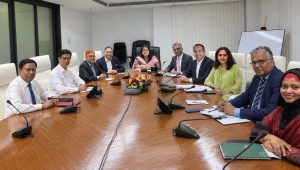
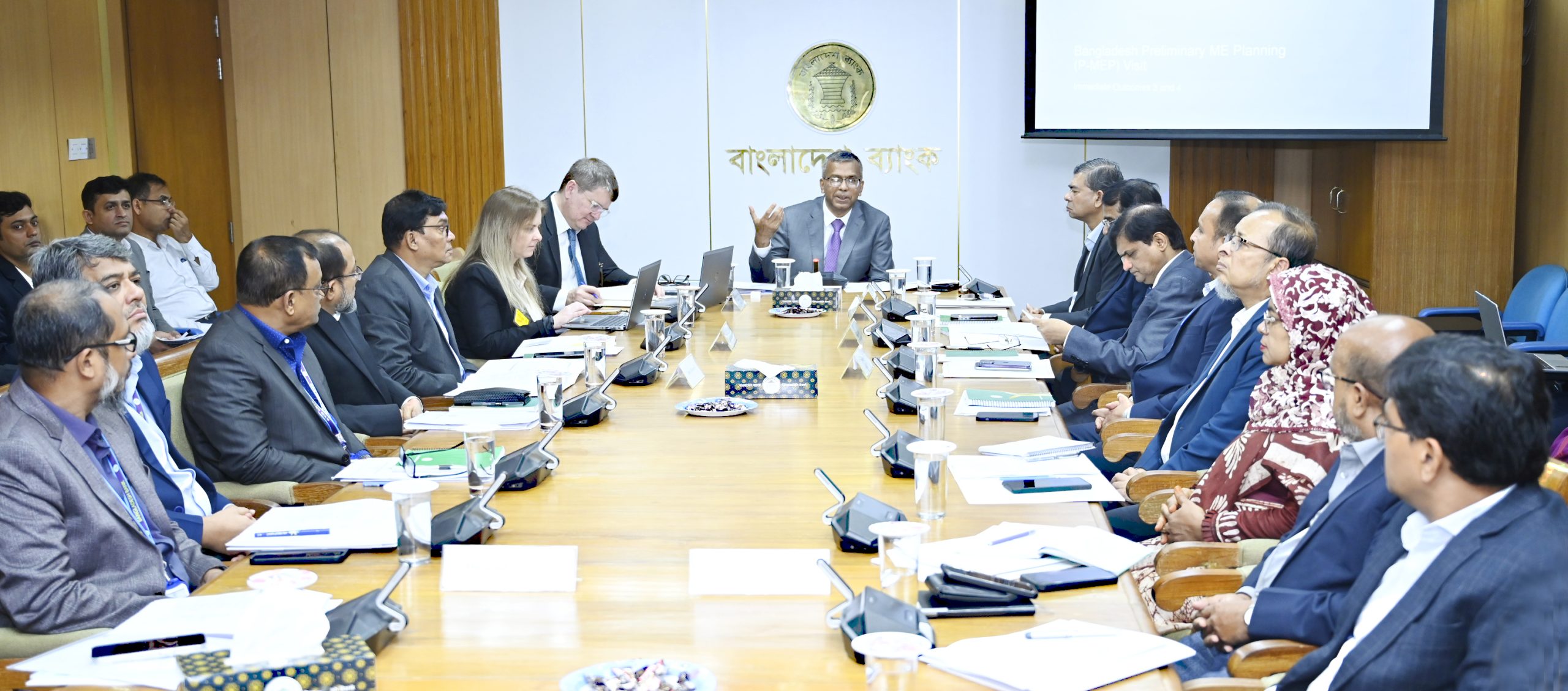
The delegation attended a meeting of the National Coordination Committee on preventing money laundering and terrorist financing, chaired by Finance Minister Amir Khosru Mahmud Chowdhury.
The finance minister reaffirmed the government’s commitment to strengthening Bangladesh’s framework for preventing money laundering, terrorist financing and financing linked to the proliferation of weapons of mass destruction.
A working committee meeting, chaired by Financial Institutions Division Secretary Nazma Mobarek, reviewed Bangladesh’s preparations, institutional responsibilities, priority areas and next steps for the evaluation.




During the three-day programme, the APG delegation held discussions with representatives of the Bangladesh Financial Intelligence Unit, Bangladesh Bank, Bangladesh Securities and Exchange Commission, Insurance Development and Regulatory Authority, Microcredit Regulatory Authority, Anti-Corruption Commission, Criminal Investigation Department, National Board of Revenue, Registrar of Joint Stock Companies and Firms, law enforcement agencies, customs, border and port authorities.
The meetings reviewed observations and recommendations from previous evaluations, progress made since then and priority actions required for the next assessment.
The delegation also held a separate session with private-sector reporting entities, including banks, insurance companies, capital market intermediaries, non-government organisations and non-profit organisations.
The mutual evaluation assesses a country’s compliance with international standards on preventing money laundering, terrorist financing and financing linked to the proliferation of weapons of mass destruction.
Bangladesh’s next mutual evaluation is scheduled for 2027-28. The country previously underwent assessments in 2002, 2009 and 2016.
Following the 2009 evaluation, Bangladesh was included among countries considered vulnerable to risks affecting the international financial system but was removed from that list in February 2014 after taking corrective measures.
In the 2016 evaluation, Bangladesh was recognised as a compliant country by APG and its 42 member states.