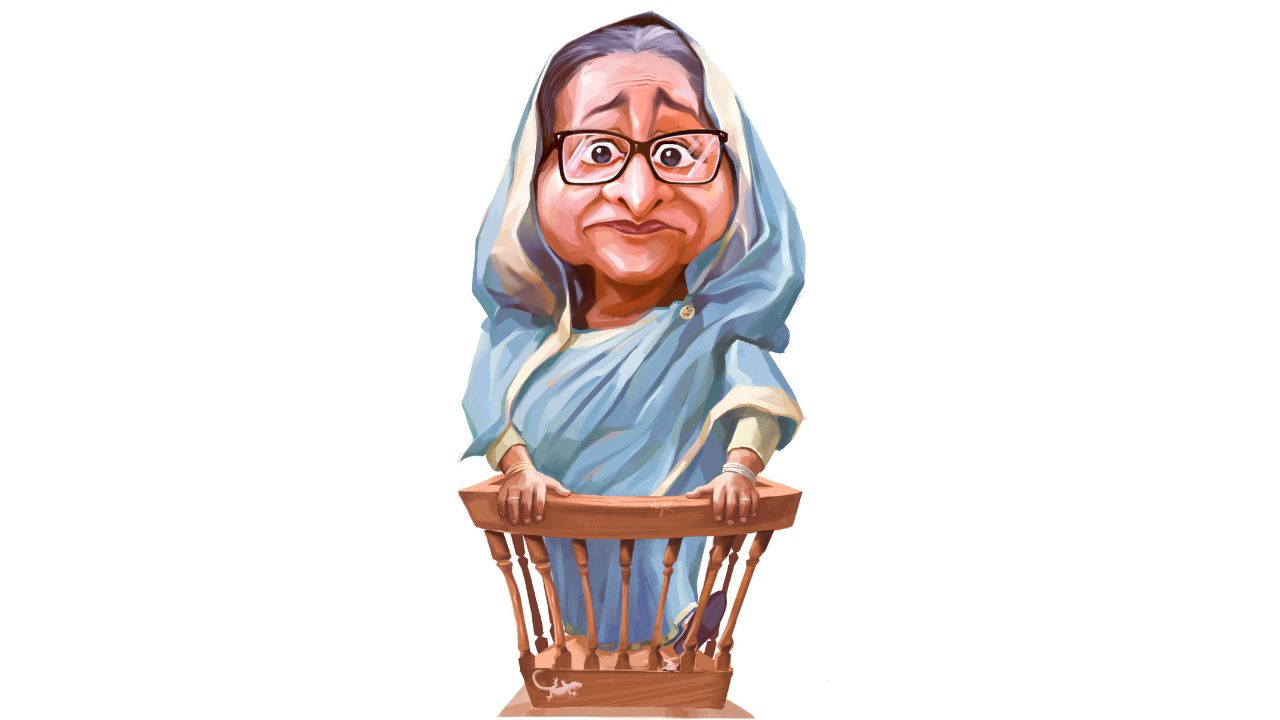

The nation waits for a historic judgement today in a case filed against deposed prime minister Sheikh Hasina on charges of crimes against humanity committed during the student-led mass uprising of 2024.
The International Crimes Tribunal-1 is set to deliver its verdict around 11am against Hasina, who ruled Bangladesh in both democratic and authoritarian forms for about 21 years.
Other accused in the case are former home minister Asaduzzaman Khan Kamal and former police chief Chowdhury Abdulla-al-Mamun.
READ MORE: From leader of democracy to autocrat
Hasina and Kamal fled the country following the fall of the Awami League government on 5 August last year. Mamun, currently in custody, will be the only accused present in the dock as the three-member bench led by Justice Golam Mortuza Mozumder reads out the judgement.
Hasina has taken refuge in New Delhi under the protection of Indian authorities, while Kamal is also believed to be hiding somewhere in the neighbouring country. Arrest warrants have been issued for both. The interim government formally requested Hasina’s extradition from India, but without success.

Hasina is set to become the first Bangladeshi prime minister to be tried on charges of crimes against humanity — including murder, attempted murder, torture, enforced disappearance, and other inhumane acts — linked to the uprising.
A United Nations investigation into the 2024 uprising reported death of 1,400 protesters during the state’s crackdown. The UN fact-finding mission documented systematic abuses, including the use of live ammunition, tear gas, and helicopter gunfire against unarmed demonstrators, describing the response as “grossly disproportionate and aimed at instilling fear.”
ALSO READ: Undeniable evidence meets Hasina’s denials



International human rights organisations, including Amnesty International and Human Rights Watch, stated that the crackdown constituted crimes against humanity. international media outlets also published reports exposing how Sheikh Hasina herself ordered using lethal weapons against the protesters to cling to power.
Meanwhile, security in and around the tribunal has been significantly reinforced, with additional police and paramilitary deployment. On Sunday, the Supreme Court requested assistance from Army Headquarters to bolster protection around the ICT.
Fearing violence from supporters of the deposed prime minister, authorities have tightened security in the capital and other major cities. Dhaka Metropolitan Police Commissioner Sheikh Md Sazzad Ali has instructed officers to open fire if arson attacks or crude bombings are attempted to kill citizens.
The interim government in 2024 reconstituted the ICT to try those who committed crimes against humanity. Three cases were filed with the tribunal against and those civil and military officers, and party leaders who aided her to crackdown on the protesters.
Prosecutors submitted their charge sheet in the first case against Hasina and two others in June, bringing five counts of charges. On 13 November, the tribunal fixed 17 November for verdict delivery after completing hearings from both sides.
Prosecutors found that Hasina personally approved harsh measures, including aerial surveillance and the deployment of armed units against civilian demonstrators. They presented evidence linking the accused to serious offences and sought capital punishment for Hasina and Kamal, leaving Mamun’s fate to the court as he turned approver.
According to the tribunal, Hasina made “inciting” remarks during a press conference at Gonobhaban on 14 July 2024, triggering the mass protests. She is accused of authorising the use of helicopters, drones, and live ammunition against demonstrators.
The indictment details the killing of student Abu Sayed at Begum Rokeya University in Rangpur, the shooting of six protesters in Chankharpul, Dhaka, and the burning to death of six people in Ashulia.
During a hearing on 10 July, Mamun admitted involvement in crimes against humanity. He told the tribunal, “The allegations of murder and mass killings during the July–August uprising are true. I accept responsibility and plead guilty.” He expressed his intention to provide full details to help the court “uncover the truth”.
State-appointed defence lawyer Amir Hossain, representing Hasina and Kamal, demanded acquittal, claiming they are innocent.
Hasina faces two additional ICT cases involving enforced disappearances, torture in secret detention sites, and killings during her more than 15-year tenure, including charges linked to the deadly crackdown on a Hefajat-e-Islam rally in Dhaka on 5 May 2013, where she is the prime accused.
Prosecutor Gazi Monowar Hossain Tamim said the judgement will be broadcast live on BTV and streamed on the tribunal’s official Facebook page. Asked whether Hasina’s gender would influence the outcome, he said, “Ordinary law offers limited priority for women, minors or the ill in bail matters. No such provision exists in ICT law. The verdict will depend solely on the gravity of the alleged crimes.”
Chief Prosecutor Mohammad Tajul Islam urged the tribunal to impose the maximum sentence, saying the prosecution seeks justice “for the scale of the alleged atrocities”.
In an interview with TIMES of Bangladesh, prosecutor and special investigator Tanvir Hassan Zoha hopes Hasina will be given the highest [death] penalty.