Rashed Al Mahmud Titumir, the prime minister’s adviser on ministries of finance and planning, said none of the large-scale development projects undertaken during Awami League’s more than 15-year tenure were realistic.
He added that past projects were primarily based on cronyism and patronage, failing to give proper importance to reality, effectiveness, and sustainable development.
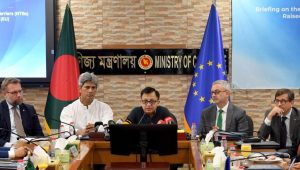
Titumir made these comments during a meeting of the advisery committee on Wednesday at the NEC Building of the Planning Commission, focusing on the formulation of a five-year strategic framework for the 2025–2030 period.
The meeting was chaired by interim government’s planning adviser Wahiduddin Mahmud.

Project reviews and strategic shifts
Speaking at a press briefing following the meeting, Titumir challenged the feasibility of previous initiatives, mentioning that not a single project was adopted in an implementable manner outside of patronage.
Regarding the future of the previous government’s mega projects, he noted that a review committee has been formed, which is expected to complete its assessment by June next year, after which the future of ongoing projects will be decided.




He emphasised a fundamental shift in development planning, moving away from a model dominated solely by state investment to one that ensures coordination between state and private sector investments.
This new strategy aims for the democratisation of the economy, creating a structure where every citizen benefits from and participates in development.
2026-2030 strategic framework
The meeting presented the “Five-Year Strategic Reform and Development Framework (2026–2030),” dated 15 April 2026, which aims to ensure inclusive and sustainable growth.
The framework will be implemented in three distinct phases, starting with a six-month recovery phase focused on managing current crises, rationalising exchange rates, and simplifying trade licences.
This will be followed by a one-year reconfiguration phase emphasising financial sector restructuring and increased financing for SMEs, and finally, a five-year reconstruction phase prioritising industrial diversification and universal social protection.
Economic targets and ease of business
According to the General Economics Division, the plan targets a GDP growth rate rising to 7 per cent by 2030 while reducing inflation to 5 per cent. Other key targets include increasing the investment rate to 35 per cent of GDP and maintaining the revenue deficit within 5 per cent.
To improve the investment climate, the government plans to reduce bureaucratic hurdles through digital approvals, setting ambitious goals such as company registration within 48 hours and employment permits within seven days.
While the plan serves as a comprehensive roadmap for a stable economy, its success remains contingent on policy continuity and political will, which are identified as significant challenges based on historical experience.