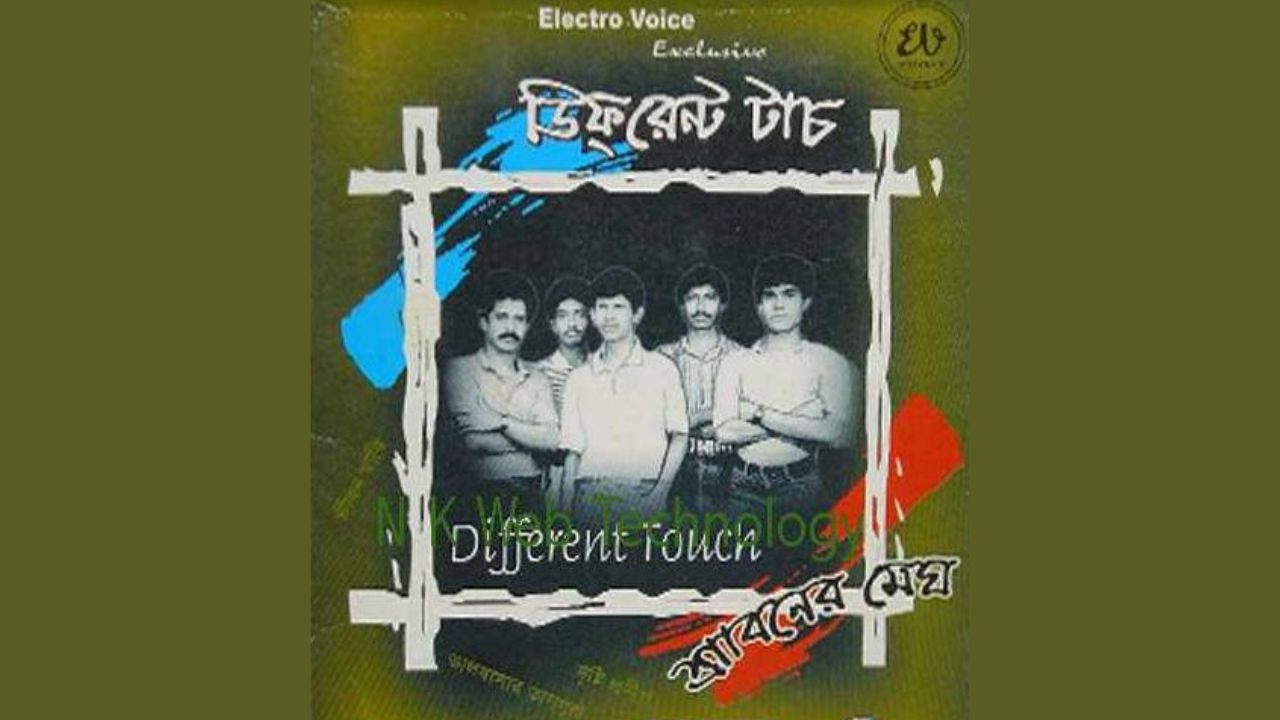



Nearly four decades after its release, a song born on a restless monsoon night in 1987 has found a new audience. ‘Aj Keno Mon Udashi Hoye, Dur Ojanay Chay Harate’ has returned to the spotlight after a viral social media reel sparked fresh conversations around the timeless Bengali classic.
The revival began when Beauty Rani Pal, head teacher of a government primary school in Sylhet, shared a reel featuring the song. The video triggered online debate and cyberbullying, but it also led to a wave of solidarity from fellow teachers. Unexpectedly, the controversy introduced the decades-old melody to a new generation, proving that some songs remain untouched by time.
But the story of this iconic track began long before the age of viral videos. Its journey started on a rain-soaked night in Khulna in 1987, when band Different Touch was racing to complete its debut album.
At the time, a full album usually required 12 songs. The band had completed 11 tracks, but one final song was still missing. The responsibility of creating that last piece fell on lyricist and composer Ashraf Babu.
The band was scheduled to travel to Dhaka for recording the next day, but Babu was struggling to find inspiration. Outside his window, the Bengali month of Srabon was in full force. Khulna had witnessed four straight days of heavy rain.

As he watched the rain-soaked night, Babu decided to turn that atmosphere into a song.
He wrote the now-famous opening lines:
“Sraboner meghgulo joro holo akashe,
Ojhoriye nambe bujhi Srabone jhoraye…”




The words flowed naturally, and by the early hours of the morning, the song was complete. Babu later recalled feeling a deep sense of relief after finishing the track that would go on to define Different Touch’s identity.
Released by Electra Voice, the album featured vocals by Ali Ahmed Babu. Soon after the recording, Ashraf Babu experienced the song’s growing reach himself. Standing outside a cassette shop at Khulna New Market, he heard his own composition playing in public for the first time.
The song’s lasting appeal lies in its simplicity. Instead of using complicated poetic expressions, Babu created a world with familiar images — Srabon clouds, a quiet madhabi flower beside a window, garden blooms, cool winds and a lone traveller stopping on the road.
At the heart of the song remains its unforgettable line:
“Aj keno mon udashi hoye, dur ojanay chay harate.”
For generations of listeners, the line has become a personal expression of longing and nostalgia.
The song also carries a legendary story. Different Touch vocalist Mejbah once recalled a 1991 concert at Jahangirnagar University’s open stage. As soon as the band started performing ‘Sraboner Meghgulo’, rain began pouring, forcing organisers to stop the programme.
The same coincidence happened again the following year when the band performed the song at the same venue. The unusual moments later became part of the band’s folklore.
From cassette tapes to digital platforms, the melody continues to live on. It remains a favourite at university cultural programmes, band shows, television music events and family gatherings. Many young bands have also covered the song, while online platforms continue to introduce it to new listeners.
Nearly 40 years after its creation, ‘Aj Keno Mon Udashi Hoye’ has not lost its charm. Instead, it has become one of the defining classics of Bengali band music — a song born from a rainy Srabon night that still returns whenever the monsoon arrives.