





Narayanganj has changed rapidly over the past 14 years. New roads cut through old neighbourhoods. High-rise buildings have replaced ponds and fields. Flyovers promise faster movement. Development is visible almost everywhere. Yet just a few kilometres away from this expanding city, people still cross a canal on a bamboo bridge.
In Kashipur union’s Hajipara area of Fatullah, the only connection between the two sides of a branch of the Dhaleshwari River is a 600-foot-long bamboo and wooden bridge. It sways with every step, planks creak, and ropes are frayed. Still, every day, hundreds of people walk across it because there is no alternative.
Ten villages depend on this fragile structure. Residents of Char Kashipur, Narsingpur, Dighichar and several surrounding areas cross the canal daily to reach Narayanganj city. Students, garment workers, elderly men, women carrying groceries, and even children on their way to school all take the same risk.
The bridge was built more than a decade ago by locals out of necessity. Since then, no permanent bridge has been constructed over the Kashipur canal. While development surged elsewhere, this stretch remained untouched, like darkness beneath a lamp.
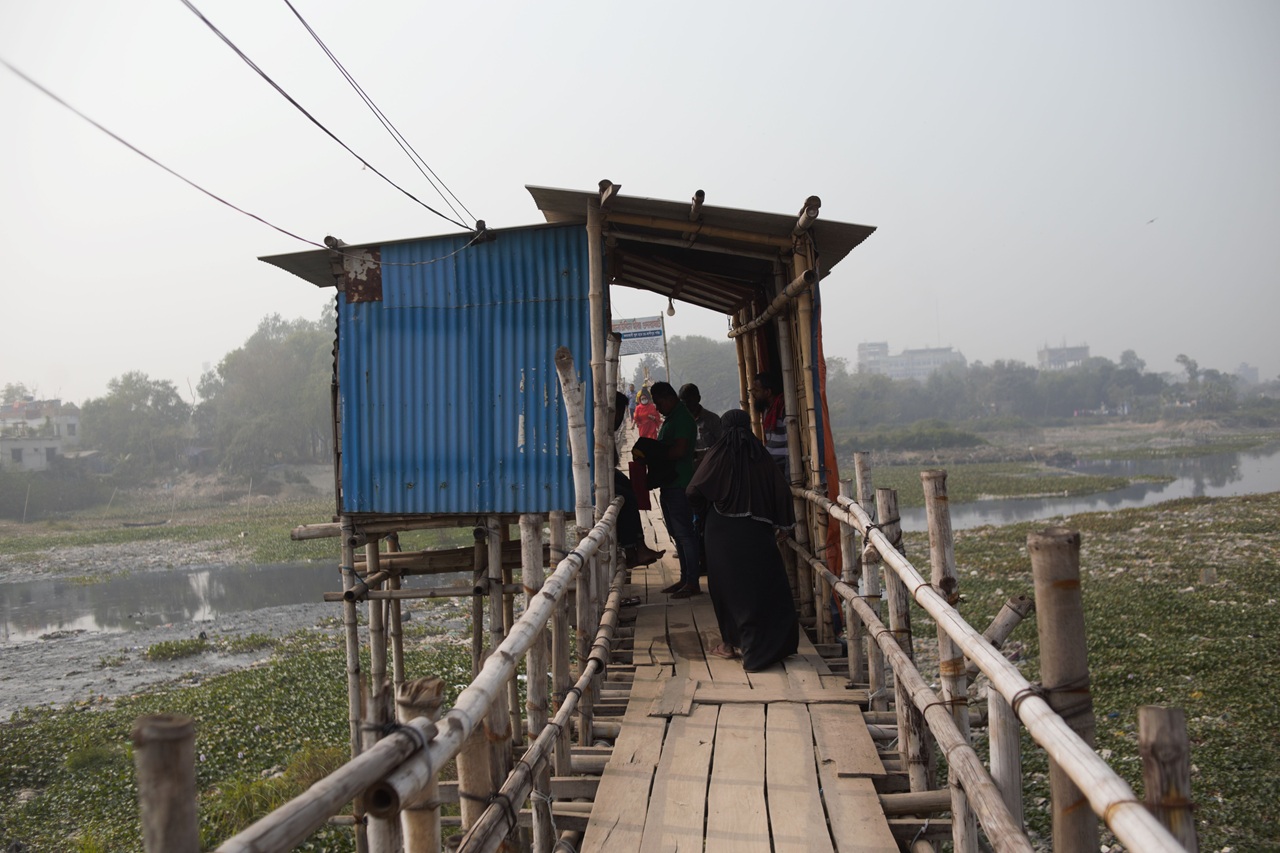
Locals say the bridge has become increasingly dangerous. Several bamboo poles have weakened. Some wooden planks bend under pressure. During the monsoon, the bridge becomes slippery, and the canal below swells. A single misstep can mean a fall into the water. Yet people keep crossing.
Fear is felt every time the bridge is crossed, yet the journey continues because a livelihood cannot be earned without crossing it. Adding to the frustration is the toll. Each person must pay Tk 3 to cross the bridge. According to residents, the toll continues, but maintenance does not.
Villagers say they have heard promises many times. Local representatives and officials have assured them that a permanent bridge would be built. Surveys were discussed, hope was raised, but year after year, nothing happened.
For the residents, the absence of a bridge is not just an inconvenience; it shapes daily life. During emergencies, people must take long detours by boat or wait helplessly. Children walk carefully, gripping the bamboo railings. Parents watch with worry. The elderly cross slowly, pausing at every unstable plank.
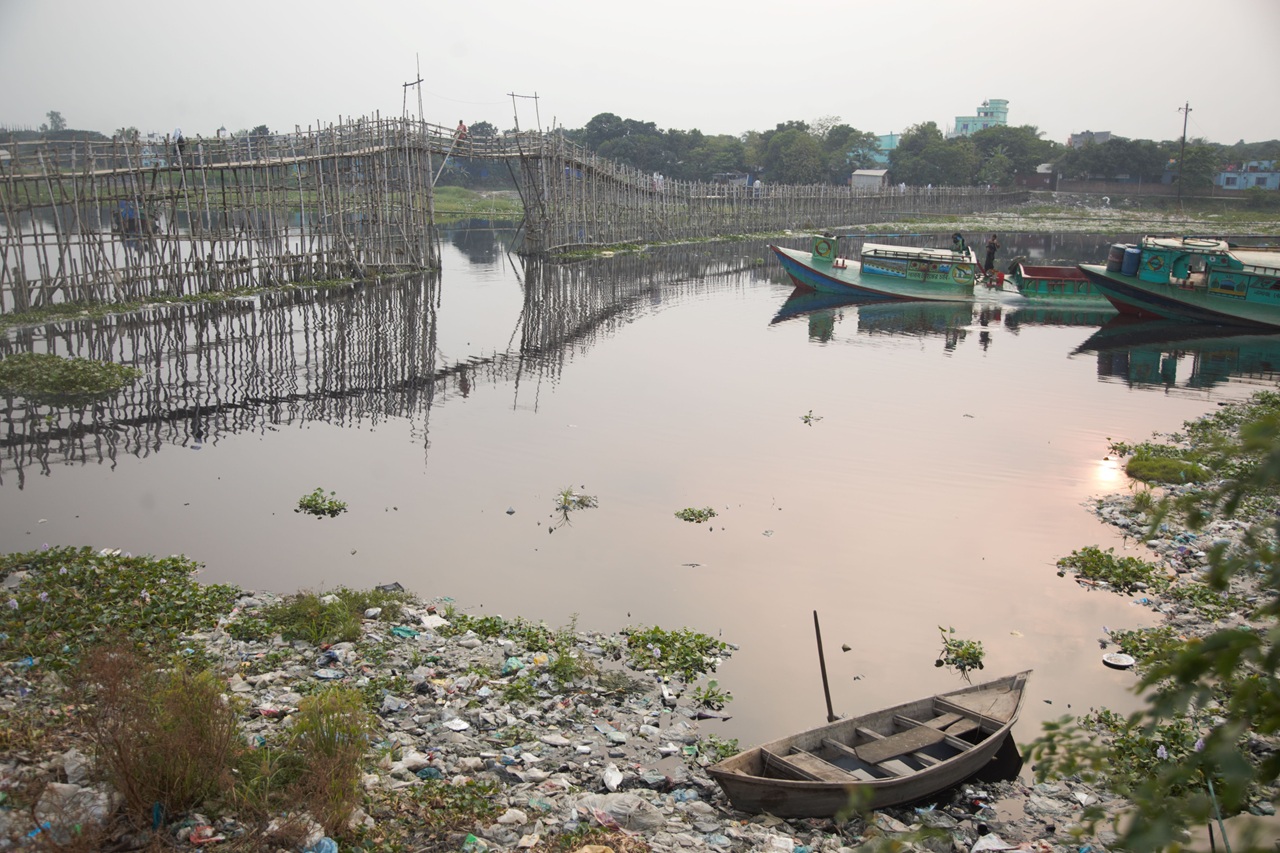
From a distance, Narayanganj’s skyline tells a story of progress. But here, progress feels incomplete. A city that boasts development still leaves thousands dependent on a bridge made of bamboo and hope. As evening falls, the bridge fills again with returning workers. The structure sways under the weight of footsteps, silently bearing the burden of official neglect.


