The upcoming parliamentary election faces a real test from two major challenges: a deepening political crisis over the implementation of the July Charter and the Election Commission’s mounting struggle to stay on course with its roadmap.
The EC faces several hurdles, including strong objections from major political parties to the amended Representation of the People Order (RPO) and unresolved court cases regarding the delimitation of constituencies.
The government, however, insists that no obstacle will prevent the election from taking place in February next year. The EC has said there might be a delay of “two to four days” in executing the roadmap, but that this will not affect the election schedule.
Nevertheless, despite assurances from the government and the commission, analysts and political leaders continue to express concern.
Political analysts say in order to hold the election in February, not only is political consensus among parties crucial, but the EC must also overcome its challenges.
Professor Dilara Chowdhury, a political analyst and retired teacher of the Government and Politics Department at Jahangirnagar University, said: “Consensus is needed to resolve the ongoing divisions among major political parties over the implementation of the July Charter. Without political understanding, the government will not be able to move forward towards the election.”

Expressing frustration with the EC’s preparations, she added: “We are not seeing the kind of urgency that should be visible before the announcement of the election schedule. If the government and the EC fail to address the challenges properly, the election may be delayed.”
Political crisis deepens
A political crisis has become apparent due to divisions among BNP, Jamaat-e-Islami, and National Citizen Party (NCP) over the timing of the referendum and the removal of the notes of dissent from the July Charter.
In addition, the EC’s election roadmap, published in August, had set a target to hold voting in the first half of February, with more than two dozen preparatory tasks outlined. However, most of those tasks have not been completed on time.
Last Tuesday, the National Consensus Commission (NCC) submitted its final set of recommendations on the implementation of the July Charter to the government. Following this, BNP, Jamaat, and NCP leaders began issuing conflicting statements regarding the timing of the referendum and the removal of the notes of dissent.




On Friday, leaders of the parties again made conflicting remarks.
BNP Secretary General Mirza Fakhrul Islam Alamgir said: “BNP will not accept a referendum on the implementation of the July Charter before the national election. By removing the notes of dissent from the final recommendations, the government and the NCC have deceived the people. Some parties are now demanding a referendum before the election in an attempt to delay the polls.”
Meanwhile, Jamaat-e-Islami Nayeb-e-Ameer Syed Abdullah Muhammad Taher said: “The referendum must be held before the election. By pressuring the government on this issue, the BNP is putting the election at risk.”
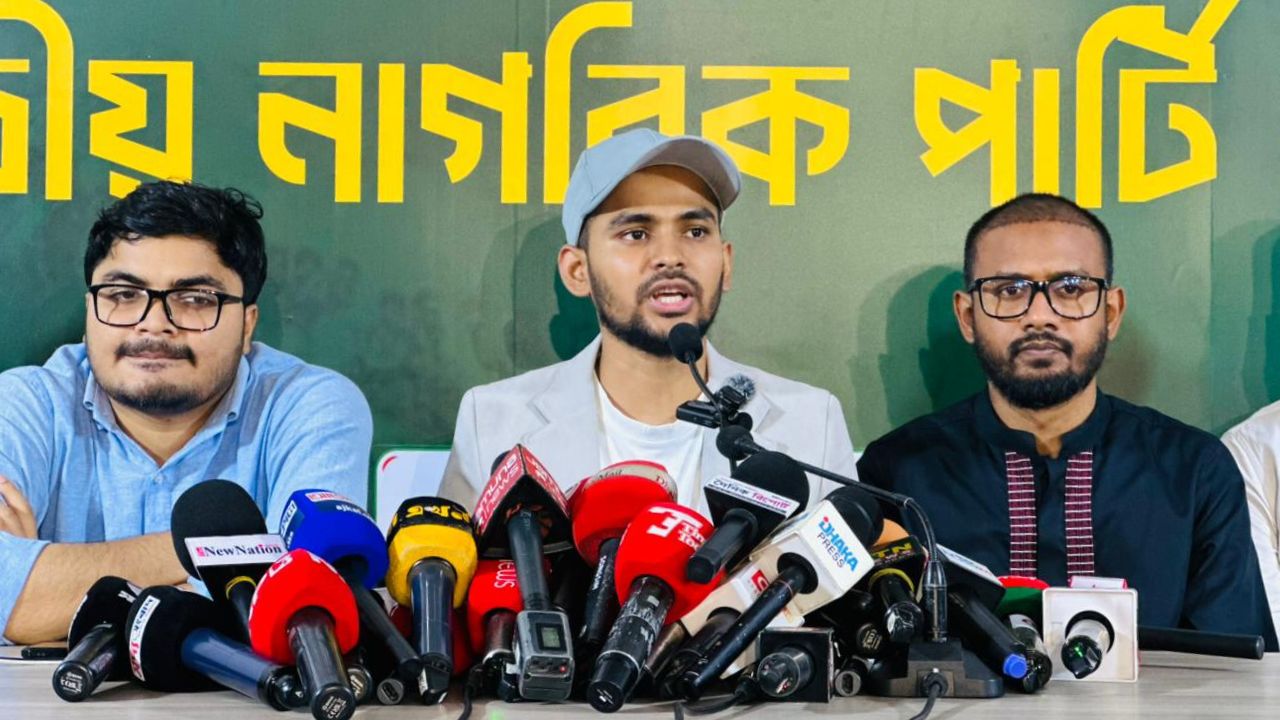
The NCP has also warned that there will be no election unless the July Charter is implemented. NCP Conveners Nahid Islam and Nasiruddin Patwary have made such statements at various events over the past three days, accusing the BNP of being unwilling to implement reforms.
The sharply contrasting positions of these parties have fuelled widespread discussion and speculation that the election may face further uncertainty.
Challenges before EC
Alongside the political crisis, the Election Commission is grappling with several administrative and legal challenges. According to its roadmap, the EC was supposed to publish the final list of registered political parties in newspapers by 14 September, but it has yet to do so.
Although the Representation of the People Order (RPO) 1972 (Amendment) Ordinance 2025 has recently been revised, the BNP has raised objections to it. The party has already sent letters to both the EC and the Ministry of Law, demanding the removal of the provision allows coalition candidates only to contest under their own party symbols.
In addition, citing population and voter imbalances, the EC has redrawn the boundaries of 46 constituencies and published a new gazette notification. This has sparked unrest in several districts, prompting aggrieved individuals to take the matter to the High Court.
Md Rashed Kabir, joint secretary of the EC’s Law Division, told TIMES of Bangladesh: “At least 29 to 30 writ petitions have been filed with the High Court regarding the delimitation issue. The EC has decided to contest these cases.”
According to procedures, the matter must be resolved before the announcement of the election schedule.
Meanwhile, due to questions surrounding the registration of domestic election observer organisations, the EC may have to conduct another round of verification, according to EC sources. This could delay the process further.
The expatriate voter registration app has not yet been launched or developed. Although the voter list has been updated twice, the final version has still not been published. The procurement of election materials is in its final stages.
However, as the registration process for political parties is still incomplete, the EC has had to revise its meeting schedule with political parties. It has, however, already held discussions with relevant authorities regarding law and order.
When contacted, Election Commissioner Abdur Rahmanel Masud told TIMES: “There may be a delay of two to four days, but efforts are underway to push everything forward. The election will be held within the timeframe announced by the government,” he asserted.