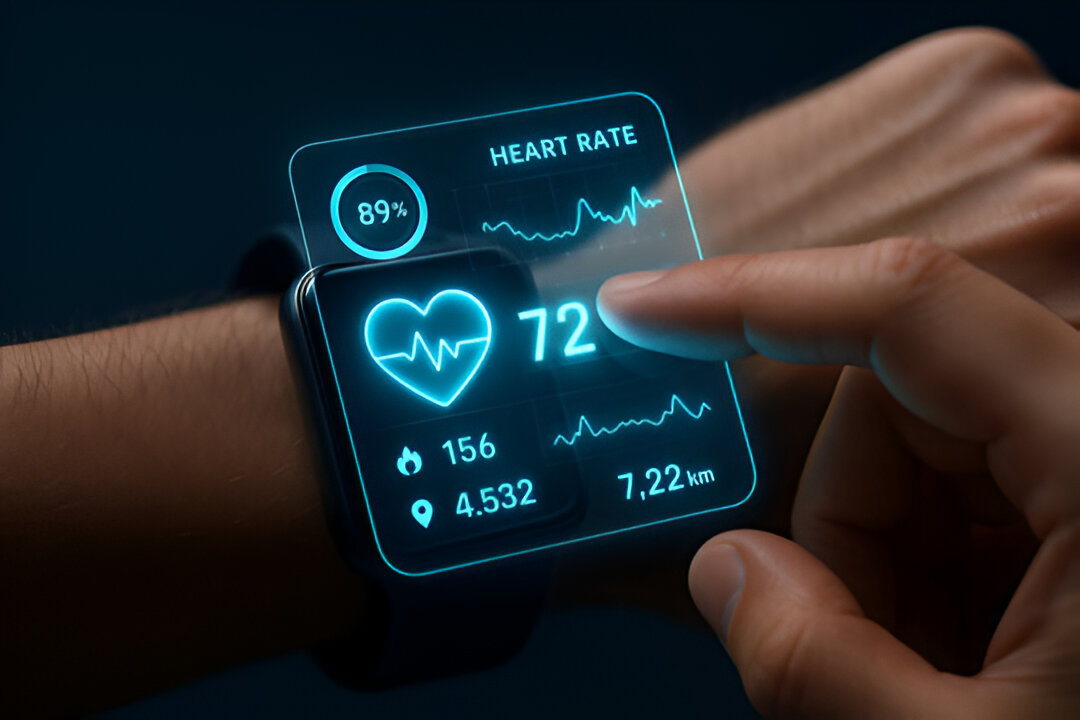



It may sound unusual, but it is a fact. Smart devices are now saving lives by collecting real-time data that can alert users or even the authorities during emergencies. This is especially helpful for people who love solo adventures, as they sometimes wander miles away from the nearest civilisation or town.
Wearables are equipped with AI-powered algorithms that provide great accuracy in processing real-life data with minimal error. This means that if a current reading falls below or rises above the set range, the device immediately alerts the user to that specific issue for attention or improvement.
Patricia Lauder’s case is one of the earliest examples of AI-assisted health monitoring saving lives. She initially suspected that she had fallen ill with pneumonia. However, her Fitbit recorded a dangerously high resting heart rate of approximately 140 beats per minute while she was lying down. Upon receiving the alerts, she was rushed to the hospital, where CT scans confirmed blood clots in both of her lungs.

An 18-year-old student was also saved by a Fitbit when his heart rate spiked to 210 beats per minute while resting. He was taken to the hospital, where doctors discovered that an underlying heart condition had caused the dangerous spike.




Recently, Kshitij Zodape, a Mumbai-based techie, was rescued thanks to his Apple Watch Ultra. While scuba diving, he descended to around 36 metres when his weight belt became unstuck, causing him to shoot upwards uncontrollably. He sensed the danger but was unable to call for help or control his ascent. That’s when his Apple Watch Ultra activated a siren, which alerted his diving instructor, who intervened in time to prevent serious injury.
To understand how these wearables can save lives, it’s important to look at their design and functionality. Being wearables, they are built differently from smartphones, often with extra protection against extreme conditions. Their portability allows them to be used almost anywhere and to sense their surroundings accurately.
These devices are powered by algorithms that track certain health metrics and environmental data within defined limits. When readings go too far above or below the preset range, alerts are triggered to warn the user.
Thanks to their portability and efficient processing, wearables can analyse data faster and in real time. Unlike smartphones or large-scale AI systems that handle huge data sets, these devices use smaller, optimised models. This allows them to instantly detect whether any reading has crossed a safe limit.