Economist Ahsan H Mansur took charge as governor of the Bangladesh Bank in the aftermath of July’s political upheaval last year, inheriting a financial system weakened by years of mismanagement.
In an interview with TIMES of Bangladesh Senior Reporter Takie Mohammad Jubayer, Mansur outlined his fight to stabilise the taka, consolidate troubled lenders, repatriate illicit outflows, and secure central bank independence.
He also signalled openness to regulated cryptocurrency adoption as part of a push towards a cashless economy.
You took charge of the financial sector at a moment of extreme stress. What pressures are you facing?
There is no quick fix. Our first move was to stabilise the foreign exchange (FX) market. Then we engaged more than 200 foreign banks providing counter-guarantees for trade finance. We assured them Bangladesh would honour its obligations and urged them to keep lines open.
The International Monetary Fund (IMF) urged us last October to fully float the currency. We waited until market conditions allowed. Once we acted, the FX market stabilised. Our objective now is to anchor the exchange rate near current levels.
We have tightened monetary policy aggressively. Liquidity in taka is scarce, making it more valuable. The yield on taka assets is now 10%-11%, compared with 4%-5% in dollar deposits. Investors must hold taka, not dollars, if they want returns.
That was stabilisation. What came next – bank restructuring?
Exactly. We must tackle the systemic weaknesses of the banking system. Five loss-making shariah banks will be merged into one large Islamic bank.

Among non-bank financial institutions, only the top nine or ten are viable. The rest are effectively insolvent and will likely be liquidated.
You are confronting entrenched interests backed by political power. Have you faced pressure or inducements?
Pressure or inducements don’t matter. I have the trust of the government and political leadership. They know I deliver, and I am here to act. If I am allowed to work, I will stay. If not, I will go.
Critics say loan defaulters and money launderers are waiting for political change that will shield them.
No government, at least in the coming years, can embrace those who wrecked the economy. Public opinion will block it. Those waiting can keep waiting. We will keep working.
There was controversy over the appointment of the Financial Intelligence Unit chief.
It is true the current head was not on the shortlist of top candidates. The selection process did not yield the best possible outcome. That is our misfortune.



Food inflation is biting. Are cartels driving prices?
No. The problem is unreliable production data. Field reports are inflated, which distorts policymaking. The government must rely on real-time market data.
Import policy is also too slow. Rice imports were delayed for two months awaiting approval. Tariffs should be set so farmers earn 10%-12% above global parity, but no more. Excessive protection penalises consumers.
You proposed negotiating with money launderers to recover funds. Isn’t that against justice?
This is pragmatism versus idealism. Realistically, we will never hang launderers. So why not repatriate funds instead? Severe crimes cannot be settled, but lower-level financial offences can.
The debate is whether to pursue criminal prosecutions or civil recovery. One side says leave it for the next government. Another says compromise will damage credibility. My position is to align with international practices and act pragmatically. The principle is to minimise losses, not maximise ideology.
Would launderers who repatriate money gain immunity?
That depends on negotiations. Serious, systemic crimes cannot be settled. But for smaller-scale financial offences, discussions are possible.
What progress has been made in recovering illicit outflows?
Some, but momentum has slowed. We have established a legal panel to determine which cases go to civil litigation and which to criminal court.
Is the target of rebuilding reserves to $40 billion within a year achievable?
I cannot guarantee it. My team believes it won’t be possible. But I will try.
What are the risks?
There are many unknown factors here – potential US tariffs under a Trump presidency, the sustainability of remittance flows, and the political outcome of the election.
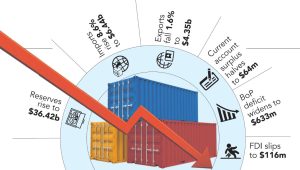
Our goals remain ambitious: inflation below 5%, reserves close to $40 billion, foreign exchange around 121-122 per dollar, and lower interest rates.
Are you pursuing a central bank digital currency?
Yes, we are evaluating a central bank digital currency. We must also consider dollar-backed cryptocurrency. Preparations are under way.
Does this mean crypto will be legalised?
Yes, cryptocurrency should be permitted under regulation. For a cashless society, it is essential. Dollar-, euro- or yuan-backed stablecoins are acceptable. But private, unbacked tokens will not be approved.
Has the government agreed to the draft “Bangladesh Bank Ordinance 2025” on central bank autonomy?
The draft will go to our board, then to the government, likely in early September. We expect the next parliament to enact it into law.
For me, the ultimate achievement would be implementation of this ordinance. Today, the Bangladesh Bank still operates under the government pay scale. No advanced economy central bank does this.
We need an independent pay structure – above civil service, below private sector. This is embedded in the draft ordinance. There will be resistance, but the central bank must break free from government shackles. The governor must be empowered, the board autonomous. There is no alternative.
If a new government takes office after the February elections and invites you to join, how will you respond?
I came to serve. My income has fallen to a fraction of what it was, but I don’t complain. What I demand is independence.
If the ordinance is passed, my demand to the next government will be to enshrine it in law immediately. If that happens, I will know they are serious about reform and central bank autonomy.
Thank you for your time.
Thank you.