


The outcome of the US midterm elections is expected to have implications far beyond American borders, as President Donald Trump’s nearly two-year disruption of traditional foreign policy faces a significant domestic electoral setback. With Democrats securing control of both chambers of Congress in what has been described as a “blue tsunami”, US allies and adversaries alike are closely watching how the defeat could affect Washington’s international stance.
Although the newly empowered Democratic majority has gained additional means to challenge executive decisions, Trump retains considerable constitutional authority over foreign affairs. This has left world leaders questioning whether the domestic setback will make him more willing to compromise or more determined to assert his authority, reports CNN.
The political shift has direct implications for Washington’s most pressing foreign policy concerns, including the military confrontation with Tehran, longstanding diplomatic and defence ties with Israel, and the war in Ukraine.
Iran welcomes Trump’s defeat
Officials in Tehran have welcomed the Republican Party’s midterm losses, viewing the outcome as a public verdict against American military involvement in the Middle East.
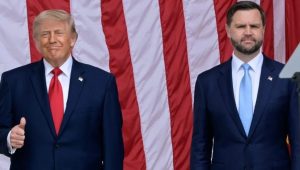
In a telephone interview with Fox News, Trump acknowledged that the war in Iran had contributed to his party’s losses. Vice President JD Vance explicitly made the same point in a post on X, writing: “The reason we lost is the war”. Trump also conceded that war-related price increases and rising fuel costs had influenced voter sentiment.
Following eight months of US strikes on regional economic lifelines, which were intended to turn voters against the conflict, Iranian Parliamentary Speaker Mohammad Bagher Ghalibaf, who has led negotiations with Washington, posted on X: “If the US government betrays their public will to serve international paymasters and blackmailers, it will learn our NO comes with a Nightmare”.
Despite celebrating the election results, Iranian leaders remain sceptical about the prospect of a fundamental change in Washington’s policy.
Supreme Leader Mojtaba Khamenei said anyone who believes the midterm results would automatically change US policy was “deeply mistaken”. He also indicated that Iran was preparing for further military conflict while intensifying diplomatic efforts.

Regional concerns remain high amid conflicting signals from Trump, who has told journalists that he is considering heavier strikes but also said he has no immediate plans to escalate the conflict.
Ali Vaez of the International Crisis Group observed that the conflict had become a political albatross around Trump’s neck, leaving him with a choice between securing a face-saving deal and escalating militarily to regain the initiative. He warned that a president weakened at the ballot box might seek redemption on the battlefield.
Meanwhile, diplomatic talks mediated by Qatari officials have gained momentum over the past week following a period of stagnation during the summer.
Before the election, Tehran offered to reopen the Strait of Hormuz within two days if Trump agreed to its seven conditions.
Sanam Vakil of Chatham House noted that although Iran’s leadership might feel vindicated by the election outcome, its underlying problems remained unresolved.



She explained that Trump needed a diplomatic victory without appearing weak, while Tehran might interpret his political setback as an opportunity to demand greater concessions. She added that an interim agreement on the Strait of Hormuz was more realistic than a comprehensive settlement.
US-Israel relations face uncertainty
In Israel, Trump’s announcement on election day that the US would abruptly cut off military aid delivered the first major shock. The subsequent Democratic victories in both chambers of Congress created what political circles described as a five-alarm fire.
Bipartisan support for Israel had already been weakening in Washington, with Democrats expressing outrage over the civilian death toll in the Gaza war and an increasing number of Republicans arguing that US military assistance had become excessive.
Former Israeli ambassador to the US Michael Oren said criticism of Israel had become the only bipartisan issue and an organising principle for both the Democratic and Republican parties.
Oren warned that the aid cutoff was only the beginning of a broader realignment that could extend to ending intelligence-sharing arrangements, halting the joint development of critical military systems such as the Iron Dome aerial defence system, and losing the US veto that has historically protected Israel at the United Nations Security Council.
“We are at the end of an era,” he concluded.
Former Jerusalem Post editor-in-chief Yaakov Katz also wrote on X that the aid announcement was merely the “tip of the iceberg”, predicting possible restrictions on arms sales, proposed sanctions and the withdrawal of funding from joint economic programmes.
Public hostility in the US intensified during the Iran conflict, with some voters viewing the joint strikes as a war sold to Trump by Israeli Prime Minister Benjamin Netanyahu.
Netanyahu’s continued push to resume strikes against Tehran risks reigniting hostilities that previously drove up fuel prices and living costs in the US.
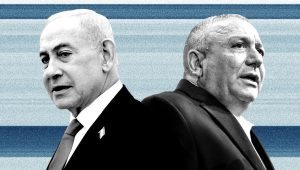
Domestically, Netanyahu is also facing political turmoil after losing his parliamentary majority in national elections held a week before the US midterms.
His main rival, former military chief of staff Gadi Eisenkot, lacks an outright majority and would need the support of Arab political parties, which recorded record turnout.

Yair Golan, leader of the left-wing Democrats party, warned that Israel “does not have time to waste” in replacing Netanyahu and steering the country away from international sanctions and isolation.
Ukraine prepares for a post-Trump era
For Kyiv, the strategic adjustment began before the US election, followed by relative official silence on Wednesday.
Relations between Ukrainian President Volodymyr Zelensky and Trump had deteriorated sharply in recent weeks, with Trump demanding Zelensky’s replacement, pursuing Russian energy deals and overseeing disruptions to Ukraine’s technological and intelligence dependencies on Washington.
Consequently, Kyiv had already calculated that it needed to prepare for a post-Trump era while urgently managing its immediate security concerns.
Unofficial reactions were reflected in social media memes depicting Zelensky watching election coverage with beer and popcorn.
Speaking on Ukrainian television, Sergiy Kyslytsia, a deputy in Zelensky’s office, said Ukraine would continue to “develop genuine, normal and stable relations” with whichever administration was in power. He also said Kyiv would continue seeking Patriot interceptor missiles while navigating relations with a new Congress and possible executive orders.
Despite its continued reliance on American arms, financial assistance and security guarantees, Kyiv has concluded that it cannot depend on Washington following months of strained relations.
Observers note that Trump’s electoral setback and the approaching end of his presidency could work in Kyiv’s favour, given his previous demands for concessions to Moscow, criticism of Zelensky and the pressure he has placed on European security alliances.
However, analysts have highlighted a significant risk in the timeline. Russian President Vladimir Putin may conclude that he has approximately a year to secure maximum battlefield gains in his war against Ukraine before the 2028 US presidential election potentially shifts Republican policy back towards the pro-Ukrainian mainstream.
Having so far failed to translate his relationship with Trump into significant military victories, Putin may seek to exploit the declining authority of Trump’s presidency.