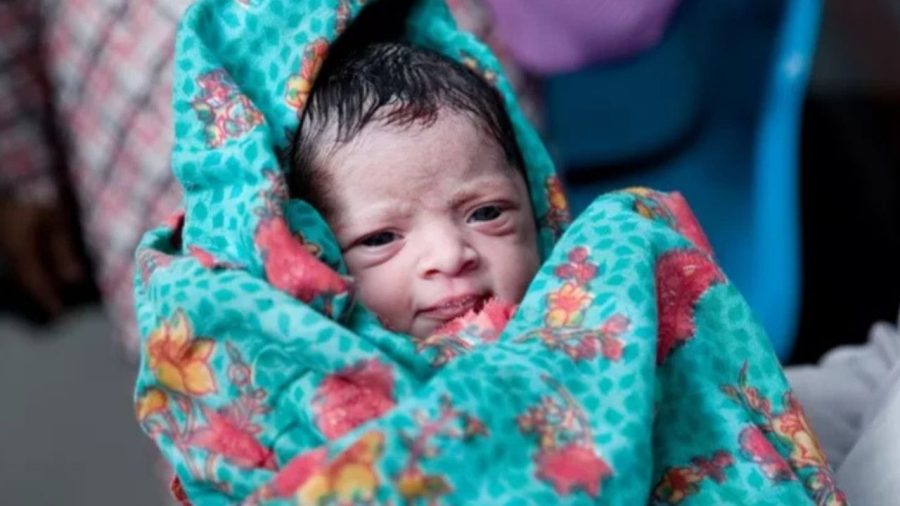



Extreme heat during April 2024 was associated with more than 5,500 excess preterm births across Bangladesh, with human-induced climate change directly contributing to nearly 1,500 of those premature deliveries, according to a report by Zero Carbon Analytics (ZCA).
The study by ZCA, an international research group providing insights and analysis about climate change and the energy transition, calculates that 1,479 premature births during that month would not have occurred without the additional warming caused by human activity.
Moreover, analysis by World Weather Attribution revealed that human-caused climate change made the April heat event roughly 45 times more likely to occur.
Comparing the April 2024 heat event against a typical April baseline from the 1991-2020 period, ZCA estimated that the heatwave overall was linked to approximately 5,515 excess preterm births nationally.
This figure represents an 11.9% rise in premature deliveries, equivalent to around 19 additional preterm births per 1,000 live births, marking the highest rate among the three countries evaluated in the study.
The findings highlight the acute threat that climate-driven extreme heat poses to maternal and newborn health in Bangladesh, which already records one of the highest preterm birth rates globally.
Bangladesh recorded an estimated national average preterm birth rate of 16.2% in 2020 – the highest in the world – compared with South Asia’s regional average of 13.2%.
Defined as birth before 37 completed weeks of pregnancy, preterm birth is the leading cause of neonatal mortality globally, subjecting infants to increased risks of death alongside lasting physical, neurodevelopmental, and socioeconomic challenges.

Regional disparities, mid-century projections
The research revealed that the health impact of extreme heat was not evenly distributed across Bangladesh.
Dhaka and Chittagong, the country’s two most populous divisions, together accounted for 47% of the estimated 5,515 excess preterm births associated with the April 2024 heat event.
However, the analysis identified Mymensingh as a major area of concern, where temperatures averaged 3.59°C above the division’s typical April baseline – the largest temperature increase recorded among all divisions.
Across every division, the rise in preterm birth risk was estimated at approximately 10% to 15%.
Mymensingh logged the highest rate of excess premature deliveries at 24 per 1,000 births despite ranking sixth among the eight divisions in total excess cases, whereas Sylhet registered the lowest rate at 16 per 1,000 births.



Researchers noted that these findings demonstrate why national averages alone cannot adequately capture the health burden of extreme heat, as smaller divisions can suffer sharp increases in risk even if more populous areas account for higher total case numbers.
Looking ahead, ZCA warned that Bangladesh’s heat-related preterm birth burden is likely to escalate further as global temperatures rise.
Under moderate and higher future warming scenarios, ZCA projects that Bangladesh could experience approximately 1,500 excess preterm births during a typical April by mid-century (2041–2060), compared with the 1985–2014 climate baseline, with an estimated range of 630 to 2,900 cases.
This projection reflects an estimated 1.1°C temperature increase in April by mid-century, with Dhaka Division projected to experience the largest burden, followed by Chittagong and Rajshahi.
These projections factor in anticipated changes in birth numbers and assume that current temperature-risk relationships remain consistent without additional adaptation measures.
Physiological vulnerability, compounding factors
Pregnant women are particularly vulnerable to extreme heat due to the physiological demands of pregnancy, as heat exposure can cause dehydration, reduced blood flow to the placenta, maternal inflammation, and the activation of biological pathways that trigger labour.
Dr Ummay Hafsa Mazumde, medical officer at Cumilla Sadar South Health Complex, said intense heat can pose serious risks to pregnant women because excessive sweating causes significant loss of electrolytes, potentially leading to grave health complications for both mother and child.
Such risks are compounded by poverty, nutritional anaemia, strenuous physical work, limited access to antenatal care, and inadequate access to cooling. Poorly ventilated homes and housing materials that trap heat further increase exposure even when women remain indoors.
To address these threats, the Directorate General of Health Services, in collaboration with UNICEF, launched national guidelines in 2024 specifically aimed at protecting children and pregnant women from heat stress while recognising the risk of preterm birth.
However, heat protection is not yet systematically integrated into routine maternal healthcare programmes, leaving the challenge of translating guidelines into practical protection, especially for communities facing the greatest exposure.

Recommended measures include integrating heat-risk information into antenatal care, strengthening community-based maternal health services, improving access to cooling and hydration, and expanding heat early-warning systems.
The report also stresses the importance of strengthening healthcare preparedness in divisions with the largest estimated burden while ensuring that areas experiencing the sharpest risk increases are not overlooked.
Calls for mitigation, health system adaptation
Dr Joanne Bentley-McKune, lead author of the report and senior research analyst at Zero Carbon Analytics, said, “Climate change is making extreme heat more frequent and intense, raising the risk of preterm birth and the potentially lifelong health impacts associated with it.
Bangladesh has contributed relatively little to the historical emissions driving climate change, yet are disproportionately affected by climate-driven extreme weather compared with high-income, high-emitting countries, which also have more resources to adapt.
Our estimates can help identify where greater health service capacity is needed, and adaptation measures – such as better antenatal care and early warning systems – should be prioritised.
However, these could prevent only some of the preterm birth burden imposed by climate change, so limiting further warming remains crucial.”
Prof Dr Iqbal Kabir, climate and public health expert and director at the Center for Climate Change and Public Health, told UNB, “These findings are a wake-up call for Bangladesh. Extreme heat is an urgent public health threat for pregnant women and newborns in Bangladesh.
“The estimated 5,515 excess preterm births during the April 2024 heat event highlight the need to integrate heat protection into maternal healthcare.”
He added, “We need to strengthen heat-risk screening and counselling through antenatal care, equip frontline health workers, improve early-warning systems and ensure access to safe, cool environments, particularly for vulnerable communities.
“Protecting mothers and newborns from extreme heat requires coordinated action across the health system, climate policy and communities.”