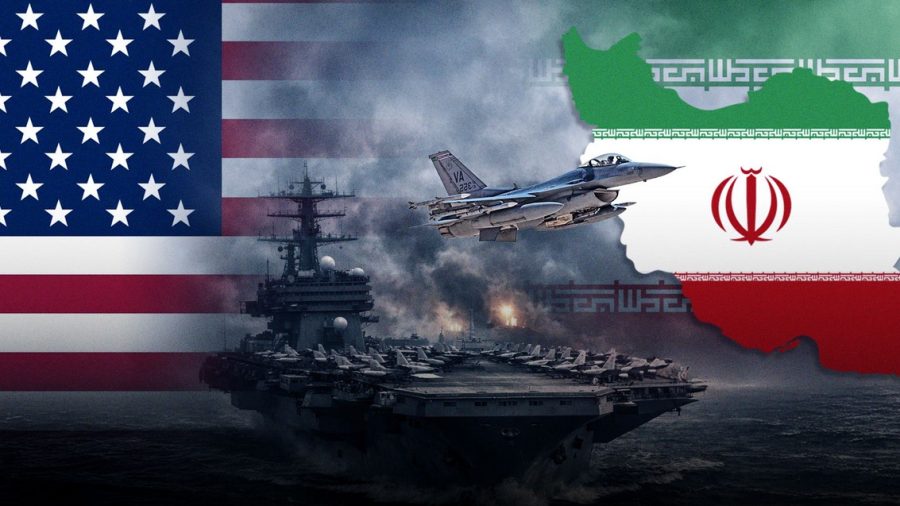



This increasingly risky situation between the United States and Iran is a turnaround in today’s international politics in which arms meant to stop wars may cause wars. The readiness of the United States to use the Massive Ordnance Air Blast (MOAB), or ‘Mother of All Bombs,’ against suspected military facilities in Iran if they are trying to develop nuclear arms is creating serious implications for the success of coercive diplomacy, the credibility of nuclear non-proliferation in the Middle East, and the security of the United States. Strategic pressure is not always a prelude to war. Still, when a nation with a very powerful conventional weapon is contemplating its use against Iran, it’s obvious that it can turn into a wider conflict.
At its heart is a simple conflict of interest. Iranian President Masoud Pezeshkian was quoted as repeating Tehran’s insistence that it didn’t seek to develop nuclear arms in bilateral talks with Georgian Prime Minister Irakli Kobakhidze at the sidelines of the UN biodiversity summit in Yerevan, and said it was ready to discuss the issue. He also condemned US sanctions as ‘unjustifiable and inhumane.’ The statement doesn’t, by itself, alleviate international concerns about Iran’s nuclear programme. However, it raises an all-important question in the diplomatic forum: Will talks on the nuclear issue reach a successful conclusion, or will pressure continue to rise, making a peaceful solution harder to achieve?
The MOAB is about 30,000 pounds and is one of the largest conventional weapons in the U.S. arsenal. Its use in Afghanistan in 2017 in an Islamic State cave complex proved Washington’s ability to unleash overwhelming explosive power. But a weapon doesn’t necessarily mean a successful strategy. US officials have made contingency plans to attack military targets in Iran. However, according to CBS News, the plans don’t prove that President Donald Trump has authorised them to act.
The issue on everyone’s mind is that a strike, if it were to occur at all, would do little to stop Iran from developing its military and nuclear capabilities, nor would it spark a counter-offensive by Iranian forces that would expand the conflict. Losing a single facility would affect operations, but it would not prevent a country from regaining its scientific knowledge, political will and capacity. Indeed, a serious attack designed to halt the development of Iran’s nuclear programme could aggravate the arguments in Iran to resist the possibility of future military attacks.

Escalation has far-reaching implications beyond the immediate confrontation between the US and Iran. The Strait of Hormuz is a vital waterway through which a significant amount of the world’s oil and LNG passes. The event would cause major disruption, setting energy-importing economies up for more price hikes, shipping delays, higher insurance rates and inflation. Recent reports point to growing insecurity on the waterway, including attacks on commercial vessels, and competing efforts to control access. As Reuters reported, Iran was implementing new tactics in its battle against shipping on October 14th.
Mohammad Akraminia, Iran’s military spokesman, has reportedly threatened to reopen the strait if the U.S. pulls out troops from the Middle East region; otherwise, Iran would expel them. The rhetoric reflects the increasingly complex link between maritime access and regional influence. Washington and Tehran cannot afford ‘more of the same’. Then a series of countermeasures can follow: attacks on commercial shipping/commercial ports, followed by measures that reduce ships moving at sea. Even if a vessel tries to breach its safety, it could still be in danger. This would create a security issue not only for the belligerents, but for energy-importing nations, commercial shipping companies and the world.




Military escalation is not the only force shaping this crisis. US sanctions aim to limit Iran’s economic options and make its policies more costly. Washington says it must put pressure on Iran to stop it from getting the bomb. Meanwhile, Tehran sees sanctions as having a high price tag on its people. In his October 16 remarks in Yerevan, Pezeshkian reminds us: Diplomacy is not dead. His rejection of nuclear ambitions and willingness to engage in dialogue may be a starting point. Still, this should not be mistaken for independently verifiable evidence relevant to Iran’s nuclear ambitions.
If either party feels it must compromise and suffer additional coercion, as a result, negotiations will not be effective. However, Iranian authorities need to respond to the valid concerns of other nations related to its nuclear efforts and the country’s presence in the region. The US, meanwhile, should recognise that threats and endless economic pressure are not a sustainable diplomatic solution. Neighbouring countries and great powers are also at risk of escalation. If the fighting continues, it could draw regional powers into the fray, put essential infrastructure at risk, and further escalate U.S.-China-Russia rivalry. It may also drive a wedge into existing international frameworks already struggling to cope with parallel security challenges.
The biggest risk is miscalculation. A strike meant to be limited could trigger retaliation that leaders feel compelled to respond to. Future responses may further close down the political avenues for de-escalation, making it harder to ‘de-escalate.’ In these situations, even a successful military operation might yield a negative strategic result, as it may leave the situation more unstable and the opponent more motivated. To avoid this, states must communicate effectively, engage in mediation, protect civilians and respect international humanitarian law. Operational options can inform military planning for national defence. Still, they do not imply that if the option is used, it will be in the country’s long-term interests.
Finally, the Iran crisis shows that relying on military superiority rather than political strategy is not an effective way of solving all problems. The potential impact of the proposed use of the MOAB on nuclear non-proliferation, regional stability, maritime security, and peace needs to be evaluated, not just based on its destructive power. The United States is rightfully worried about nuclear proliferation, and Iran is protecting its sovereignty and security. Neither goal can be maintained through a vicious cycle of threats and counterthreats. Iran needs to give serious assurances about its nuclear programme, and the U.S. needs to maintain a diplomatic channel that makes it easier for Iran to comply than to continue to fight.
There is no tradeoff between showing strength and risking weakness. It lies between power politics and power politics that increases the chances of conflict. Deterrence matters only if it makes war less likely, and the more likely war becomes as a result of pursuing deterrence, the more strategic restraint is necessary, and the less of a concession it is.
The views expressed in this article are solely those of the author
The writer is a Professor, Department of International Relations, University of Chittagong, Bangladesh. Director, Hong Kong Research Center for Asian Studies-Bangladesh Center (RCASBC). Email: [email protected]