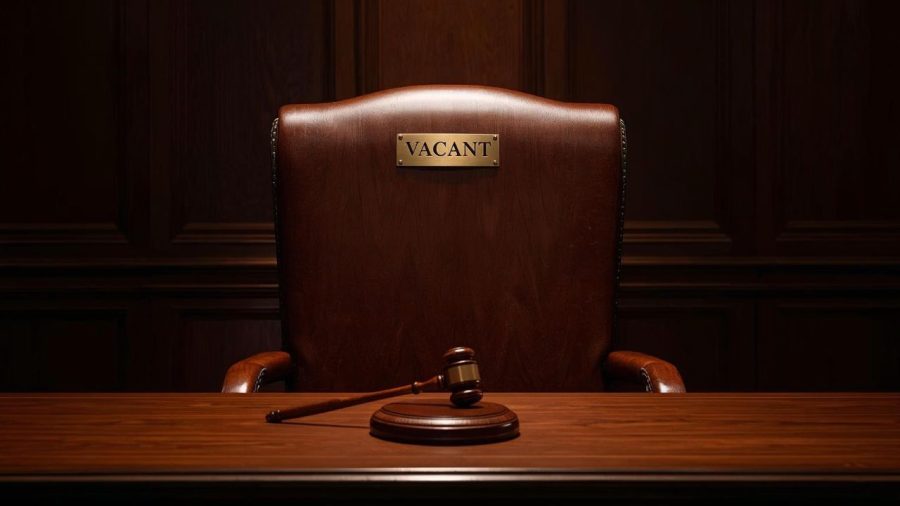



Judicial proceedings at Nilphamari’s Women and Children Repression Prevention Tribunal-1 have remained largely paralysed for nearly four months, leaving crucial rape and abuse cases in limbo as allegations of judicial reluctance, absent prosecutors, and warring lawyers deepen the deadlock.
The tribunal has lacked a permanent presiding judge since 23 June, when Judge Ziauddin Mahmud was promoted and transferred. Although Tribunal-2 Judge ABM Golam Rasul was assigned additional duties, regular hearings have failed to resume.
The prolonged disruption has severely delayed case filings, bail applications, and witness examinations, leaving vulnerable litigants across Nilphamari Sadar, Jaldhaka, and Saidpur facing endless frustration. Legal observers warned that crucial evidence in sensitive cases risks being lost or corrupted as trials gather dust.
The Tribunal-1 has seen three judicial changes since January 2025. Disruption, however, predates the current vacancy. Under previous judge Md Asaduzzaman Khan, the tribunal sat idle for 13 consecutive days during Ramadan leave, followed by a 43-day shutdown during his Hajj pilgrimage.
Prosecutor blames acting judge
Asaduzzaman Khan Rino, Public Prosecutor for Tribunal-1, laid the blame squarely at the feet of the acting judge, accusing Judge Golam Rasul of refusing to conduct proceedings despite taking official charge.

“After the acting judge assumed responsibility, I was fully prepared to conduct proceedings,” Rino said. “However, the judge refused to hear case filings, bail applications, or witness examinations.”
Rino alleged that desperate families travelling from remote rural areas were suffering the brunt of judicial inaction.
While acknowledging he had personally missed one hearing due to commitments as treasurer of the District Bar Association, Rino said that an Assistant Public Prosecutor attended in his stead, only to be mistreated by the bench.




APP Md Azizul Islam claimed Judge Golam Rasul instructed him never to appear in his courtroom again, leaving him feeling humiliated and unwilling to return.
Lawyers and court officials dispute account
However, an investigation by TIMES revealed that chronic absenteeism among prosecutors and defence lawyers has contributed significantly to the paralysis.
District Bar Association President Al Faruq Abdul Latif strongly rejected claims of judicial reluctance, maintaining that the acting judge was being hampered by a lack of prosecutorial support.
“The allegation that the acting judge is refusing to sit is incorrect,” Latif said, explaining that while some matters can proceed without a prosecutor, critical bail hearings legally require the PP’s presence. “Because the PP was absent, those hearings could not move forward. It is not a case of the court failing to sit due to the judge’s unwillingness.”
A senior Bar Association member added that following a mediation meeting, the PP attended court on the first day but vanished on the second, forcing the bench to rise.
Tribunal-1 Bench Assistant Md Badiuzzaman corroborated this, saying that Judge Golam Rasul had convened court on numerous occasions, only for sessions to collapse because either defence counsel or the prosecutor failed to show up.
Awaiting justice
Judge Golam Rasul declined to address the allegations, saying he required authorisation from higher judicial authorities before speaking to the media.
Meanwhile, families continue to bear the human cost.
Satowara Begum, whose husband Md Nur Alam has been languishing in prison under the Women and Children Repression Prevention Act, submitted a formal plea to the Bar Association on 12 October begging for intervention.
When contacted by TIMES, Supreme Court Registrar General Muhammad Habibur Rahman Siddiqui promised swift oversight, “I am not yet aware of the situation, but I will look into the matter immediately and take necessary action.”